

August has decided to end on a high note. I am writing this on August 31 and the high temperature was 111 degrees with humidity below 10%. A bit hard on garden plants, but they are resilient.
Our Garden Harvest
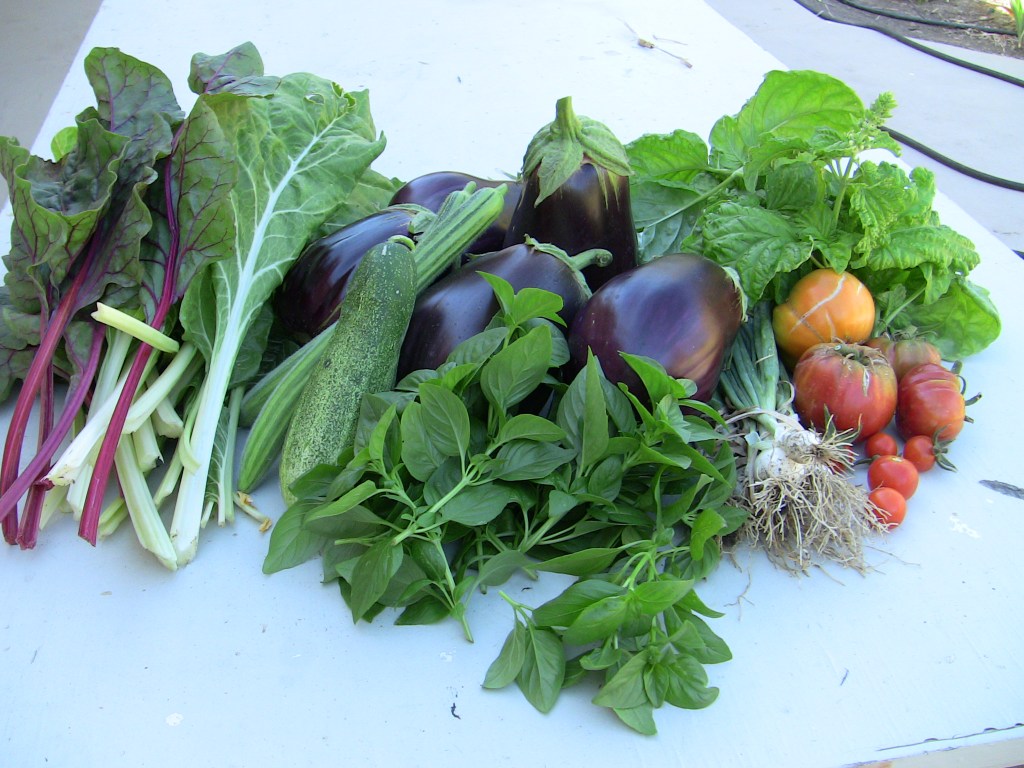
The summer veggies are in full production mode.
Eggplants have been prolific this year, most are the Black Beauty variety.
Cucumbers also producing heavily this month, with two varieties, Diva and Striped Armenian. The striped Armenian quickly get very long, easily 18 inches or more. We try to pick them every day to get them young and tender.
Basil is in full swing. We have 4 varieties going this year. Genovese (a traditional Italian style), Napolitano (a large leaf variety), Emerald Towers (dark green, bushy growth and slow to flower), and Persian basil, the seeds came from Mahnoosh’s brother about 10 years ago and they are still giving us basil.
Chard is doing well, though it gets a little droopy in the very hot days.
Green onions are close to the end of their harvest, some are starting to form bulbs, but they are still tasty.
Tomatoes this year were given a challenge as they were relegated to a bed with soil that has not been improved much, so production is on the low side. We’re growing a few varieties, all from saved seed. Gardener’s delight is a standard with clusters of plum sized tomatoes and vigorous growth. These seem very hardy and tend to volunteer in our garden. The other varieties to fall into 3 groups, an orange heirloom style with very meaty flesh and few seeds, a very dark red, almost black heirloom, and one with a pinkish color.
Collards are a reliable summer green that produces well with lots of large thick leaves.
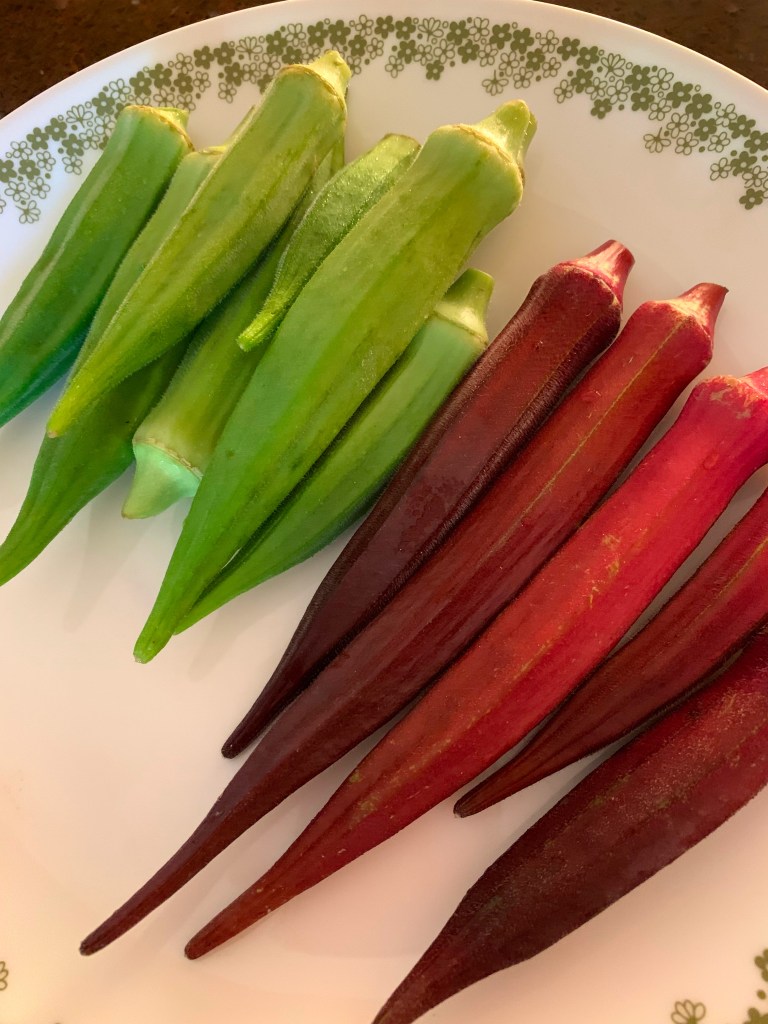
Okra is producing, but not as heavy as we’d like. Two varieties we are harvesting now are the traditional Clemson Spineless and Red Burgundy. This is our first year of okra production and from 7-8 plants we harvest 3-4 okra a day. In a week we have enough for a meal.
A few last lettuce earlier in the month, but getting too hot to keep them from bolting. Letting a few go to seed that we’ll collect for future plantings.
Frisee, a nice endive variety hangs on with the hotter weather better than lettuce and makes a nice salad green at this time of year.
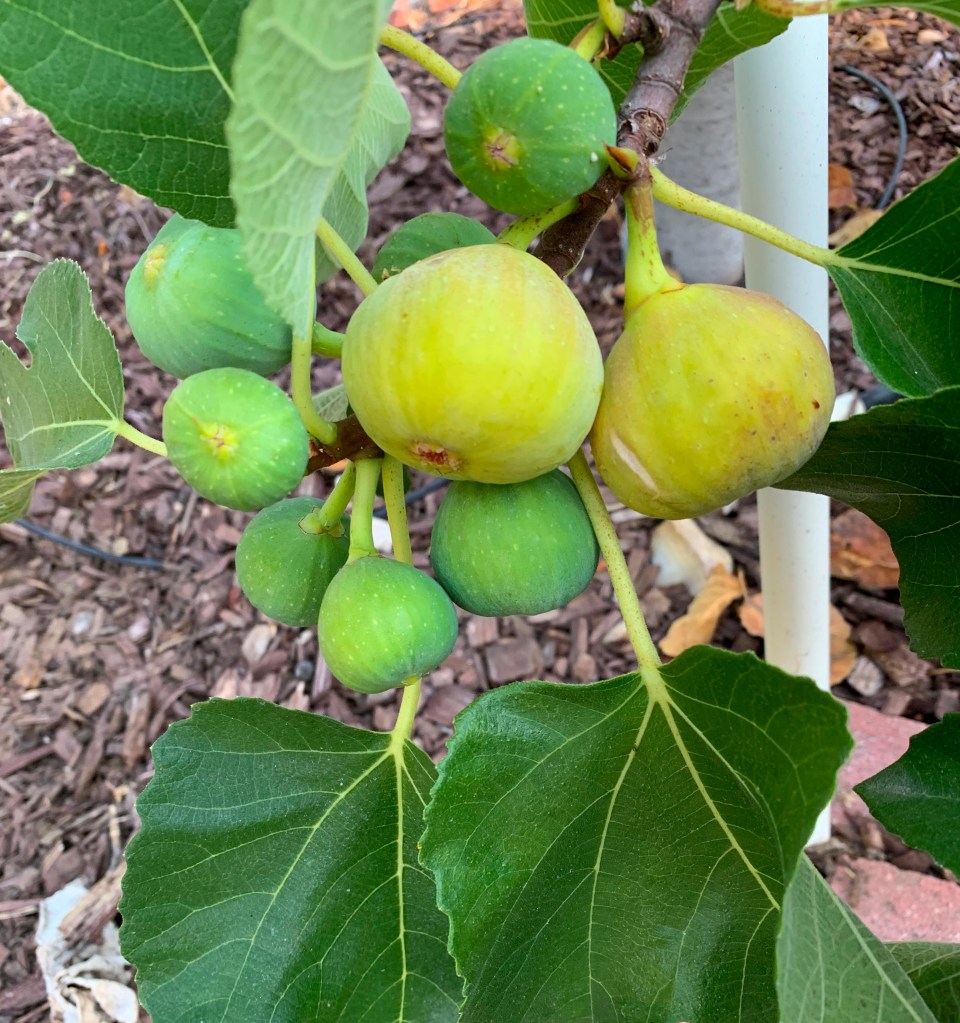
Figs are doing well. Our Indian Fig (looks kind of like a Turkish brown fig) gets ripe in mid summer and has now finished for the season. The Green Fig (looks like a Genoa fig) is the late summer and fall producer and we are getting a good harvest now. We also have a volunteer fig that produces a smallish round fig that is more juicy and slightly tart.
Meyer lemons are picked regularly and still have more hanging on the tree. Nice large fruits that fortunately stay fresh on the tree for a fairly long time, so we can pick a few at a time and leave the rest for later harvest.
Sweet lemons are producing nice large fruit with lots still on the tree.
Shallots were harvested in early July and have been curing (drying). Just finished processing, sorting and cleaning them up to be ready to use. We got about 7 pounds from two rows of seeds, so pretty good. See our post on the Shallot Experiment for all the details and photos.
Still Growing
The fall harvest crops keep growing. Our sweet potato bed is filled with vines and hopefully lots of underground production as well. We are starting to tie the vines to posts so their long arms don’t sprawl all over the neighboring garden beds. Usually harvest is in November so lots of growing time left.
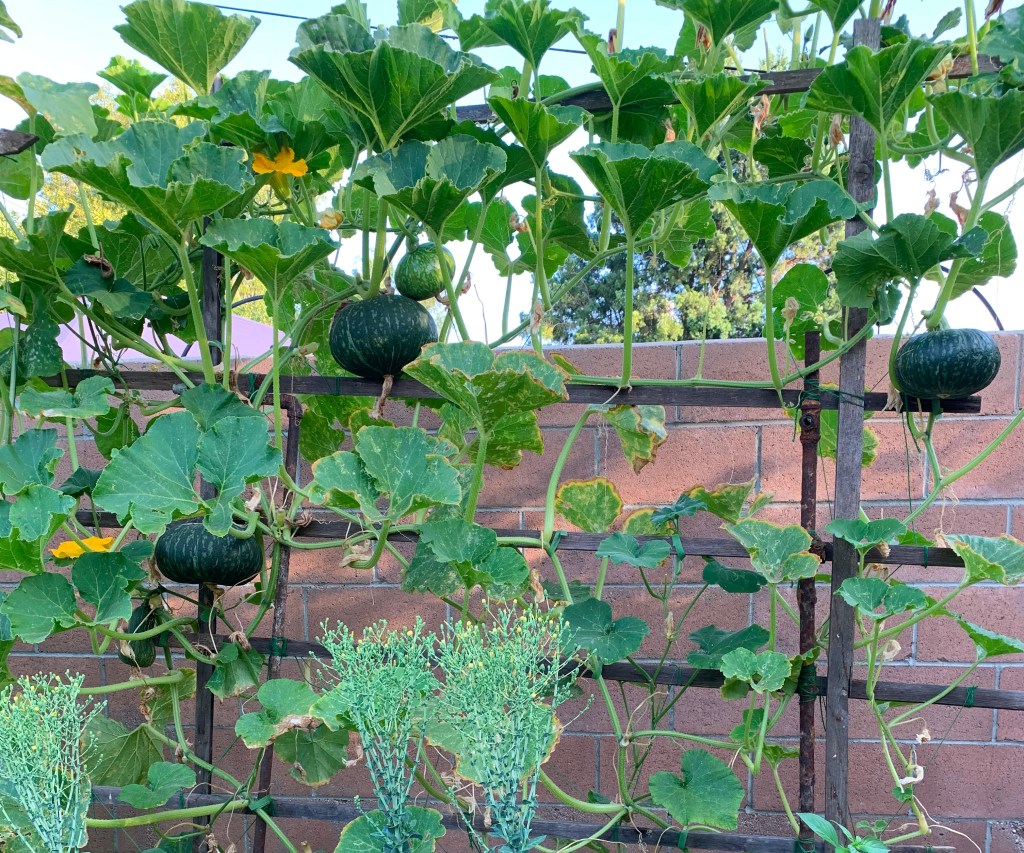
Winter squash is something we are doing different this year. We are trying a new approach of growing them vertically by putting them on a trellis. We have two Kabocha squash and two are a small butternut squash variety. The Kabocha squash took off and quickly filled the trellis up about 7 feet tall and spreading at least 6 feet wide. It looks a bit like a squash espalier.
Pomegranates are growing in their nice squirrel protection screen bags. See the post on making these squirrel resistant fruit protectors. Probably late October or November before they are ready to harvest. Last year the squirrels did not leave any for us. Hopefully these new protectors will do the job.
Beans are coming along in one of our new garden beds. No production yet as they’ve only been growing a few weeks. Beans were planted late in the season to fill the space destined for garlic this fall.
Summer squash is also in the new garden bed and looks like they will beat the beans in getting a quick harvest started.
Garden Flowers

Rudbeckia, also called Black Eyed Susan, is a great summer flower in our garden. The bushy plants are filled with sunny yellow flowers with a dark central disk. Each flower produces hundreds of tiny seeds that are attracting Lesser Goldfinch for a good breakfast or dinner! After planting a few Rudbeckia one year, they are now coming up everywhere in the garden.
Cosmos are doing well in the hot dry summer weather here. Very hardy and colorful. Ours are mostly in shades of orange and yellow. The Goldfinches are also seen munching away on their seeds (which seem more meaty to me than the tiny Rudbeckia seeds).
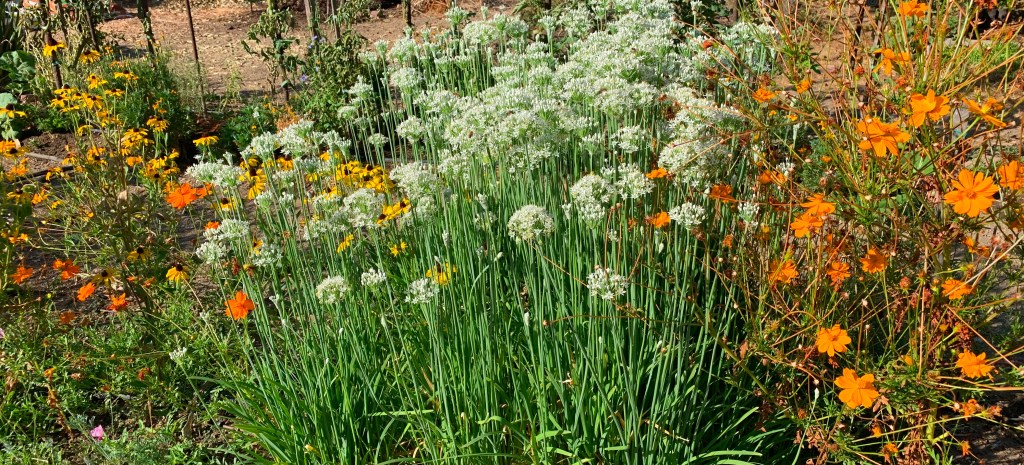
Garlic Chives are starting to flower with their round umbels of starry white flowers. The bees like having those large clusters of flowers where they can find a few meals without having to travel.
Marigolds are a wonderful summer flower. They are quite hardy with a strong pungent aroma when touched. We planted a few here and there in some of the vegetable beds to help with pest control, as they help eliminate root knot nematodes. Their strong scent may also deter other 4 legged varmints from doing much snooping around the garden beds!
Ratibida, also called Prairie Coneflower or Mexican Hat, is another drought tolerant summer flower growing in our garden. Flowers are not showy like Rudbeckia, but add some color and texture to the garden.
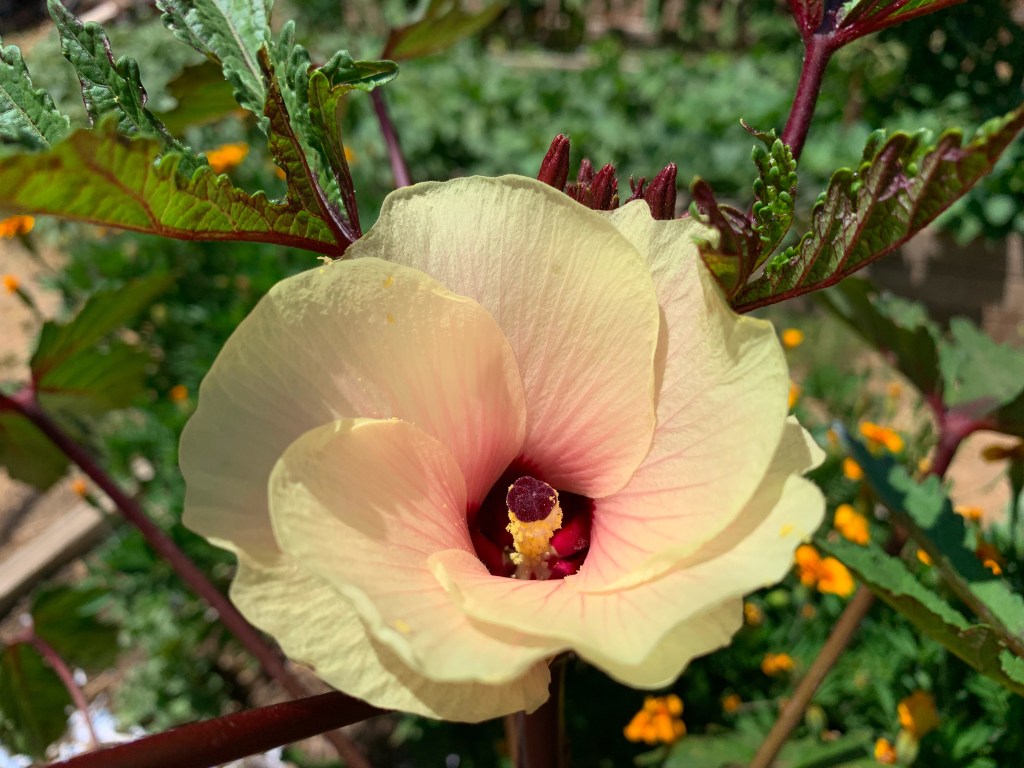
Okra is not only producing edible fruits, but has very showy flowers. The flowers have a short life as they open in the late morning, around 10am, then close up in the afternoon, around 3pm. The next morning there is a little nub of an okra growing.
New Saffron and Garlic Beds
We are moving into a some new adventures with the addition of 3 new large raised beds for our fall planting of saffron and garlic. See our post on building low cost raised beds.
Growing saffron sounds fairly easy, harvesting is another matter. Since there are just 3 small stigmas in each flower, harvesting sounds a bit tedious. Harvesting tool of choice is a pair of tweezers, according to some sources. Lots of questions on the details of the harvesting, so it will be an adventure. We’ll write a post about our initial saffron experiment once we see how the harvesting goes. We’re expecting flowering of saffron in November.
Garlic is a more of a garden standard, though we have not had garlic as a real crop in the past. We will be jumping in and growing 8 varieties of garlic with planting this fall and harvest next summer. This is an experiment to test the process and productivity of garlic in our garden. We’ll be writing a post on this experience as well. Planting is planned for November, so stay tuned for a future post on our garlic planting experiment.
 Zanganeh Garden