


Saffron is often considered the most expensive spice. The spice comes from the stigmas of the saffron crocus flower. Each flower has 3 of these long threadlike structures. It takes around 500 of these threads to make one gram, or about 170 flowers. A kilo would take about 170,000 flowers!
Growing Saffron
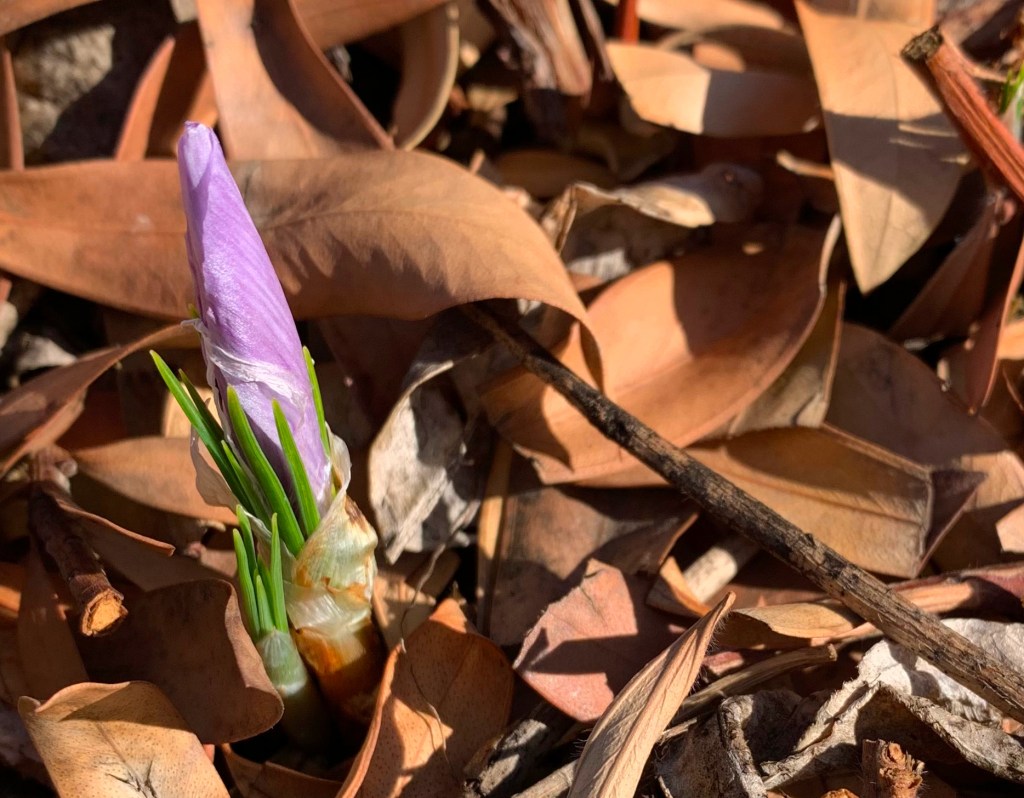
Saffron is a fall blooming crocus. The plants are dormant over the summer and the flowers bloom in fall or early winter as the leaves are just starting to sprout. Leaves will continue to grow into the spring. Like other bulbs, they will have leaves through the spring then the leaves die back and they go dormant during the summer.
They seem to like a cool winter environment. In the United States, it appears Vermont is one of the larger producers of Saffron. There are growers in Ontario, Canada as well as Northern California. From the information we found, it appears our winters may be a little warmer than the ideal for saffron, but why not experiment a bit? Since they like a dry summer, we certainly can provide that.
Our Saffron Experiment
As a fun experiment, we planted 50 saffron crocus corms in October 2022. With planting on a 4 to 5 inch (10-12 cm) spacing, they fit in 8 square feet (less than 1 square meter) of garden space. A few leaves and flowers started popping up in late November. Each plant can produce multiple flowers, but this first year we had a total of 15 or 20 flowers. No more flowers after mid December, so a short harvest season.
They can divide to create triple the number of plants every year. After a few years they need to be dug up and replanted to keep from getting too crowded (like many other bulbs). We’ll see how they do next year when they have had more time to grow and get adjusted to their new home.
Saffron Harvesting
The flowers go from bud to open flower in just a few days. When they are ready they open in just a couple hours, generally in the early morning. Harvesting daily in the late morning seemed to work well at catching the flowers at their prime. The flowers are pulled from the plants by pinching off the flower from the base. Another benefit for the picker is they have a wonderful sweet fragrance!
Some people take the approach of harvesting by taking a pair of tweezers and plucking the red stigmas out of the flowers. Most harvesters seem to prefer picking the whole flower then gently removing the stigmas as a separate process. The stigmas are joined at the base. With care you can get a trio of stigmas as one unit. To give the highest quality saffron (super negin) the yellow-orange bottom of the stigmas are pinched off, leaving only the dark red upper portion of the stigmas.
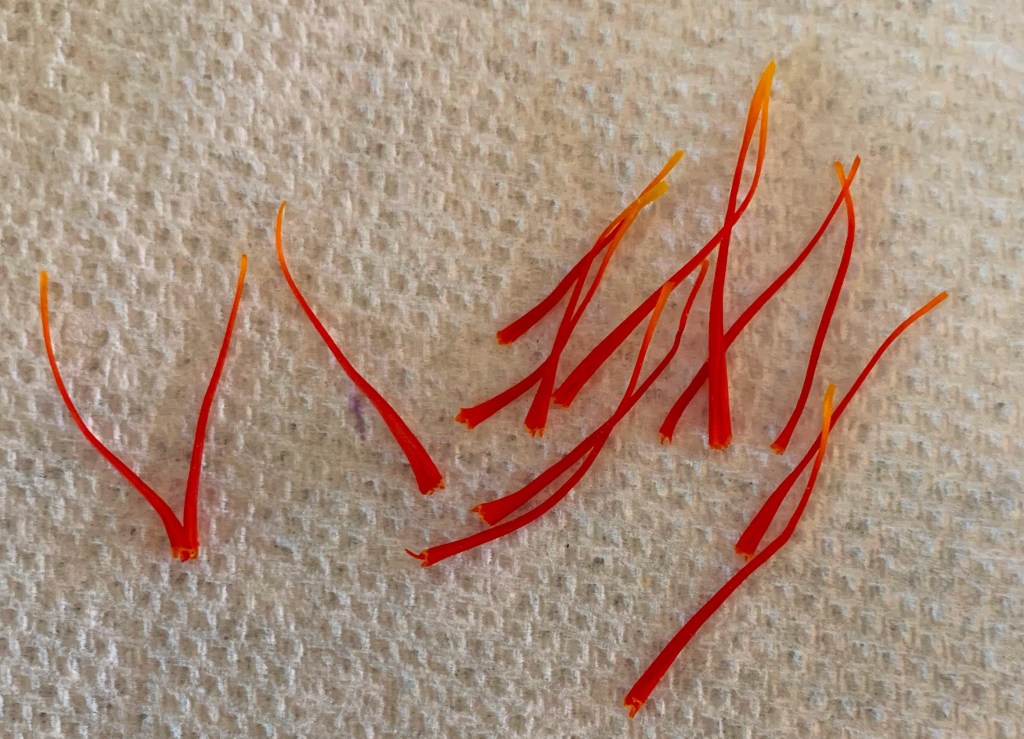
After separating the stigmas from the flowers, they need to be dried. They dry quickly, being so small and thin. Drying is done at a low temperature, around 120 to 140 Fahrenheit (50 to 60 Celsius) for about 30 minutes. Once dry enough to break rather than bend, they are ready to store in an air-tight jar until ready to use.
Next Steps
By late December 2022 there were about 40 plants with leaves coming up out of the 50 corms we planted. Shortly after planting them, one of our local critters (raccoon, squirrel, possum?) did some digging around the newly planted saffron. Not sure if someone was digging for saffron and ate some of them or if the saffron was just collateral damage from a search for other tasty tidbits. They appear healthy and happy now.
We’ll let them grow over the spring and then they’ll get a good rest over the summer. Hopefully next November will bring us a good crop of new flowers.
 Zanganeh Garden