

Why Grow Garlic?
Garlic is a regular item in most of our cooking. We love the taste and it has a long list of health benefits. But we’ve not had garlic on our list of crops. Now we’ve decided to jump in with a major garlic planting of about 500 plants. Here’s the background.
Many years ago we planted a few garlic cloves around our pomegranate trees as a pest deterrent. The garlic grew, but never vigorously so they were mostly ignored.
On a whim, we pulled a couple of the small garlic plants and moved them to other spots in the garden. No real attention given to them, until summer of 2022 while working in one of the herb beds we came across one nice sized garlic plant. It had a nice healthy bulb on it and was a hardneck variety. We had not done any research on garlic before this, but did know the softneck varieties are typically grown in mild climates, like California. Hardneck varieties are reputed to do best in colder climates. So having a nice hardneck garlic bulb was a surprise.
Time for more research into garlic. We found there are many interesting varieties of garlic in both softnecks and hardnecks. For those new to garlic varieties, the hardnecks have a stiff stem in the center of the bulb, while softnecks are more like an onion without that hard stem. The vast majority of garlic in the grocery stores are softnecks, at least in our area.
We found many of the heirloom or boutique varieties of seed garlic command a premium price, compared to the garlic bulbs in the store. Also there seemed to be a short supply with many varieties getting sold out early in the planting season.
Growers raved about the better flavor of homegrown garlic. Like the difference between store bought and home grown tomatoes. Since we appreciate the great flavor of garlic, maybe growing our own would give us reasons eat even more of them!
Growing garlic did not sound too difficult. Basically stick the cloves in some good fertile soil in late fall, mulch in for the winter, keep them well weeded and watered, then dig them up in the summer. They do need some curing (drying) to develop the best flavor and to prepare them for storage, but they generally seemed an easy crop to raise.
We had space available to put in a few new raised beds so decided on a moderate sized test run to see if we could grow enough for our own use and also have some seed garlic to share with other gardeners.
Garlic Planting Plans
Looking at planting suggestions, we learned a 4 foot by 4 foot bed could plant 96 garlic cloves. A pound of garlic is roughly 8 bulbs. The number of cloves per bulb varies by the variety, some with 4 very large cloves, others with 12 or more smaller cloves. So a pound of seed garlic should give us 50 to 100 cloves, or about right for a 4 by 4 bed.
We decided to go with 8 different varieties to evaluate how they grow in our climate, their productivity, time to harvest and of course taste. We built 3 new 12 foot by 4 foot raised beds (see our post on Building Low Cost Raised Beds) that would give us ample room for those 8 pounds of garlic.
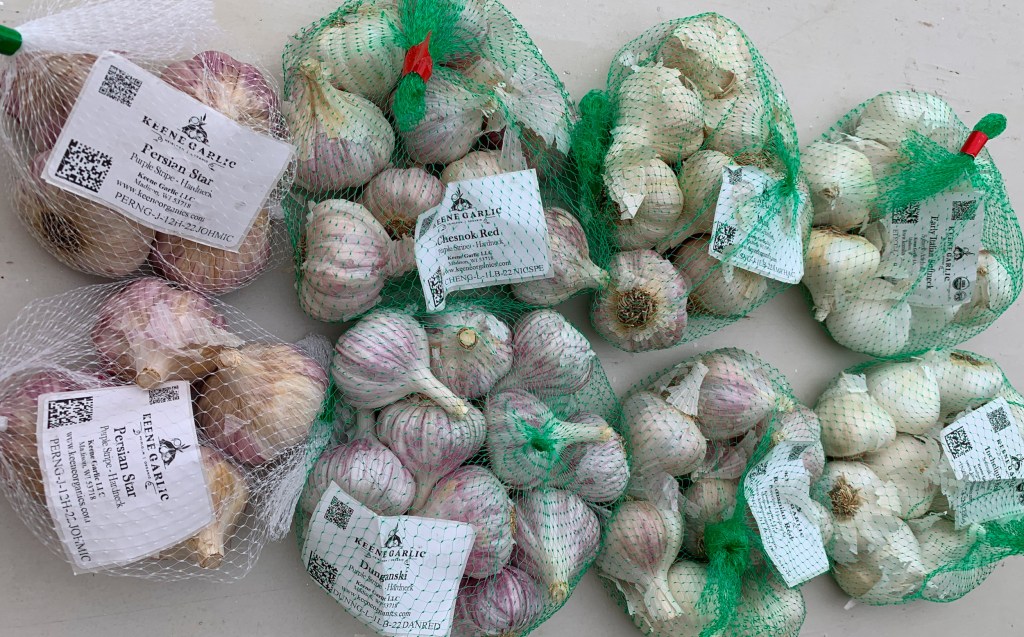
One of our sources of garlic growing information was from Keene Garlic in Wisconsin. They have many varieties of seed garlic as well as great growing information. Based on their recommendations, we selected varieties expected to do well in our climate, two softneck and six hardneck varieties. Garlic for seed is typically shipped in October, but we placed orders months before to assure we’d get the varieties we wanted.
Garlic Varieties
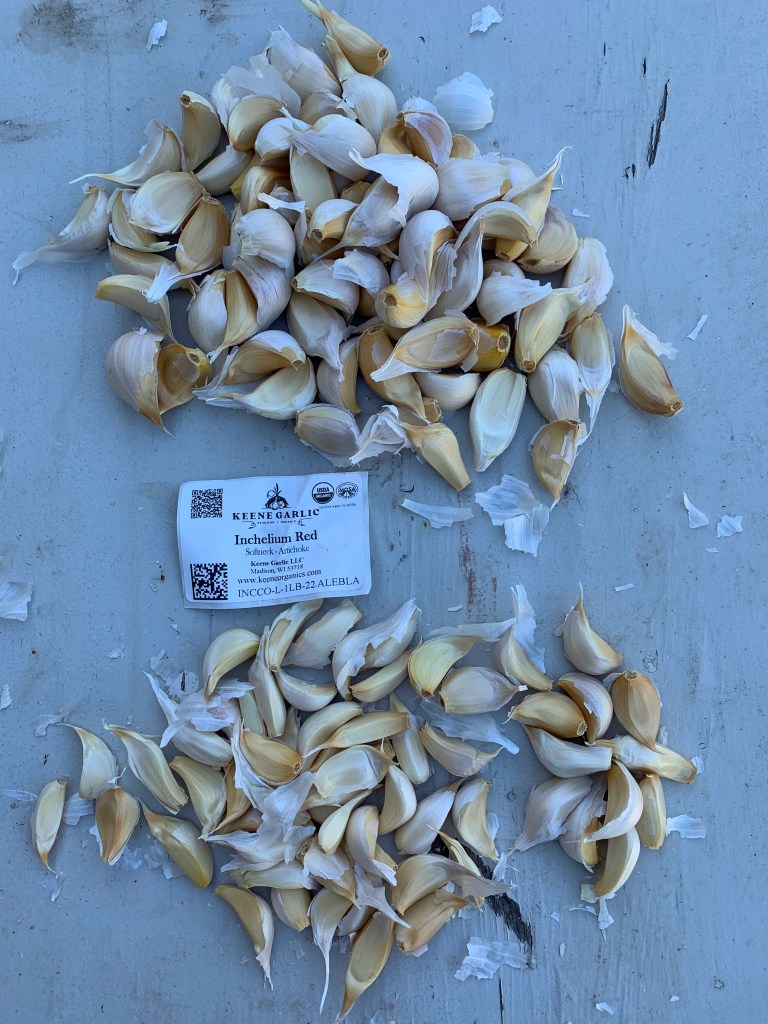
The two softnecks varieties we ordered are Inchelium Red and Early Italian. In addition to the softneck and hardneck distinction, there are a number of subtypes of garlic. Both of the softnecks we ordered are considered “artichoke” type. The softnecks do well in mild winter climates, one of the reasons they are heavily planted around Gilroy, California (just south of San Jose). Gilroy calls itself the “Garlic Capital of the World”.
These softneck varieties had 12 to 14 cloves per bulb, 8 or 9 cloves of good size, the rest a bit small for planting. The larger the clove, the larger the resulting bulb, so we plant the large ones.
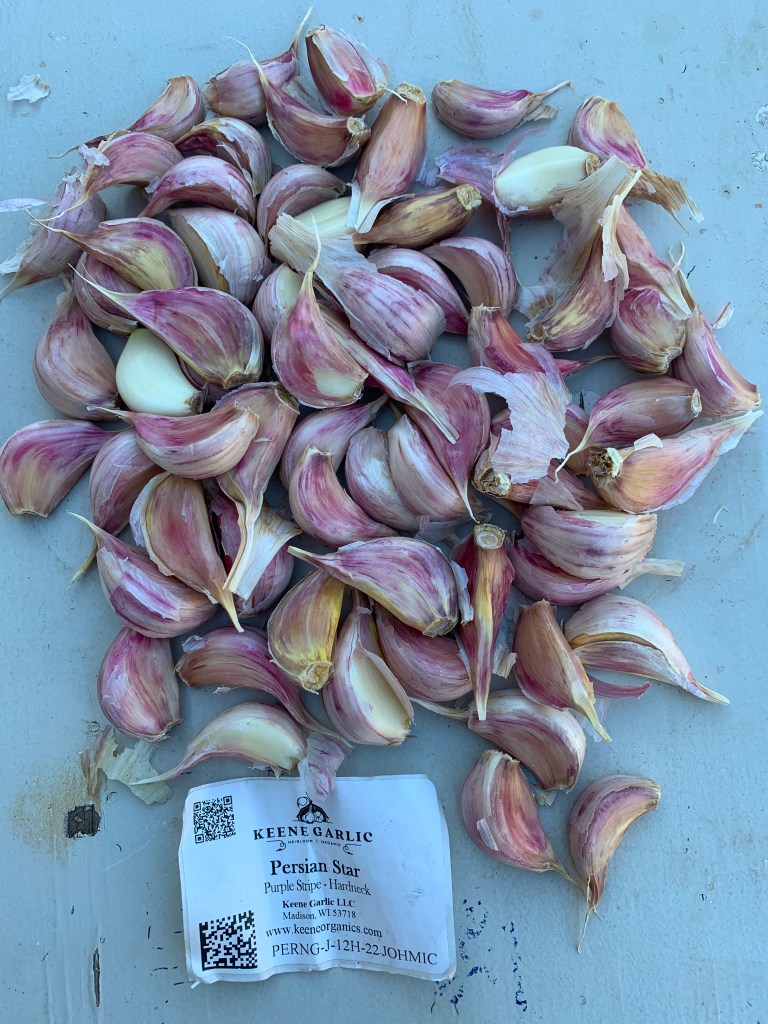
For hardnecks, we have 3 of the “purple stripe” type. Those are Chesnok Red, Dunganski and Persian Star (couldn’t resist planting one with that name). As their name implies, these typically have a bit of nice red/purple stripes coloring the skins. You can see that in the photo at the top of this post and the photo on the right. These averaged about 10 to 12 cloves per head. Larger cloves than the softneck and not as many.
The remaining 3 hardnecks are the “porcelain” type. We have German Extra Hardy, Music, and Romanian Red varieties. These had 4 to 6 very large cloves and no small cloves in each bulb. Those juicy large cloves already puts them on the top of our list for a good roasting/cooking garlic!
Hardneck garlic varieties like a cold winter to do well. They are planted in late fall to get that winter chill, then they’ll pop up in the spring when weather warms a bit. They are popular in cold winter climates where they do well.
For us, we put them in our “Wisconsin simulator” (refrigerator) for about 3 weeks of “winter” weather (not too cold at about 40 degrees Fahrenheit, or 4 degrees Celsius). Hopefully this “vernalization” will stimulate them to be ready to grow.
Planting – November 2022
The cloves are first gently separated from the bulbs. We then give them a quick disinfecting by soaking in hydrogen peroxide for 10 to 20 minutes. This reduces the chance of introducing any pest or disease problems that may come along with the seed garlic.
Next we soaked the cloves in a dilute fertilizer solution for 24 hours. We used Neptune’s Harvest liquid fish/seaweed fertilizer, diluted 1:128 (1 oz per gallon of water). The fertilizer should give those cloves a boost to get started quickly. One question is how much difference this might make, so we did a little experiment on some of them by soaking in plain water rather than fertilizer. We’ll see if it makes a difference.
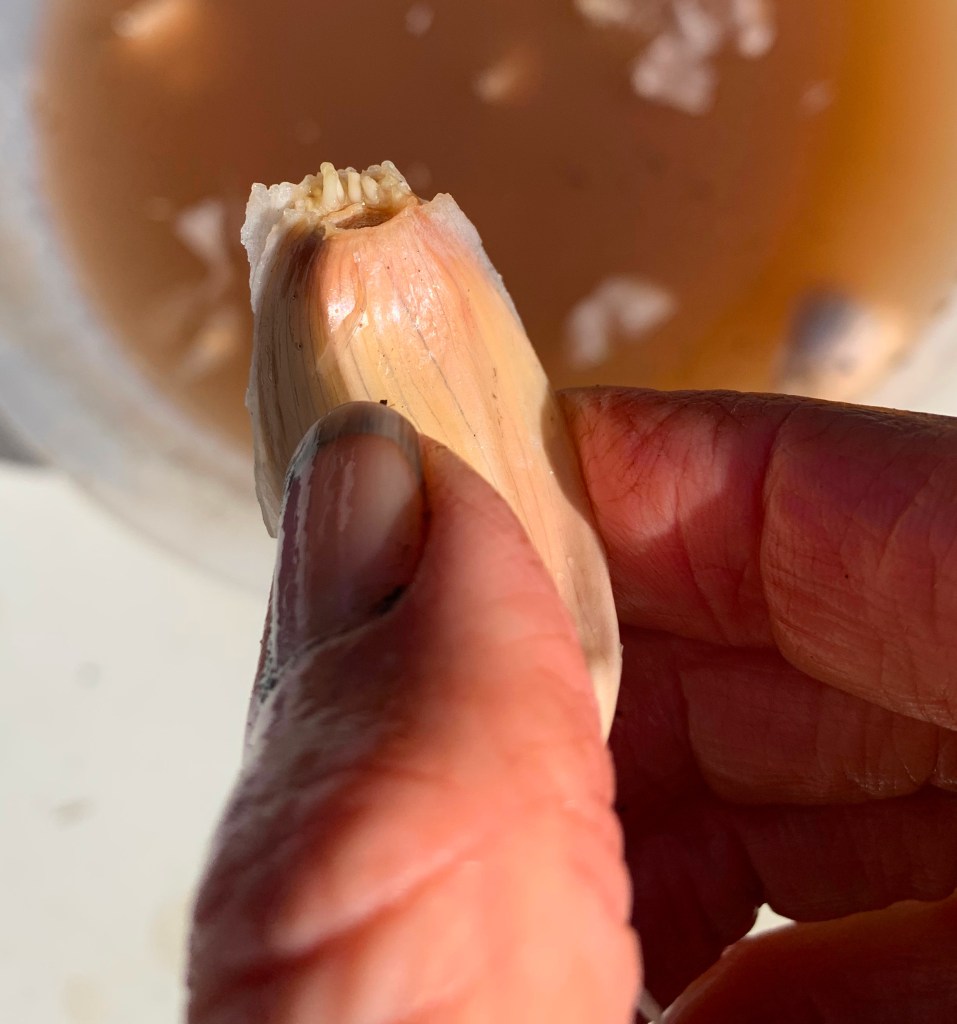
After 24 hours of soaking, many of the cloves were already growing roots! They were ready to grow.
Garlic are heavy feeders, they like lots of good organic material and fertile soil. Adding compost or good organic fertilizer is recommended. We added a dose of organic fertilizer along with some kelp meal in the top 6 to 8 inches of soil.
We laid out rows for the garlic at about 6 inch spacing and planted garlic cloves about 5 inches apart in the rows. Digging shallow trenches for the rows made it quick to push the cloves in the soft ground so they would be 2 to 3 inches below the surface when the trenches were covered.
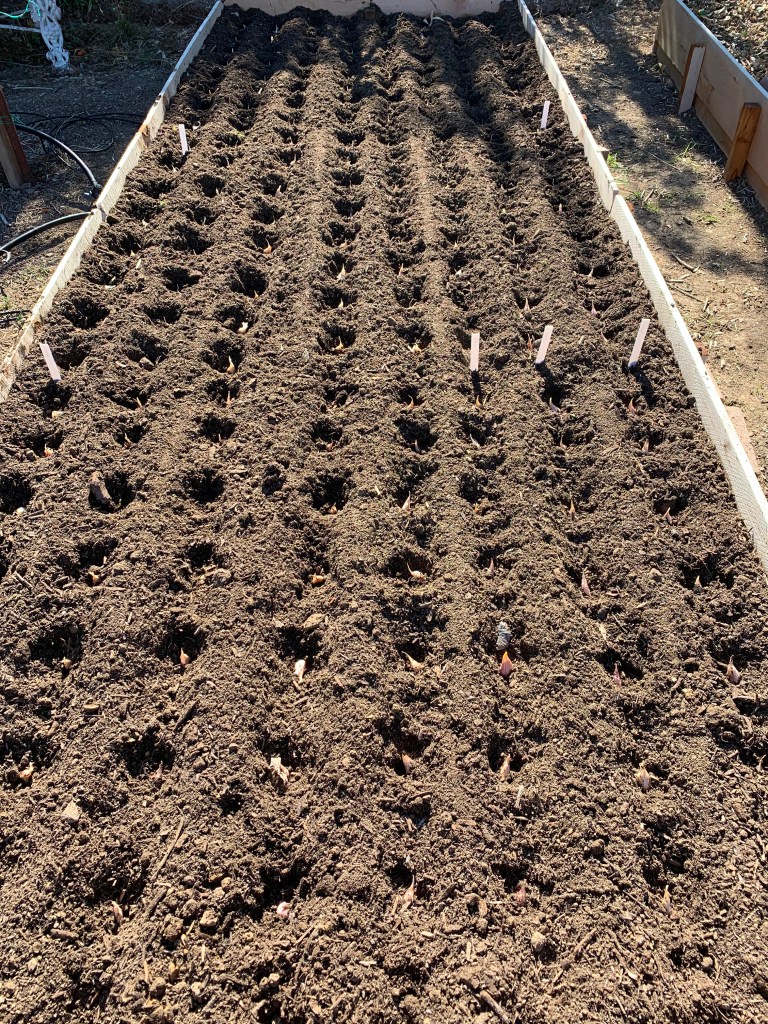
Once they were all planted the bed was covered with mulch. We watered them in well after planting to get them off to a good start. In our relatively warm winter climate, they came up quickly, both softnecks and hardnecks.

Progress – January 2023
In January, all the garlic beds are looking great. Good growth on all the varieties so far. The rain in early January got them well saturated, but they appear to be doing well without getting too water logged.
The varieties with the larger cloves (German Extra Hardy, Romanian Red and Music) have the largest plants so far. Certainly possible they are simply large plants overall. Looking forward to learning more about the growth of the different varieties.
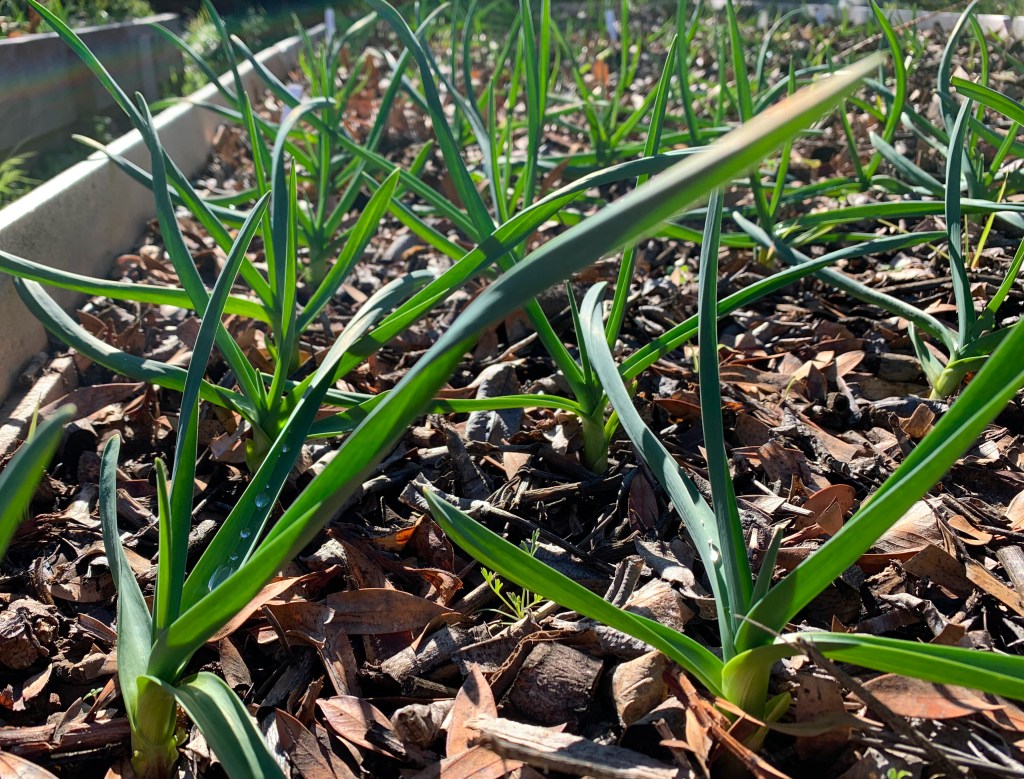
One of the tests we did was a vernalization test. The question was how much difference does the vernalization make? Some of the German Extra Hardy bulbs were not given the vernalization treatment, they were just stored outside in a paper bag. So they had some cool nights, but also warm days.
Looking at the growth so far, the vernalized cloves do appear to be larger and more vigorous, but both groups are looking healthy. We will continue to watch them. The real test will be how productive they are at harvest time.
For the test of the fertilizer soak compared to water, at this time the difference is small if any. We’ll keep an eye on them and see if production is different for the two groups.
Progress – February 2023
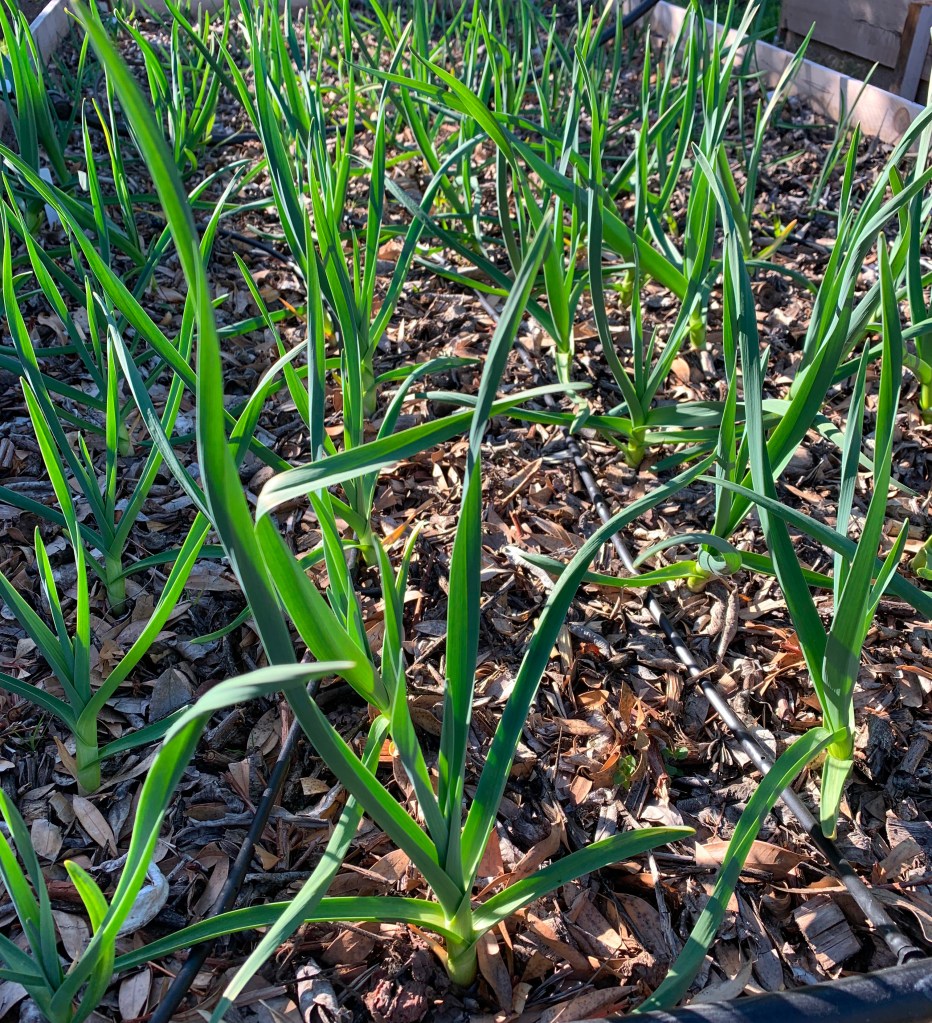
All the garlic is looking good here in mid-February. The porcelain varieties (German Extra Hardy, Music and Romanian Red) have really taken off and are twice the size of the purple stripes. Of course they started with cloves about twice the size to begin with. The softnecks (Inchelium Red and Early Italian) were planted a few weeks before the others, so they are not far behind the porcelains.
Next Steps
With a good start to growing, we’ll keep the garlic weeded (they don’t like to be crowded) and watered with one or two doses of fertilizer in the spring. We’ll post some updates showing the progress.
When harvest time comes this summer we’ll be sure to post a blog with all the exciting news. Most likely it will be around July or August depending on how quickly these garlic mature. It will be interesting to see which ones are ready to harvest first.
You can follow us on Instagram to see posts there, we’re @Zanganeh.Garden.
We welcome any thoughts or comments below. You can also choose to subscribe using the button below. That will notify you when we publish new posts.
 Zanganeh Garden