

January had a nice wet start giving us a good dose of much needed rain. We had a few storms with 1 to 3 inches of rain each. Some heavy rain at times, but no problems right around us. Now we are drying out, even had Santa Ana winds blowing a few days with humidity dropping below 20%. We ended the month with more typical weather, light frost at night, temperatures in the 30’s, and days up in the 60’s.
January is usually a good time for planting early vegetables, but the rain slowed our planting. We are working to catch up and as beds dry out more seeds will go in the ground. Since we harvested and cleaned out most of the beds in November and December, it will be a month or two before the beds fill out again.
Contents of this Post
Here are what we cover in this update:
- Garden Sounds – audio collage of our garden bird visitors
- Harvesting Now – what we are picking (and our squirrel)
- Flowers and Herbs – flowers blooming in our January garden
- Coming Soon – updates on the shallots, garlic, seedlings, and volunteers (like Miner’s lettuce)
- Visitor Log – who’s in the garden (mostly our flying feathered friends) with a few surprises, video and audio of our visitors
- New Music – info on our latest recordings
Garden Sounds
Here’s an audio clip created from a collage of recordings in our January garden.
Time stamps of first appearances
0:00 – Oak Titmouse (continues through most of the recording)
0:11 – Red-shouldered Hawk
0:26 – Song Sparrow
0:31 – Spotted Towhee
0:51 – Acorn Woodpecker
1:07 – Lesser Goldfinch
Harvesting Now
Citrus is in prime season with Satsuma Mandarin Orange, Meyer Lemon, and Sweet Lemon all ready to eat. The Mandarins did not produce as much as last year, due to heavy pruning last spring. Still, plenty to eat, even with our local squirrel grabbing one here and there.
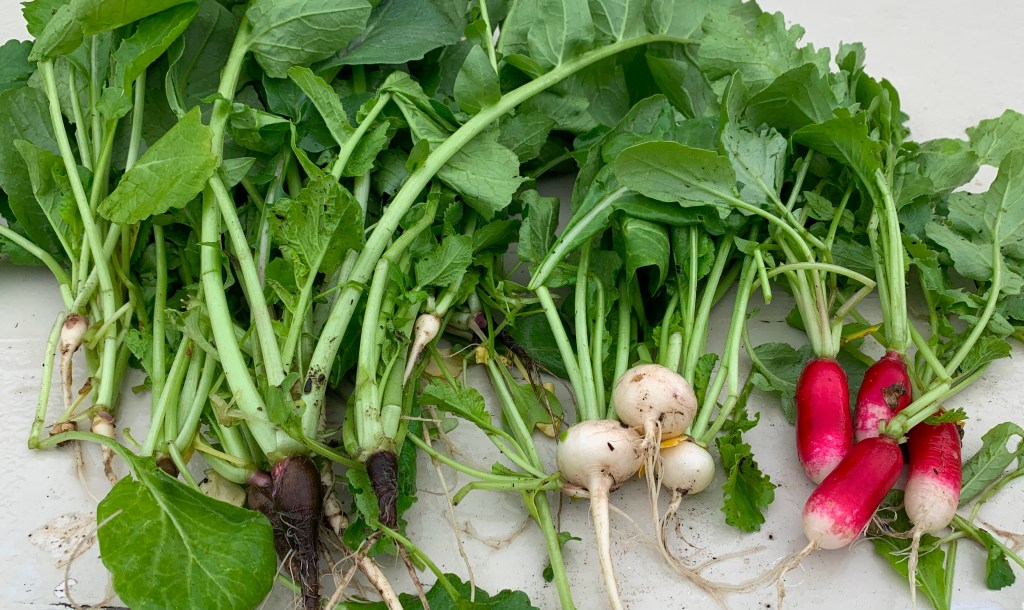
Radishes are giving us nice early rewards. We usually add radishes along with other plantings since they are up and harvested before other plants really get rolling. Our favorites are the French Breakfast style radishes. They grow quickly, produce a nice sized radish, and when the weather warms up they don’t bolt as quickly as other varieties.
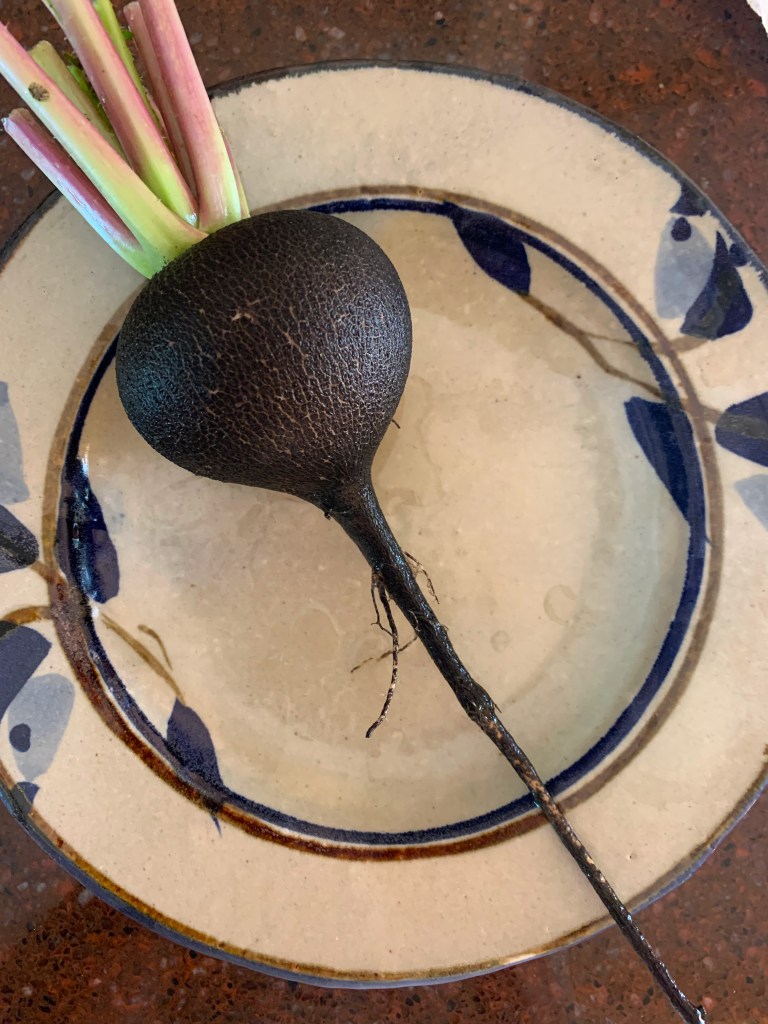
Black Radishes are also doing well. They take longer to mature and grow more like turnips than radishes. The leaves and roots get larger than other radish varieties. With their strong pungent bite they are a bit intense for eating fresh. We tend to use them in combination with other foods, or pop them in a green smoothie for a little extra zip.
Arugula likes the cool weather and is giving us nice greens. The standard arugula can get fairly large. We prefer to harvest on the young side, when it is more tender. We have let some go to seed and the finches are quite fond of the seeds. Later in the spring they will be having a feast on the volunteer arugula that now grows in many corners of the garden.
Chard keeps producing through the winter, giving us nice winter greens. They are also popular with the Ruby Crowned Kinglet we see visiting to grab a quick snack of aphids.
Collards and Kale are other good winter greens. Ours are holdovers from seeds planted last spring, so they will get retired when our recently planted kale and collards mature.
Flowers and Herbs

Rosemary is starting to bloom. For many of the Mediterranean herbs in the Mint family, winter rain is the signal to start growing and blooming. Our Rosemary is one of the first. Lavender will be following soon.
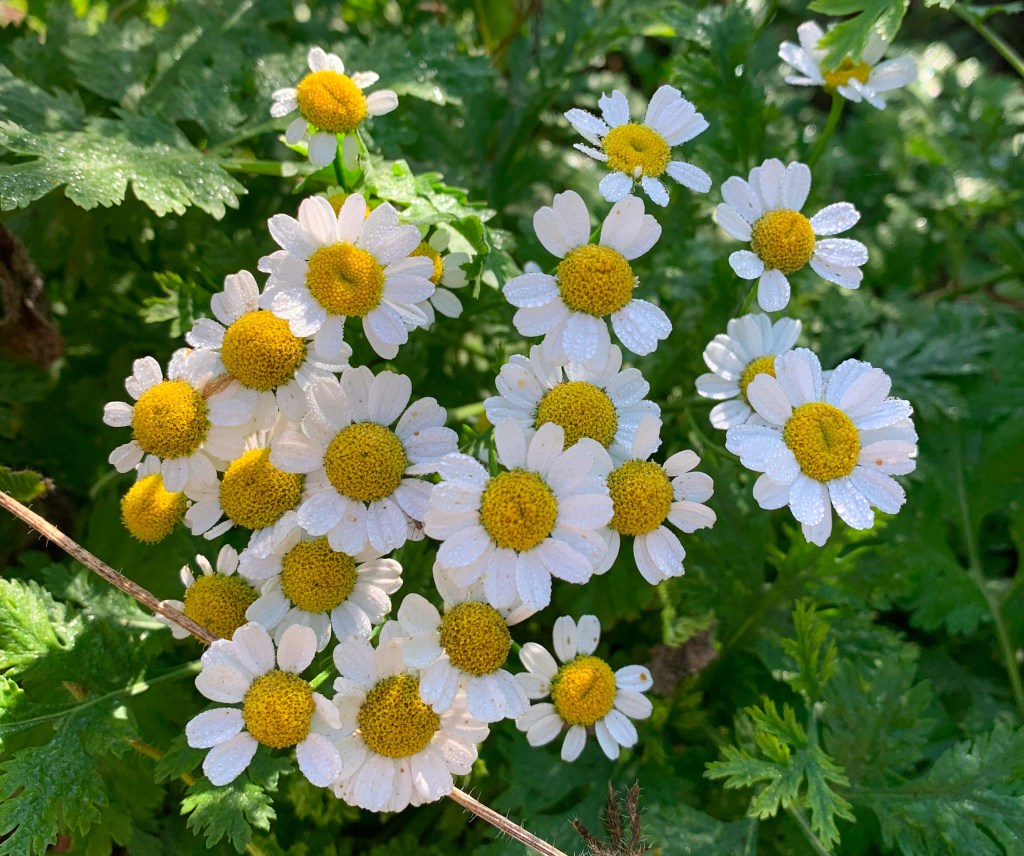
Surprisingly we still have Feverfew blooming. We did get it planted late, but didn’t think it would keep flowering through the winter. Adds some nice color to the herb bed.
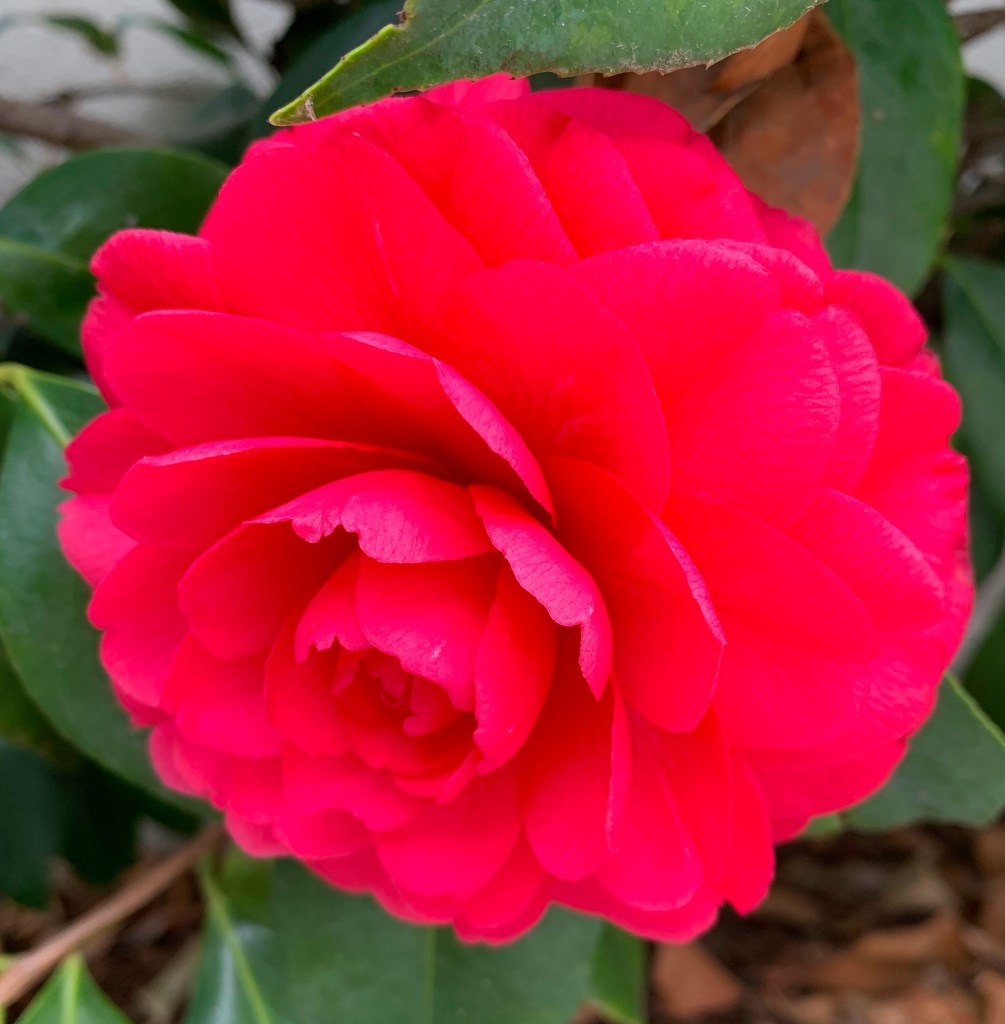
Camellias, another winter bloomer are just starting to bloom. They are always a great colorful addition to our garden when many other flowers are still sleeping.
Coming Soon
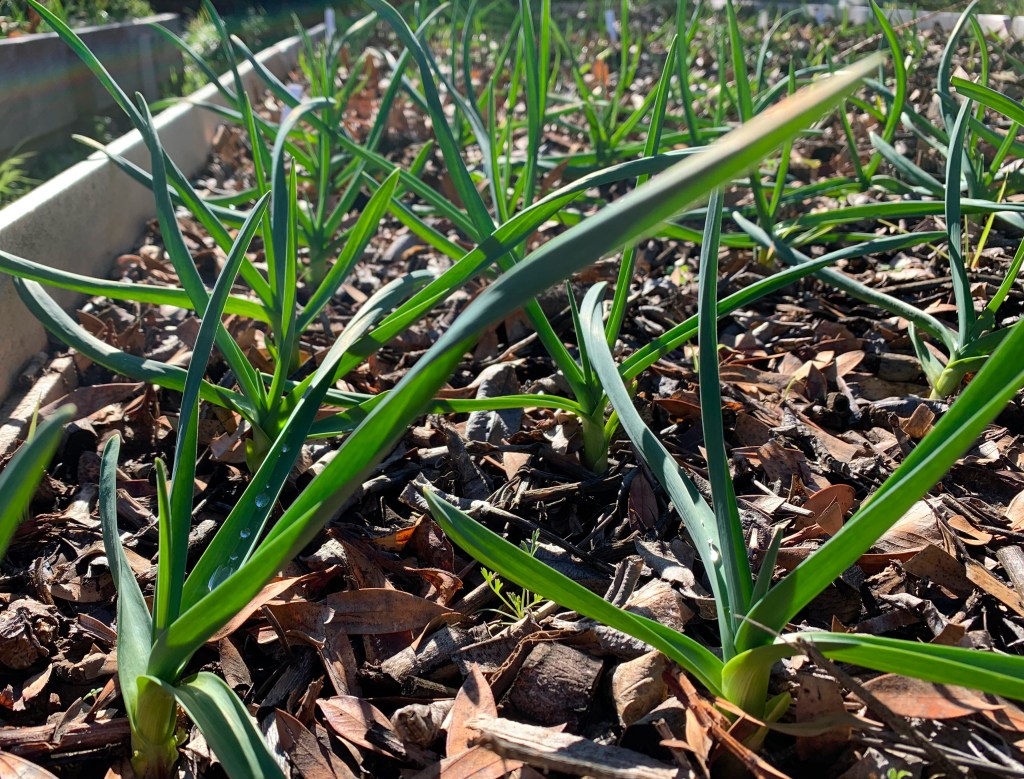
Shallots are in and looking good. We planted bulbs and seeds. The bulbs are vigorous with leaves up 8-10 inches already. Seedlings are still small, but as weather warms up they should put on more growth. Check out our post on shallots for more details.
Our new adventure in growing garlic is starting off well. Have had a few that were dug up by one of our night visitors. Our prime suspect is a raccoon, but could also be the possum who wanders through the garden on a regular basis at night. The garlic did not get eaten, so probably the varmint was looking for some of those green fig beetle grubs or a juicy earthworm.
For all the details check out our post on the garlic experiment.
We planted some Fava Beans as a cover crop in space that is designated for summer cucumbers. Last year we tried fava beans for the first time and they grew well, getting about 6 feet tall with multiple stems. Their main purpose is for improving soil health, but we may get a few beans before the cucumbers are ready to go in. An interesting fact is they are reported to be extremely cold tolerant, down to 10 degrees Fahrenheit (-12 Celsius). Those of you in cold climates may want to give them a try.
One of the beds we planted with a variety of winter crops (lettuce, beets, carrots, cilantro, radish) had seedlings come up but many of them were munched on and did not do well.
In our search for improvement, will like to investigate these problems. The real question is did they get eaten because they were weak, or were they weak because they got eaten? First thought was some slugs got to them. But the odd thing was the low growth was mostly on one side of the bed.
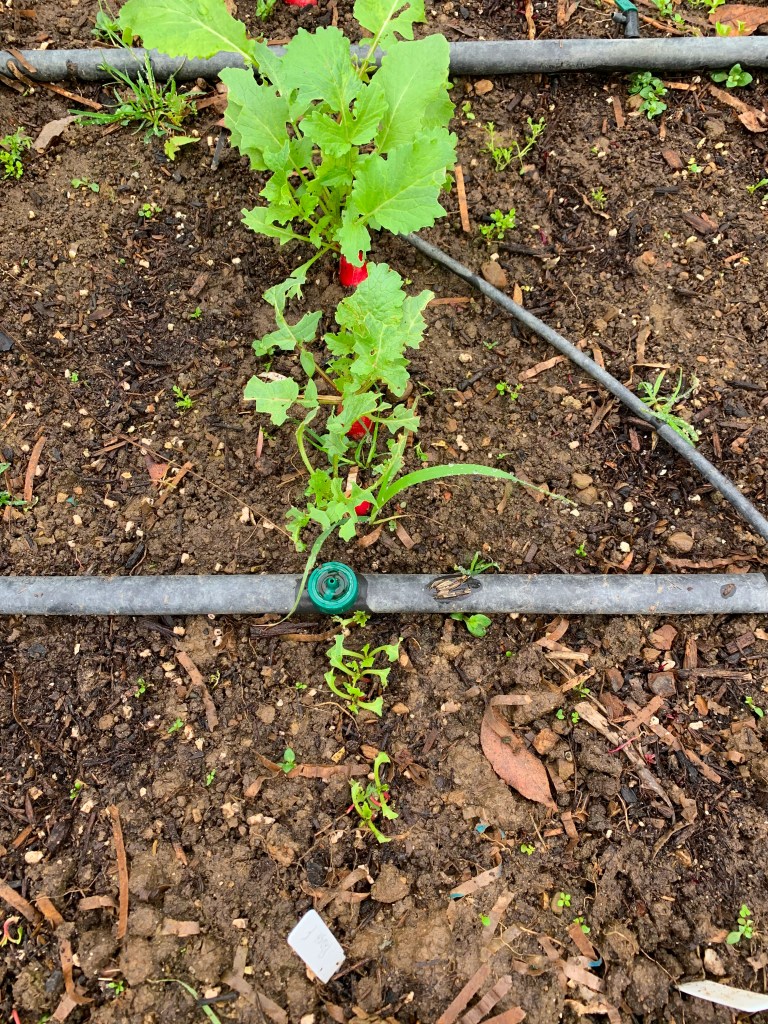
This bed had shade from a 6 foot tall pittosporum. In the deep winter half the bed was in shade. Since the most damage was on the shady side, that could be a factor. The pittosporum has been trimmed and as the sun moves farther north shade won’t be an issue.
We also noticed some of our bird friends are grabbing a few nibbles of greens! With few young greens around before the rains, this garden bed may have been a good snack for birds. The bed has now been replanted and we are hoping for great production.
We encourage volunteers in the garden. We collect seed from a number of plants so we let them mature. Our seed eating bird friends munch a few seeds and scatter the rest. Between our efforts and the birds, we get a good batch of volunteers coming up from seed.
One of our flower and perennial beds has a good crop of cilantro, lettuce and wild arugula coming up along with lots of California poppies, lupine and borage.
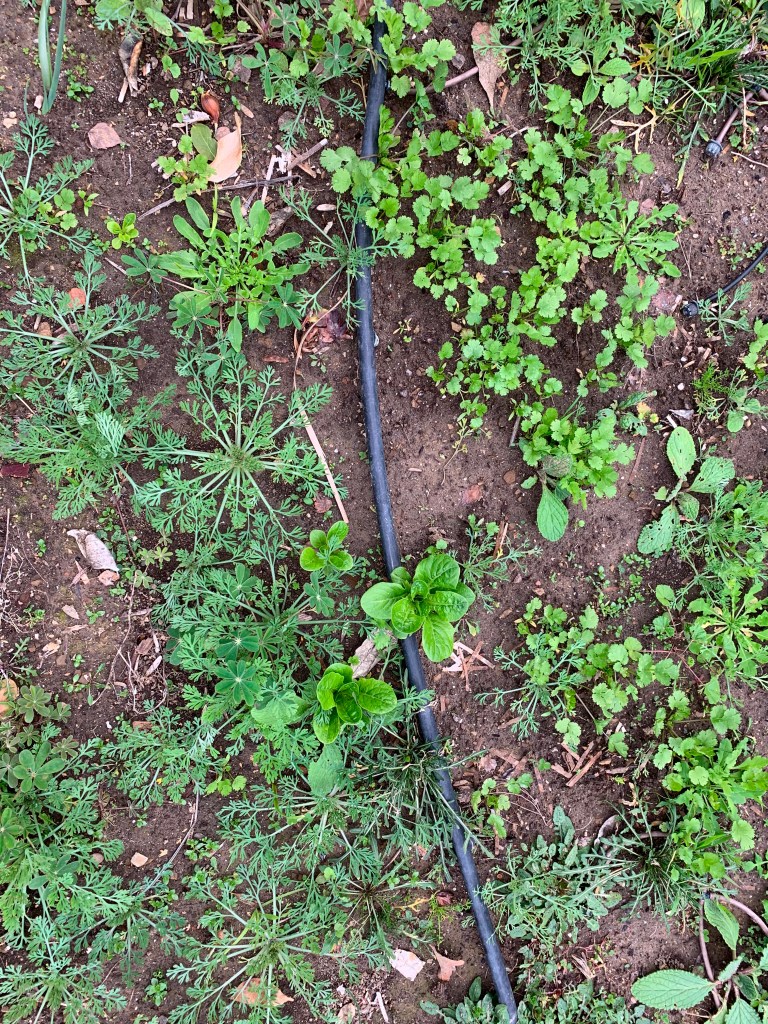
Another garden volunteer is Miner’s lettuce, or Claytonia. They are a native plant here in California and are one of the first plants up after it rains. They make a nice early green, though the flavor is a bit on the bland side. This year they are coming up in many more locations than last year. Not a problem as they mature quickly, produce their little white flowers, and fade away very quickly.
Wildflowers are coming up all over the garden. California poppies and lupines are the most obvious. Flax and Shirley poppies are also becoming large enough to notice. Other contributors are still small and hard to identify who’s who, but lots of seedlings popping up after our good rains. We scattered wildflower seeds in some of the open areas of the garden, adding to the self-seeding wildflowers from last year. Should be a great display in a couple months.
Visitor Log
We captured a few of our avian visitors on camera to share with you. We don’t put out a bird feeder, but have plenty of tasty seeds and bugs around to attract different species. Under the pittosporum is a favorite hangout for sparrows and towhees to find seeds. The wren grabs a little bug here and there. Of course that squirrel seem to think it is his pantry as seen in the video above! The little Ruby Crowned Kinglet does much of its feeding on the chard and kale, where he finds juicy aphids. Ruby doesn’t like to sit in one place very long!
We started tracking the bird visitors to see who is coming and going. Not all of them check in with us and show their ID, so we surely miss some.
Northern Mockingbird is the most regularly seen. He appointed himself the “khan” of our yard and sits in a high perch checking out everything that happens in his realm.
White Crowned Sparrow, Song Sparrow, Oregon Junco, California Towhee and Spotted Towhee are frequently seen foraging on the ground. They move slowly so we get a good view of them.
Our Black Phoebe likes to perch on low stakes around the garden and catches bugs, often in flight. We see her most days.
The Bewick’s Wren and Ruby Crowned Kinglet are small and dart around quickly, so can be hard to spot. The wren spends time poking around the ground and has that distinctive tail sticking up. The kinglet flits around very quickly. It has been around in the past, but until this month we didn’t have its ID. The key was seeing a quick flash of some red on the head one day. The males keep their red crown covered with other feathers until they get excited. Maybe as breeding season approaches we’ll get a good view of that crown.
Bushtits are another small quick moving bug eater. When they come, it is usually 8 or 10 at a time and they make a distinctive constant thin chipping call. When we hear that sound, we know the bushtits are around.
The Oak Titmouse is another small easily missed bird that hides in the bushes and trees. Probably visits more often than we realize.
Anna’s Hummingbird is another frequent visitor that is hard to see, but its distinctive call and that sound of an arrow zipping past make it obvious there’s a hummingbird around.
Larger birds we see and hear on a regular basis are Crows, Ravens, Acorn Woodpeckers (with their very distinctive woody woodpecker call) and Red-shouldered Hawks with their strong piercing call.
We started using the Merlin Bird App on our phone and find it helps with bird identification and information. The Sound ID was great to identify which hawk we had. Originally we thought our locals were Red-tailed Hawks, but the voice is clearly the Red-shouldered Hawk. The app also makes it quick to narrow down possibilities by visual characteristics and behaviors.
We had been seeing some Western Bluebirds around on a regular basis. We usually see them spring and fall. They seemed to be hanging around longer than usual, but now have not seen them for a few weeks. Guess they decided it was time to finally move on.
Also confirmed the identity of a couple White Breasted Nuthatches. We’d caught glimpses of what appeared to be nuthatches in the past. Their distinctive habit of walking down tree trunks headfirst is a good clue. Got a good view of them this month to confirm their ID. We don’t see them too often though.
Lesser Goldfinches are frequently seen munching away on seeds in our summer and fall garden. Unlike the sparrows who find seeds on the ground, the goldfinches like their seeds fresh, usually picking them right off the flower stalks. With no lettuce, cosmos or rudbeckia seeds they like around, we had not seen them lately. Then the dandelions started flowering and going to seed. The goldfinches were quick to come by and started plucking the seeds off the dandelions.
A notable guest was the coyote we saw one morning as it took a stroll down the sidewalk. Didn’t seem to be in a big rush, just intent on walking. A woman with a dog across the street did not even get him to turn his head. Looked like a healthy happy chap out for a morning walk. Unusual to see, especially during the day.
New Music
We have a few new additions to our Music page. Tutu Maramba is a Brazilian lullaby played on guitar and recorder. Lilliburlero is a popular dance tune from the 17th century performed as a recorder trio. Check them out, as well as our other music, here.
Find Joy in a Garden
We hope you are able to take time and enjoy a garden or get out in nature. Observe the antics of the critters. Relax and enjoy some peace.
Leave us a comment or let us know if there are topics you’d like to hear about.
Follow us on Instagram, @Zanganeh.Garden where we post short updates.
Use the subscribe button at the bottom of the page to be notified of future postings.
 Zanganeh Garden