

February came to a close by delivering a lot of rain for us. We had around 6 inches of rain in 2 days. Considering last season had just over 10 inches for the full year, this was significant! Major snow in our local Southern California Mountains left people snow-bound in 8 feet of snow!
The rain has soaked into our garden. Pleasantly surprising that our heavy clay soil did not get any pooling of water. Some deep soil moisture will help as our dry season will be coming soon.
With the rain and colder than normal temperatures the garden is still in a slow winter mode. We are still getting night temperatures in the low 30’s with a good frost many nights. Cool season seedlings are coming up and growing well. The rain has encouraged a lot of volunteers in the garden (some we’d call weeds, others are edible). Lots of our bird friends have stopped in for a visit and find things to nibble on, including lettuce, spinach and beet seedlings that we did not plant for them! We have plans to put bird netting over the new seedling beds soon.
Spring flowers are just getting started and will soon be popping all over the garden. The late fall plantings of garlic and shallots are looking great, not minding the cool wet weather at all. See our posts on garlic and shallots for all the details.
We are also working to replace the grass in our front yard with low water plantings. We are close to finishing stage 1, a test portion on one side of the yard. Despite good rain so far this year, our water supplies are generally low, so time to plant more plants adapted to our drier mediterranean climate.
Read on to get all the details.
Contents of this Post
Here’s a summary of what is in this post along with links to each section for quick access.
- Harvesting Now – what we are picking now
- Flowers and Herbs – Daffodils and early wildflowers are blooming
- Coming Soon – Seedlings are popping up, garden planning, seed starting and wildflowers coming up all over
- Visitor Log – Some bird friends caught on camera and new sightings
- Drought Tolerant Landscaping – Converting our grass to drought tolerant landscaping
Harvesting Now
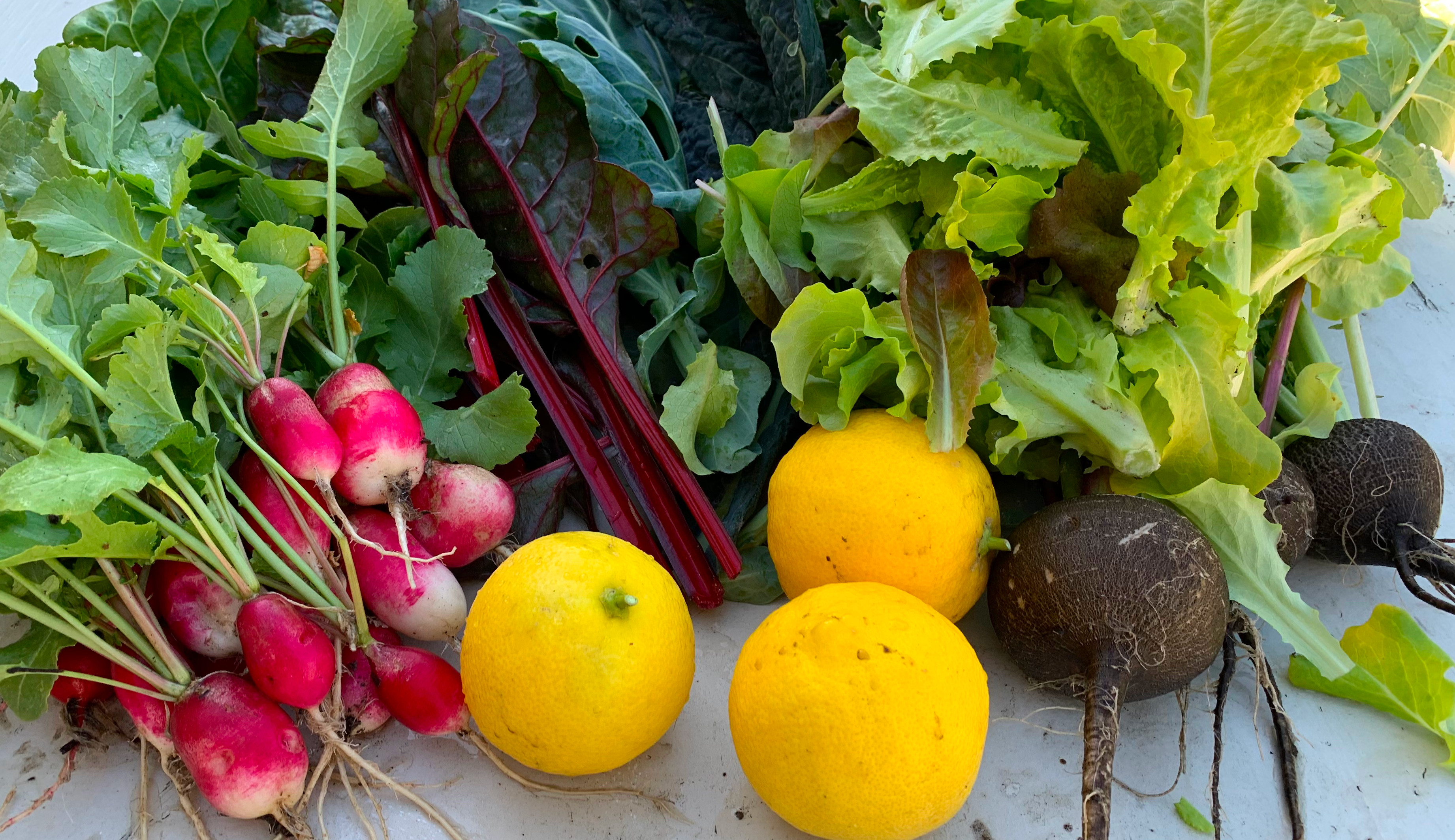
Radishes are quick to come up and doing well in cool weather. We’ve already harvested quite a few. We like munching on them and find the French Breakfast variety performs well for us. We use the young greens as a nice addition to our smoothies.
Black Radishes take longer to mature and produce some roots nearly the size of turnips. They are more pungent and we often add them to our green smoothies for extra zip.
Arugula likes the cooler weather and matures quickly. Our first crop is finishing and we’ll be progressing to the “wild arugula” that grows slower with smaller leaves.
Chard, Kale and Collards from last summer are still producing and give us good greens every week. Kale is starting to develop flowers, so will be wrapping up soon. The new season kale is already up and looking good, so timing is good to make the transition.
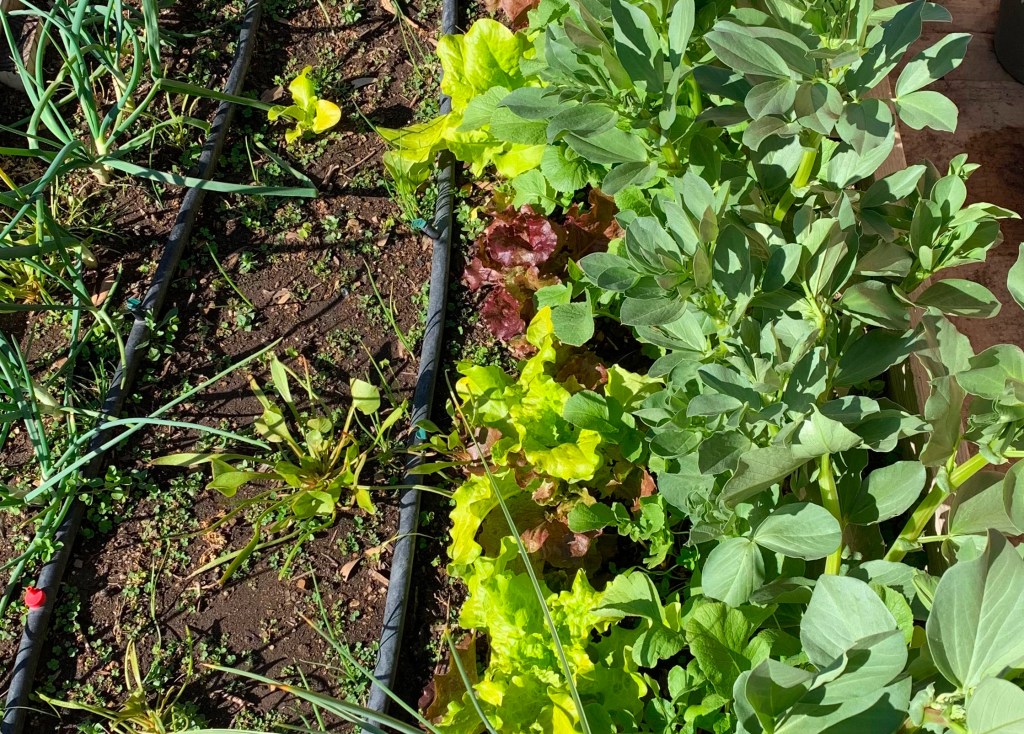
Lettuce harvesting is starting with cutting of young greens. We planted them densely with the intention of cutting them young for an early harvest. The first round is mostly loose leafy varieties that we are enjoying in spring salads.
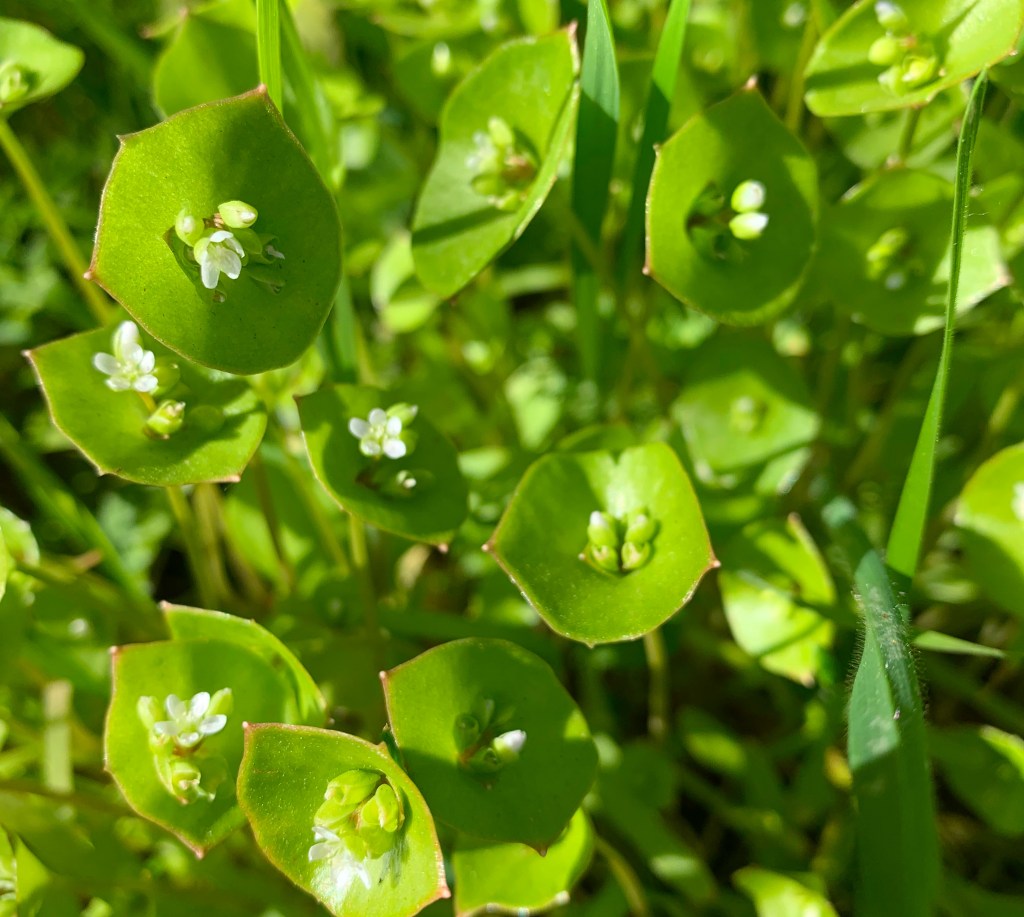
Miner’s Lettuce is a volunteer early spring green. We have quite a bit coming up all around the garden. Makes a nice addition to our planted crops. See our post on Miner’s Lettuce for the scoop on this interesting wild plant.
Fava Beans are growing well. The young shoots are edible, like pea shoots, so we cut a few to try them. They have a pleasant mild fresh green taste. The fava beans are now close to 2 feet tall and starting to flower. They are quite hardy, reported to tolerate temperatures down to 10 degrees Fahrenheit (or -10 Celsius). So any of you in a colder climate might consider putting some in for an early legume. We are using them primarily as a cover crop, but expect to get beans from them as well.
Meyer Lemons and Sweet Lemons are also ripe now. Great to have fresh citrus fruits right at hand in our garden. They keep well on the tree so we can continue harvesting them for a few months and enjoy fresh lemons.
Flowers and Herbs
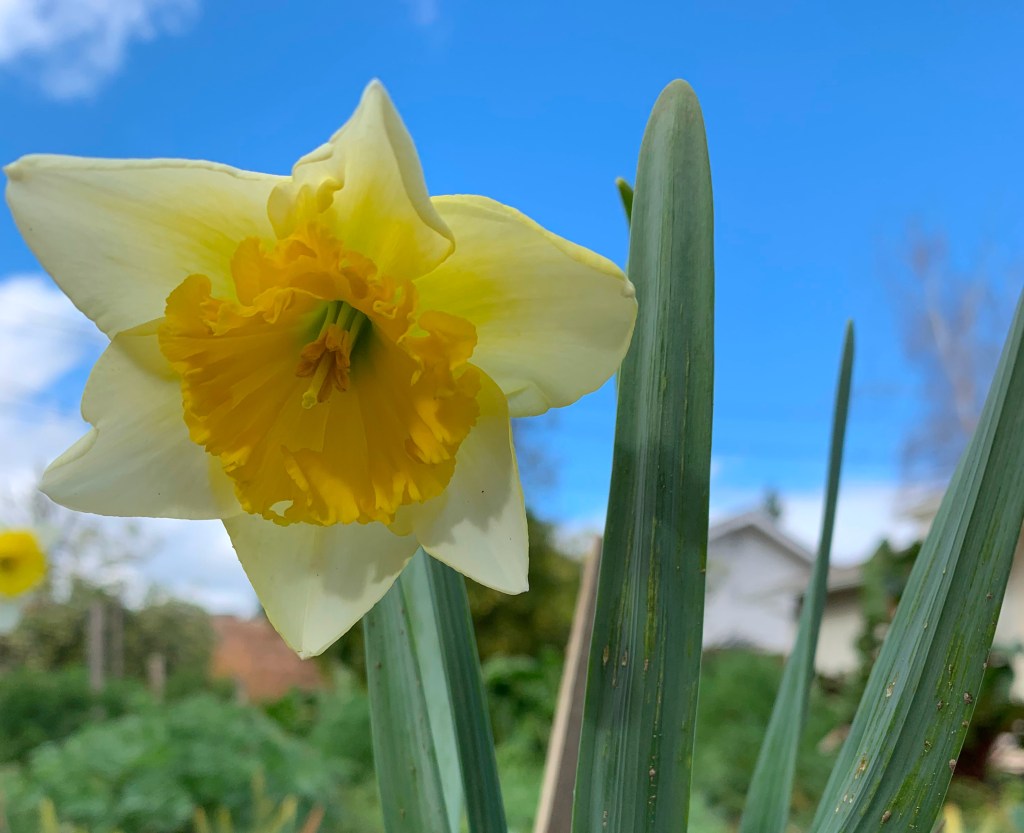
Time for early spring flowers. The classic early daffodils are getting started. We have a few scattered here and there around the garden. They keep dividing and we move a few around every year to bring early color to various corners of the garden.
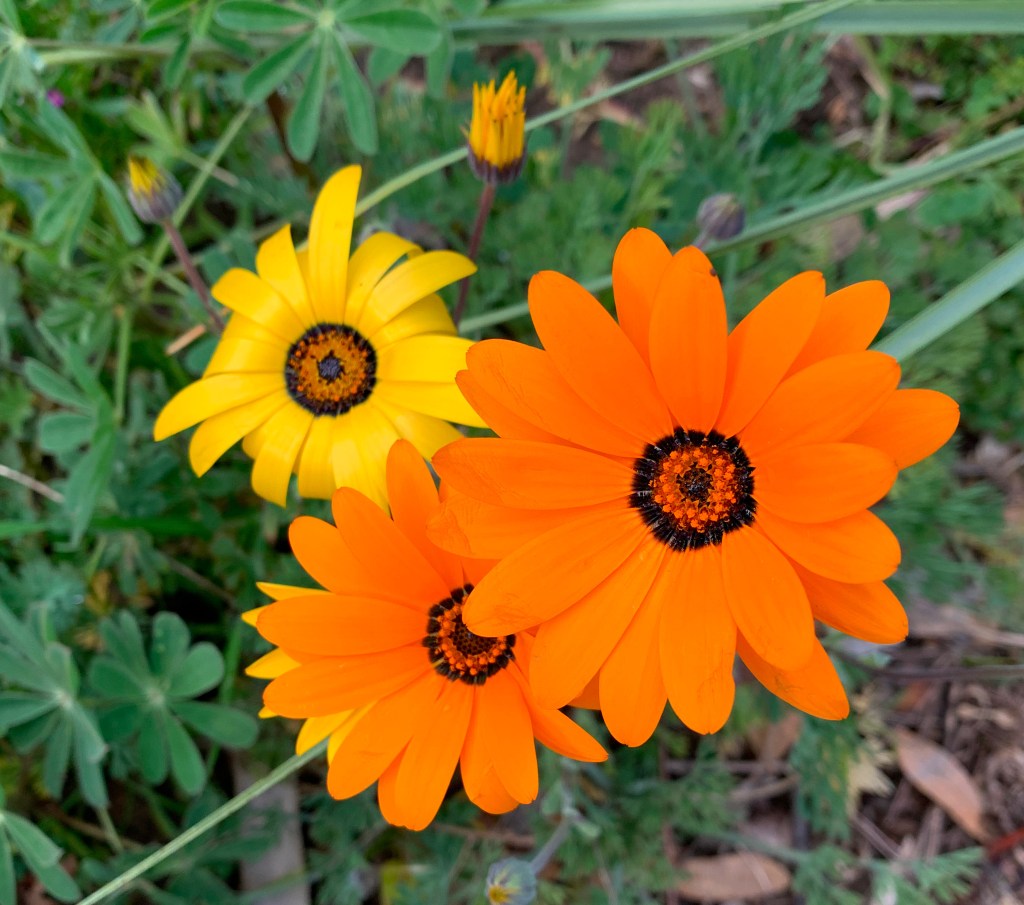
Some early yellow and orange wildflowers are starting to bloom along with the lupine and California poppies we will have in abundance soon. Other wildflowers are right behind them.
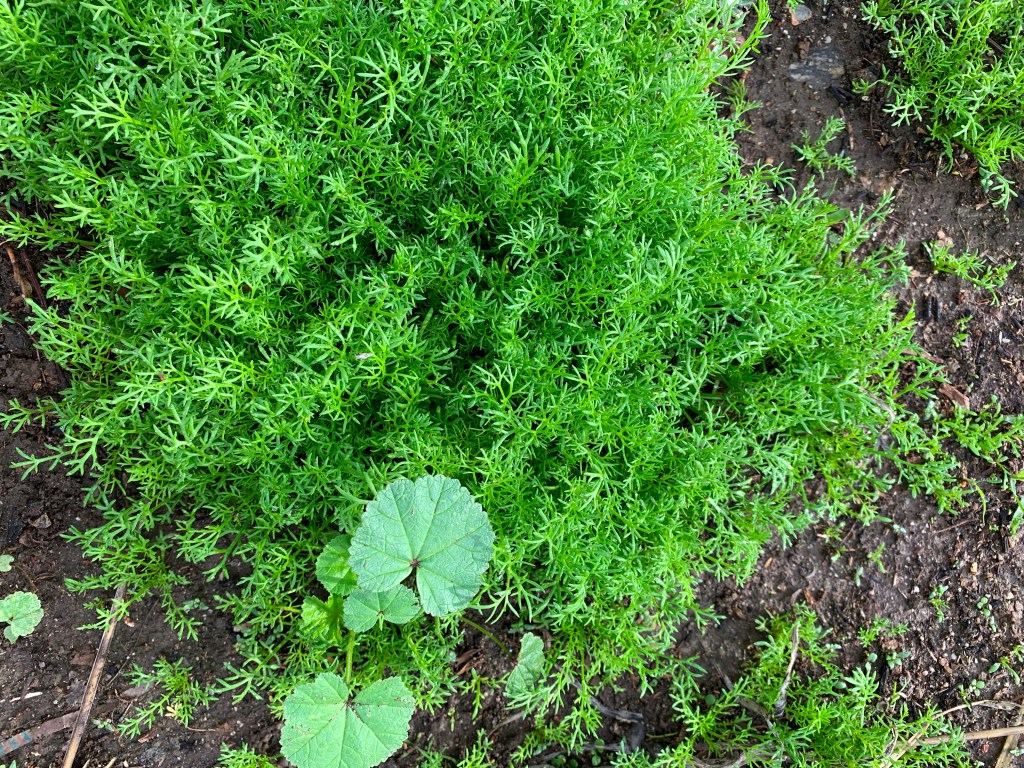
We have a chamomile forest coming up as volunteers in a garden path. They are also coming up in the herb bed where they are intended, but interesting how well they do in a neglected spot. They are great for reseeding themselves.
New marjoram plants we started from cuttings last fall have been transplanted to the herb bed. Still small but expecting as days warm up they’ll be putting on new growth. Last year’s marjoram is ready for a spring cutting. They can be a little sensitive to cold weather so waiting for a little more warmth.
Oregano is unstoppable and will also need a good haircut soon to encourage new spring growth.
Coming Soon
This next month we should have good harvests of lettuce, cilantro, arugula, kale, spinach, fenugreek and radish. Beets, carrots, cress and peas are growing and we may get some by end of March, but more likely in April.
Time to get seed starting into full swing. Summer vegies like tomatoes, peppers and eggplants are going into starter pots very soon. This year we are doing more seed starting than past years. We acquired a seed starting heat mat to help those summer crops get off to an early start. Without the warmth, they take a long time to get growing!
We came up with a design for recycled paper starter pots. Take a look at our technique in our post on making paper pots. We’ve tested them on lavender and yarrow starts for our drought tolerant plantings. They are working well!
We’ve made our garden plans for the spring and into the full summer season so we know what’s going where and when. We are trying to optimize our bed space so when one crop comes out the next one is ready to go in. One of the reasons we are doing more seed starting is to have transplants ready to go in and begin harvesting sooner, rather than direct seeding and waiting weeks for seeds to sprout.
Visitor Log
We’ve had all our regular bird friends stop in for visits. See our post from January 2023 for the list of regular visitors.
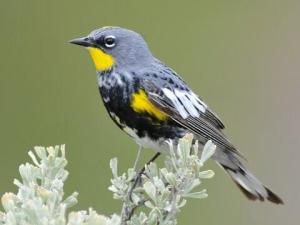
One newcomer, or one we had not previously identified, is the Yellow-rumped Warbler. The Western variety we have is the “Audubon’s Warbler” variety. They have splashes of bright yellow on their head, throat, chest, and yes, of course on their “rump”.
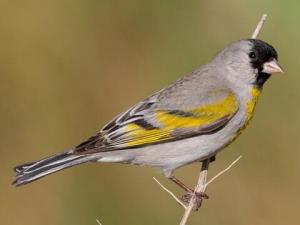
We had a rare visit from a Lawrence’s Goldfinch that stopped in briefly. It is quite distinct with a gray body and dramatic black “mask” covering the face from forehead to chin. He was hanging around with some Lesser Goldfinches, but looks quite different. They are designated as rare, uncommon, and highly erratic, moving around a lot from year to year. Nice to have him stop by!
Here is a video of our Lesser Goldfinches feasting in our garden last fall. They usually come with lots of friends and have a big party! They prefer small seeds from plants in the composite family (including lettuce, cosmos, black-eyed susan, dandelion, and many more). They like to harvest their seeds really fresh and can often be seen plucking seeds right out of the dried flowers. Much different than the sparrows, juncos and towhees that pick their seeds off the ground. Not many seeds getting ripe now, except those early flowering dandelions. So our crop of dandelions is going to a good cause!
Some common insect feeders are the Ruby-crowned Kinglet, Bewick’s Wren, and Bushtits. We see them regularly visiting our chard and kale where they find juicy aphids. Nice to have some good debuggers hanging around the garden.
Drought Tolerant Landscaping
A large portion of household water used in Southern California is for outdoor watering. Lawns and grass take a lot of water to keep them green in our hot dry summers. As we face more years of extended drought, conserving water for other uses is important.
Our backyard was nearly all lawn when we moved into this house. We have since converted it to garden beds, fruit trees, herb beds and wildflowers. We’ve put drip systems in for all the irrigated areas to improve water usage.
In our front yard, we still have lawn, though we cut back on water usage, letting it go a bit brown during the hot weather. It is mostly tough Bermuda grass and Saint Augustine that tolerates hot weather. Still takes more water than we’d like and looks a bit ragged with low watering. Time to make a change!
We are starting with the side portion of our front yard, between our driveway and the neighbor, to test out the process of turf removal and replacement with drought tolerant plantings. That will give us an idea of the work involved and cost to implement before taking on the larger part of the yard.
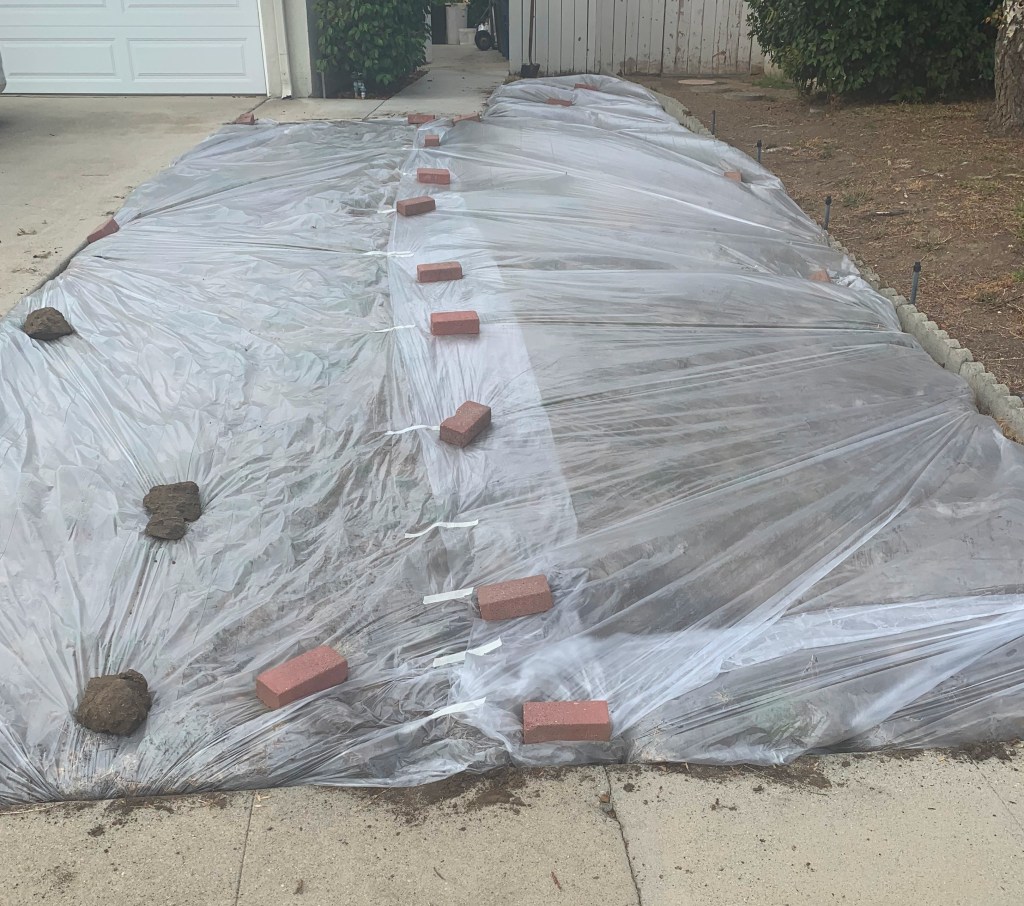
To remove the grass we used the solarization process, covering the area with clear plastic during our warm sunny days to cook the grass for more than a month. Then some good exercise digging the whole area, breaking up the old roots and preparing the soil for new plants.
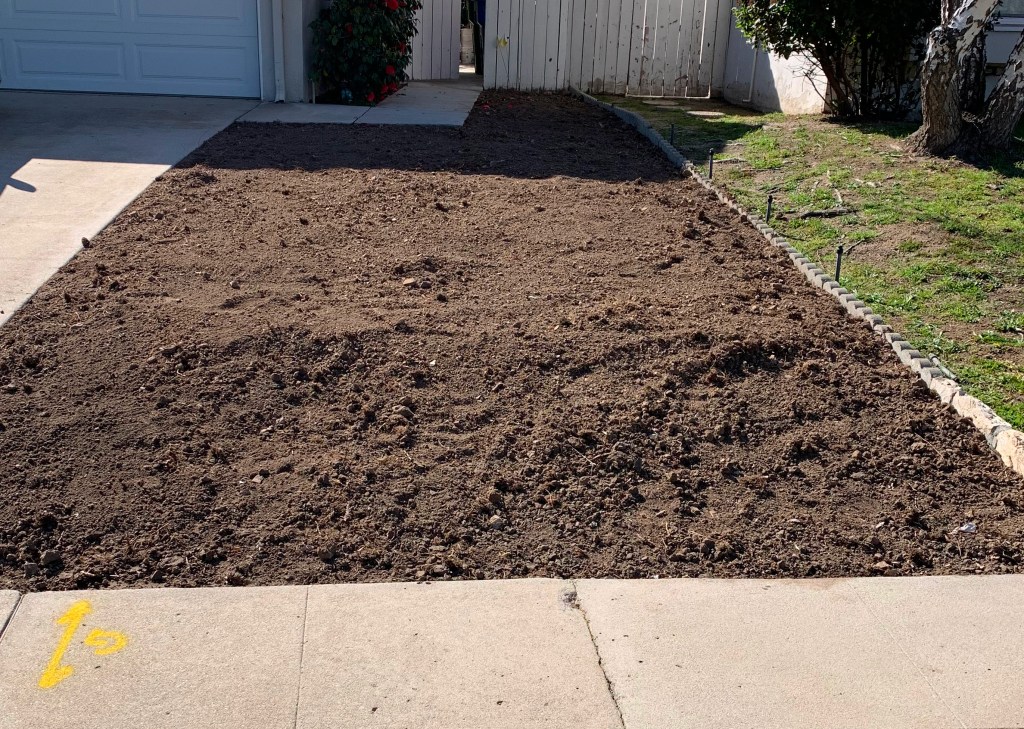
Grass is now out and rough grading is done. We purchased a few plants from the nursery and made cuttings of rosemary and lavender from existing plants last fall to save cost of buying plants. We will also transplant some tough low-growing potentilla from our backyard for low water ground cover.
We are waiting for the soil to dry out a bit before final grading, installing edging and planting. We’ll cover open areas with mulch and install a drip system for irrigation. A bit of work, but expecting a great result!
Find Joy in a Garden
We hope you are able to take time and enjoy a garden or get out in nature. Observe the antics of the critters. Relax and enjoy some peace.
Leave us a comment or let us know if there are topics you’d like to hear about.
Follow us on Instagram, @Zanganeh.Garden where we post short updates.
Check out our YouTube channel, also @Zanganeh.Garden.
Use the subscribe button at the bottom of the page to be notified of future postings.
 Zanganeh Garden