

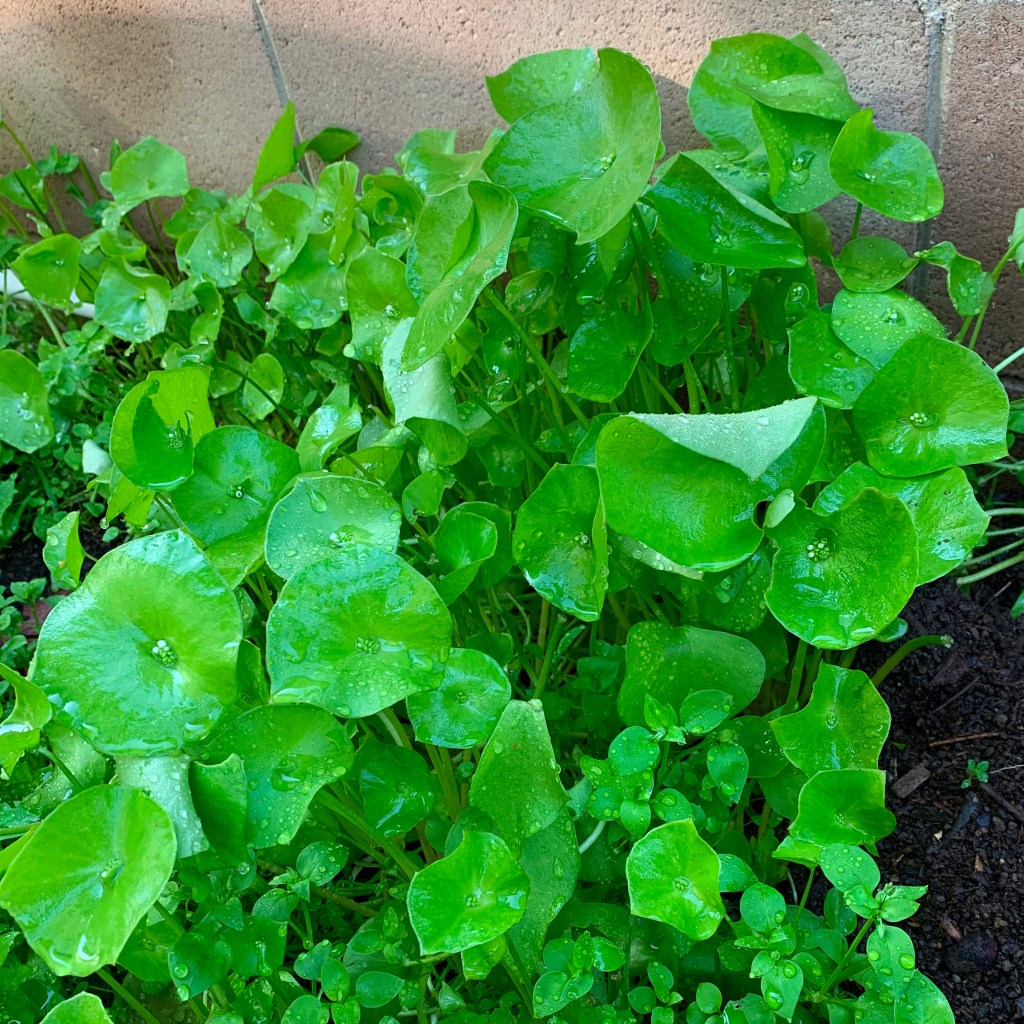
March started and ended with rainy weather. Nice for the green growing plants. Our Miner’s lettuce is thrilled with the cool wet weather! All the deep moisture should give us an abundance of wild flowers in the next couple months.
Sounds from the garden this month were on the wet side. We heard some happy locals “singing in the rain.” Take a listen!
March was significantly cooler than last year, with nights still into the 30’s with frost all the way to March 31. Last year the overnight lows were in the 50’s by end of March.
Growth in the garden was slow due to cool weather. Still those cool weather crops came through with harvests of greens and radishes.
Some garden work was delayed due to the wet conditions. Indoor seed starting for spring and summer is progressing. Summer tomato, eggplant and pepper starts are up and growing. For some starts we are using recycled paper pots we wrote about in an earlier post.
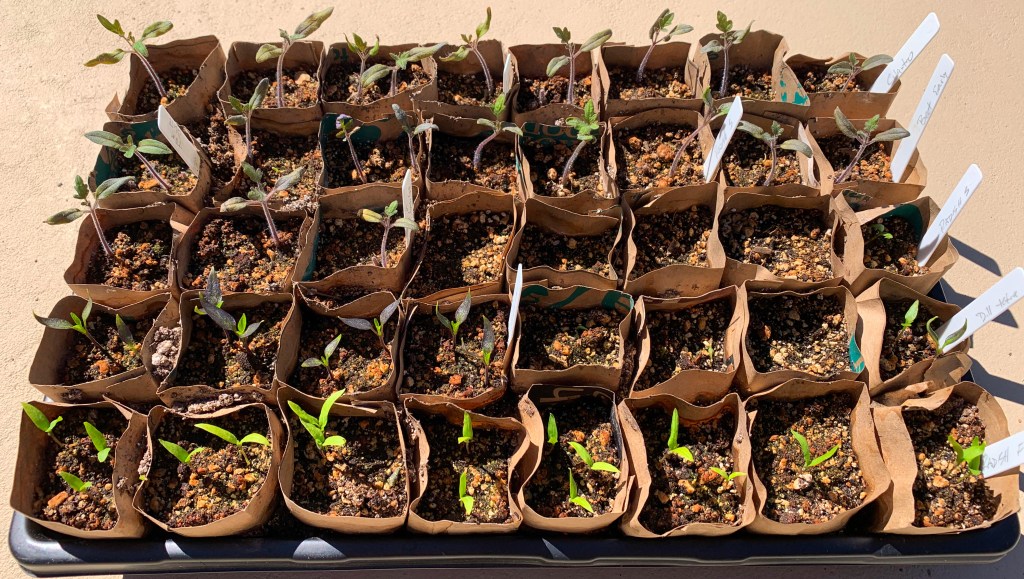
We are also doing more seed starting of other vegetables and herbs this year with hopes of making better use of our garden beds and enhancing our productivity.
Contents of this Post
Here’s a summary of what’s in this post along with links to each section for quick access.
- Harvesting Now – What’s ready for eating
- Flowers and Herbs – Wildflowers are starting to make their show
- Coming Soon – The coming features, fava’s and many more
- Visitor Log – Some friends and some undesirables
- New Residents – Who’s moved into our garden?
Harvesting Now
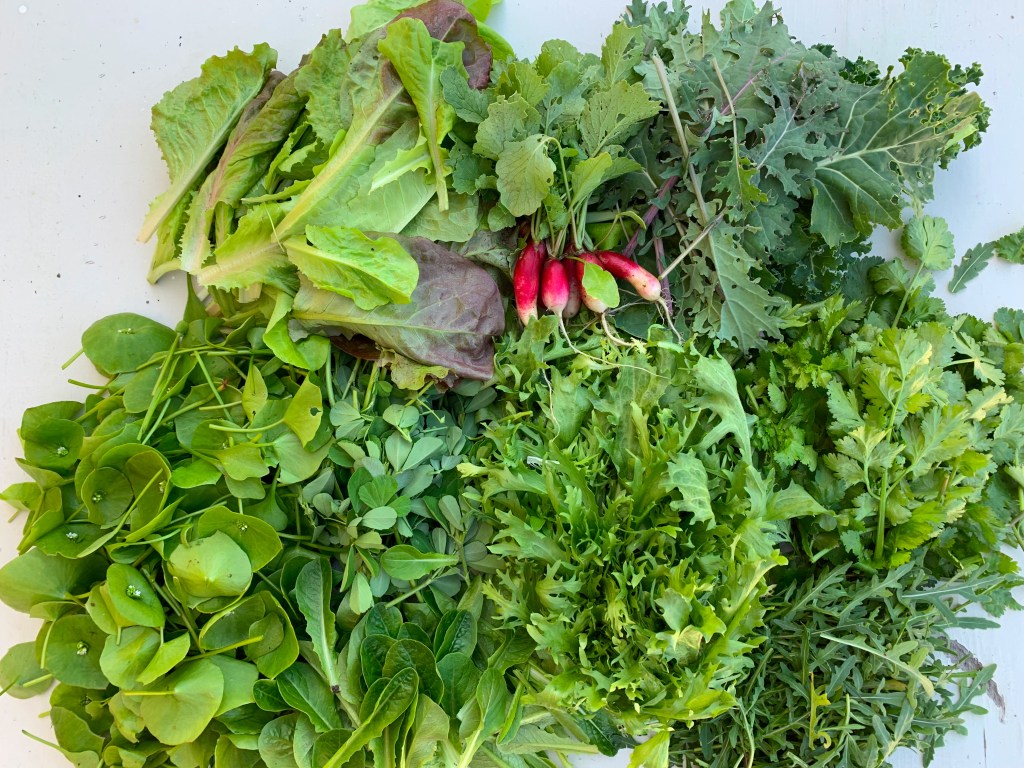
Greens and radishes are the main garden produce this month. In the photo above starting at 12 o’clock and going clockwise we have French breakfast radish, kale, cilantro, wild arugula, frisee, fenugreek (toward middle), baby lettuce (toward bottom), Miner’s lettuce, and various leaf lettuce (mesclun).
Chard and collards are also going strong but did not make it for the photo shoot.
Flowers and Herbs

Borage is an annual that does well at reseeding itself, with the help of our bird friends, often seen snacking on the seeds. Borage grows well here and one plant can easily get 3 feet tall and 3 feet wide (1 meter). The wonderful star-shaped flowers are also edible, with a bit of a sweet taste from their nectar.
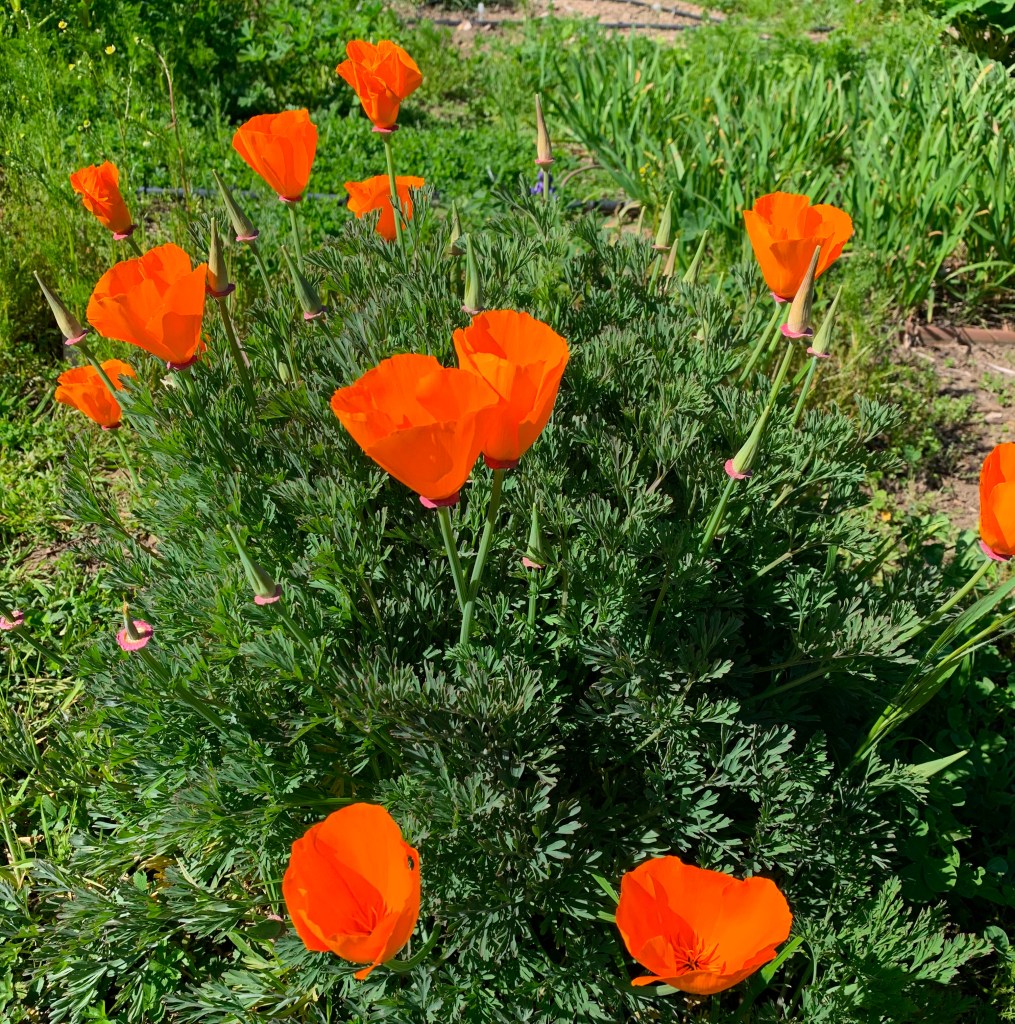
California poppies are also great at seeding themselves. They are coming up all over the garden and just beginning to bloom.
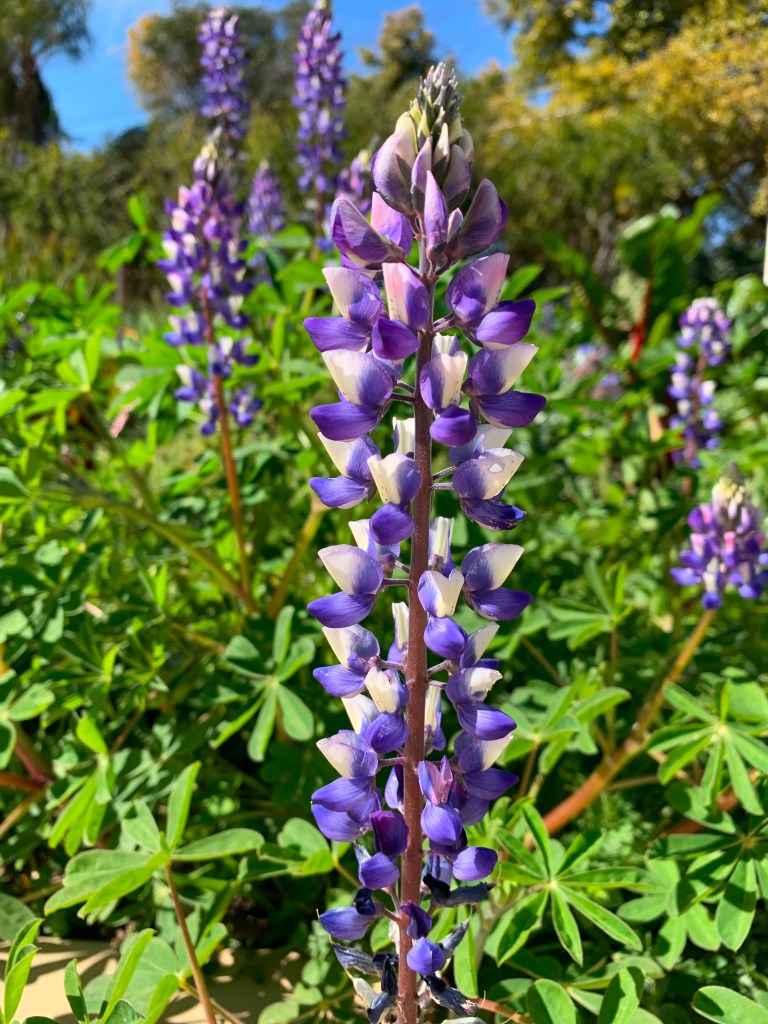
Lupines are another great self-seeder. When their seed pods get dry they literally pop open and shoot the seeds all around, similar to the poppies. These two wildflowers are growing in much of the garden. The lupines are quick to go to seed and plants die back fairly soon, so we let many grow and give us nice color in the garden. We have some big black bumblebees that seem to have a strong preference for those lupine flowers. We have also found Allen (Allen’s hummingbird) visiting lupine.
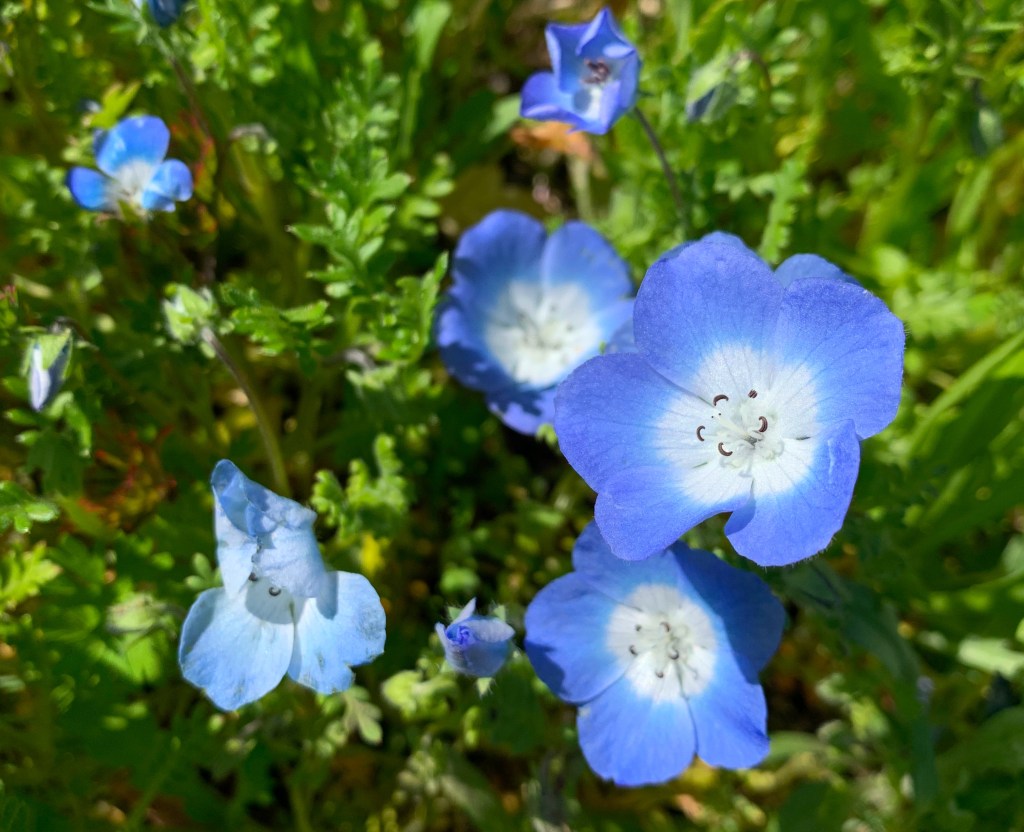
The baby blue eyes are one variety of wildflowers we have in our collection. They just started blooming as well. Lots of other wildflowers are on their way, but not quite blooming yet. Next month should bring a full display of color in the garden.
On the herb front, oregano and marjoram are due for a hair cut to get ready for spring, then they can fill out with new growth. Rosemary and lavender are already in bloom. Chives from last year are just coming out of their winter rest.
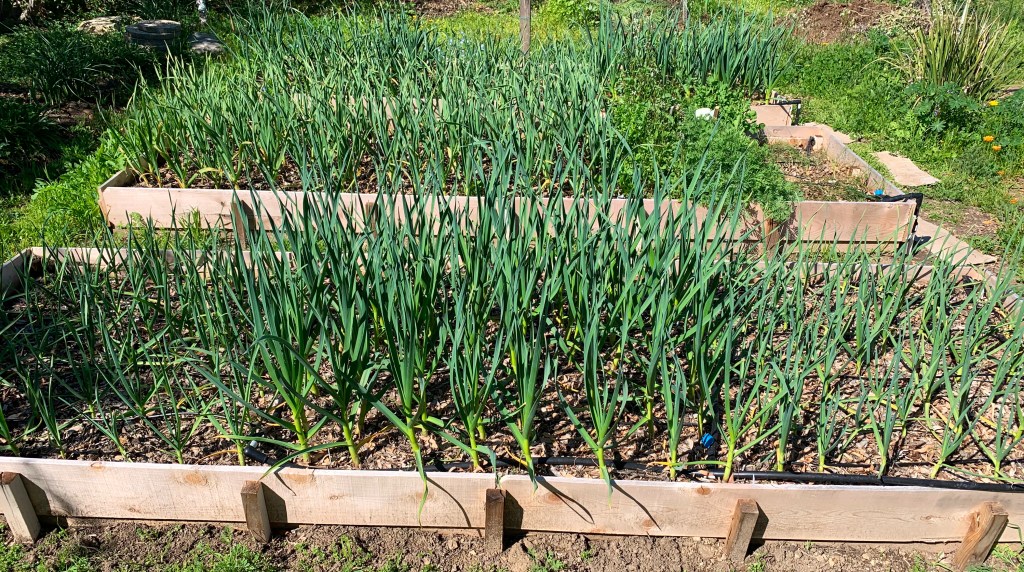
Our garlic and shallot plantings are going great. The photo below shows the 3 beds with garlic in them. The front bed has 3 varieties and they clearly have different growth styles (they were planted at the same time). On the right is Persian Star, middle is Music, and the left is Chesnok Red. All 8 garlic varieties we planted are looking very healthy and vigorous.
Coming Soon
We have most of our beds with crops just about ready for harvest. Sugar snaps are starting to flower, beets and carrots will be ready for early harvest soon, cress will be big enough to trim in a couple weeks.
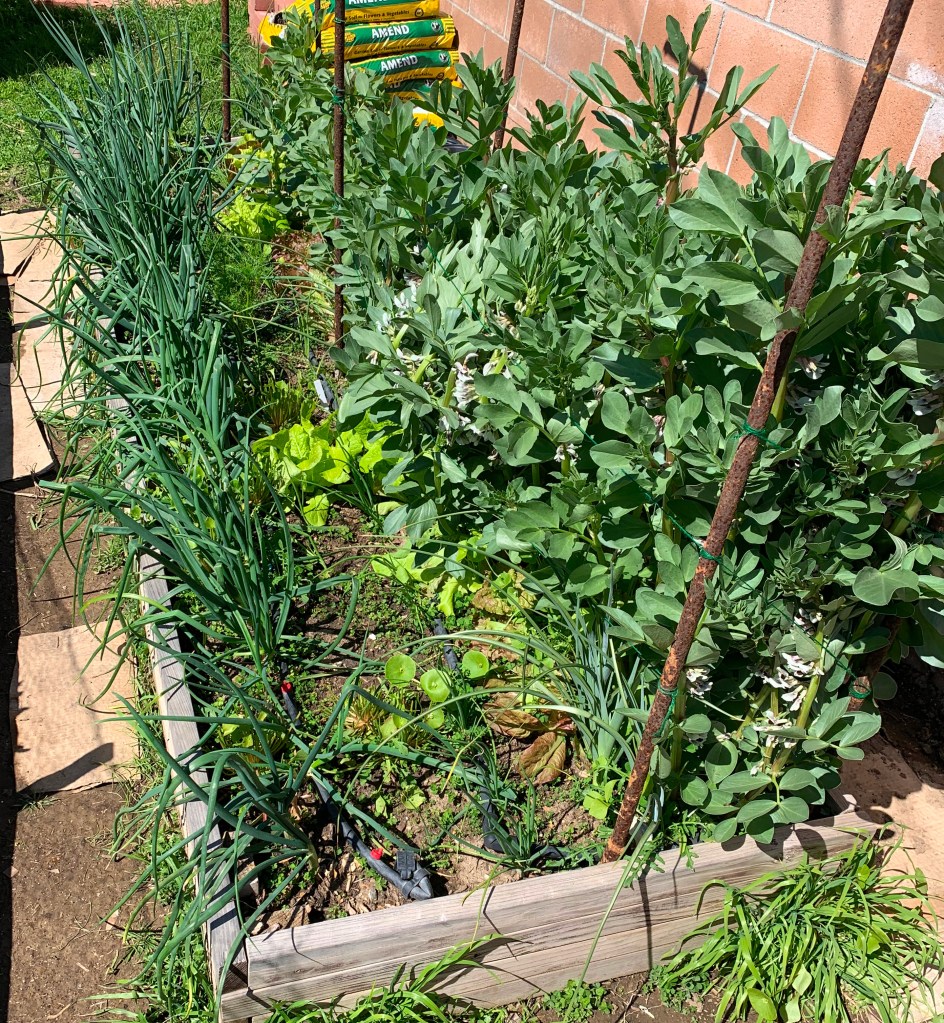
We have fava beans getting tall and producing a ton of flowers. They are not a common crop in this country, but seem to be quite popular in Europe and the Middle East. We planted some as a cover crop last year and they did great, getting 6 feet (2 meters) tall with very dense growth. So we are trying more this year and hope to get some good beans off them as a bonus. They have a reputation of being extremely cold hardy, so can be started very early, even in colder climates.
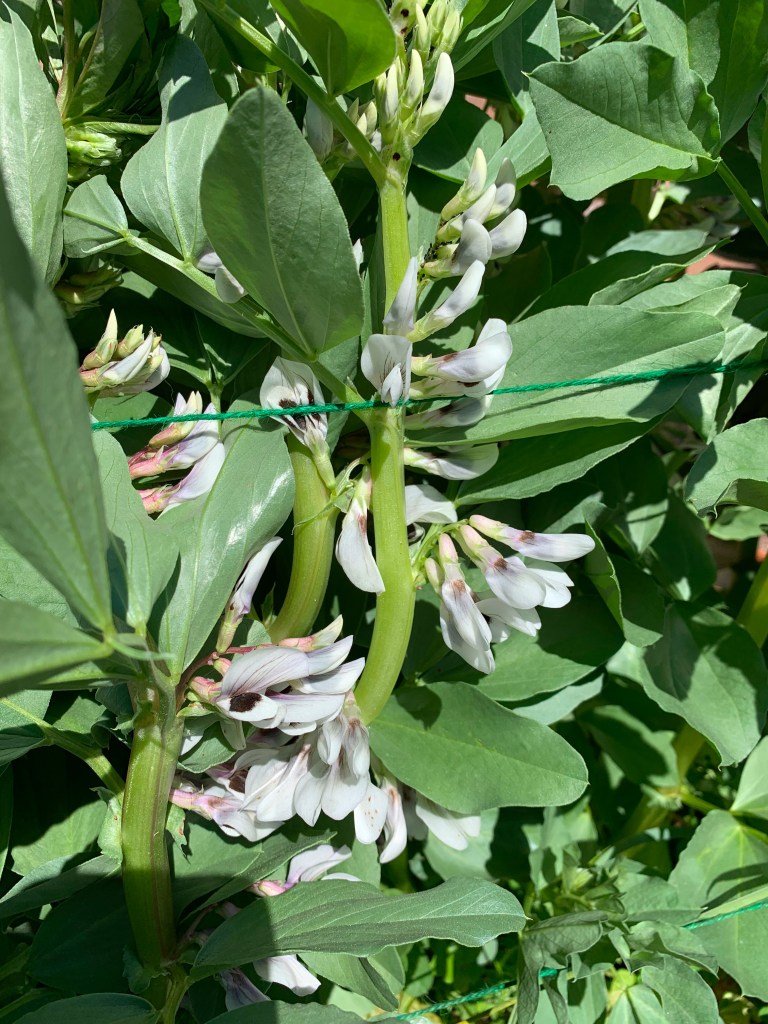
In addition to eating the large mature beans, the young shoots are edible as greens, similar to pea shoots and the young beans can apparently be eaten with their pods. We are growing two varieties, Windsor (a good reputation for eating) and Sweet Lorraine (mostly used as a cover crop, with smaller beans). They are thriving and filled with flowers. Since they are legumes, they will be adding nitrogen to the soil. We’ll also use all that good green growth as compost fodder.
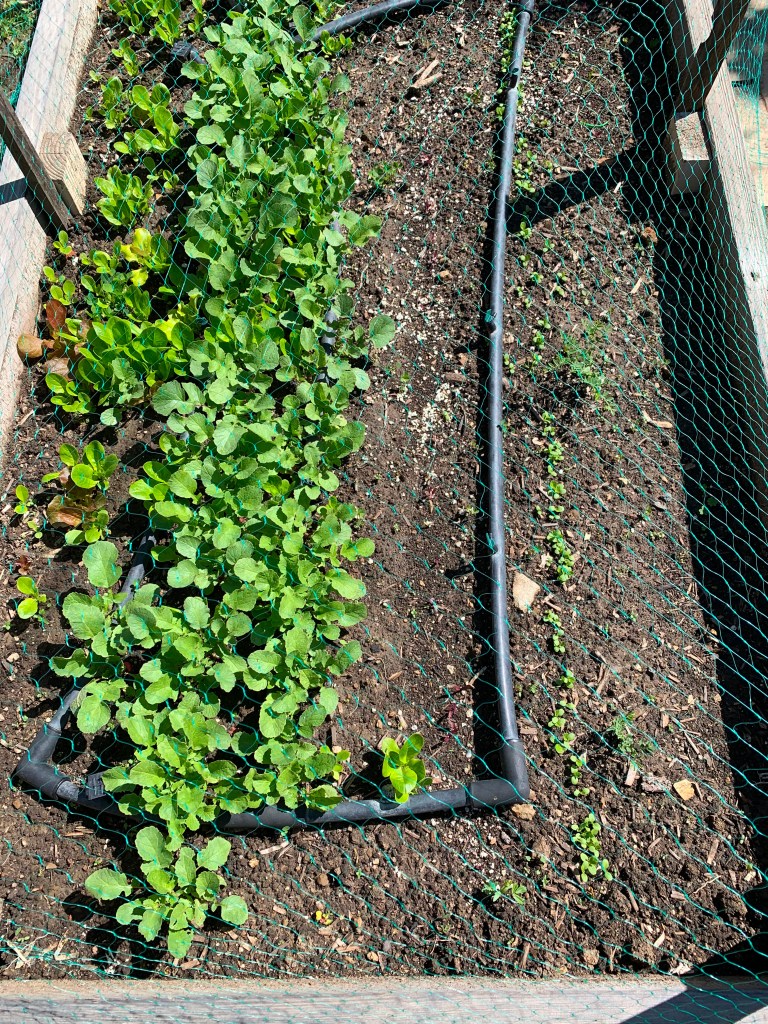
One of the problems we wrote about in our February update was our seedlings coming up then disappearing. The evidence pointed to our ground feeding, seed eating birds (sparrows, towhees, juncos). We now have bird netting over newly seeded beds and we are seeing better survival of seedlings, like the beets and lettuce on the right side of this bed. The radishes in the middle are almost ready to harvest and the mesclun lettuce mix on the left will be ready to start cutting soon.
Visitor Log
We had a quiet month for visitors. Maybe the cool and wet weather has kept visitors away. Or maybe we’ve been more occupied with indoor activities and just not noticed who stopped by! Of course we still see our regulars, mockingbird, towhee, ruby crowned kinglet, ravens, juncos, wrens, finches and such.
We did see western bluebirds briefly after not seeing them for at least a month. According to Cornell Ornithology, in our local area they come down for the winters then head back to higher elevation forests for the breeding season.
A couple not so welcome visitors came by for a midnight snack. In the morning we found many holes dug in the garlic bed! Fortunately all but one garlic came through unscathed. Hopefully they will tolerate the disturbance to their roots. A few of the saffron bulbs, that are smaller with shallow roots got pulled out. They are replanted and hopefully will continue growing.
New Residents
We have a nice young couple moving into new accommodations in our garden. They are fairly quiet. They’ve tucked their new residence into the garden between some arugula and lettuce. We’ve alerted them to the potential night marauders who may be interested in their kids! Hoping they stay safe.
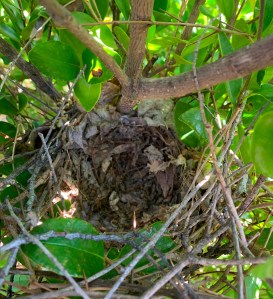
One of our services is providing building materials for our bird friends. This month we saw ravens pulling stiff branches off a bottle brush. The mockingbirds were scavenging for small twigs. Last year the mockingbirds built a fence of thorny pomegranate twigs around their nest! That seemed quite a thoughtful addition, for a security minded bird. Haven’t seen their building site this year but we do see a pair hanging around the garden. When they are nesting they get quite protective and chase away the squirrels and other potential menaces.
Also saw a couple wrens with their beaks filled with fluff that looked like good nest lining. Then saw they were collecting bits of lint from around our dryer vent. Quite amazing how they creatively incorporate things like that into their building. Looks like good insulation and much nicer than fiberglass for the young chicks! According to Cornell Ornithology the Bewick’s wren nests “…may be lined with feathers, wool, hair, or plant down, with a final inner lining of snakeskin.” Wow, a snakeskin leather lining. Pretty upscale!
Another interesting fact for these Bewick’s wrens is young males learn to sing when 30 to 60 days old from neighboring adult males and his song will be different from his father’s, changing a note or phrase here and there.
Find Peace in a Garden
Find time to get out in a garden, a park or a spot where nature is on display. Listen to the sounds, observe life, find peace.
If there are topics you would like to hear more about, let us know in the comments below, or send an email to Zanganeh.Garden@gmail.com.
We post quick updates on Instagram @Zanganeh.Garden
Check out our YouTube channel, also @Zanganeh.Garden
Use the subscribe button below to be notified of new posts.
 Zanganeh Garden