

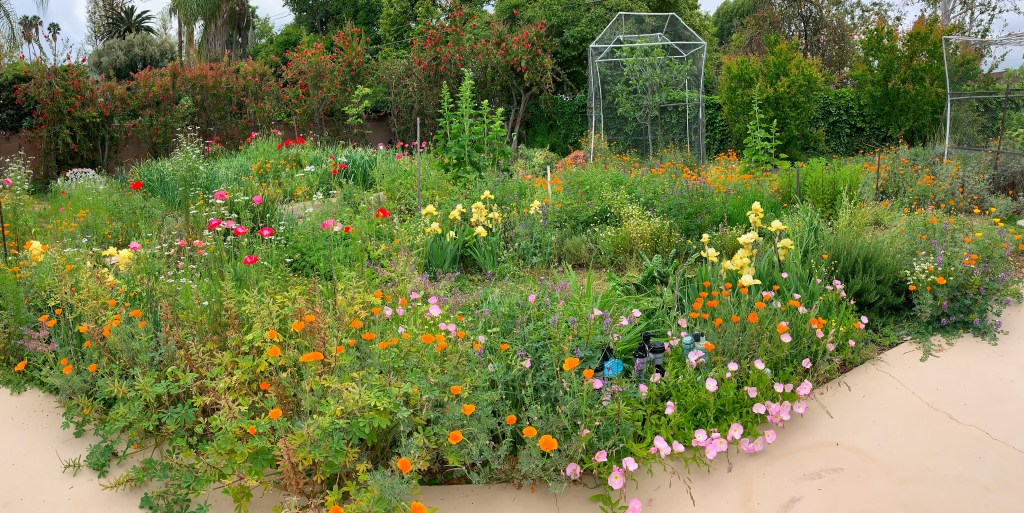
April warmed up and after a wet March everything is growing! Wildflowers along with other plantings are blooming in abundance. The California poppies and lupines do a great job of spreading themselves around the whole garden. We also encourage the Shirley Poppies in shades of red and pink. Color all around.
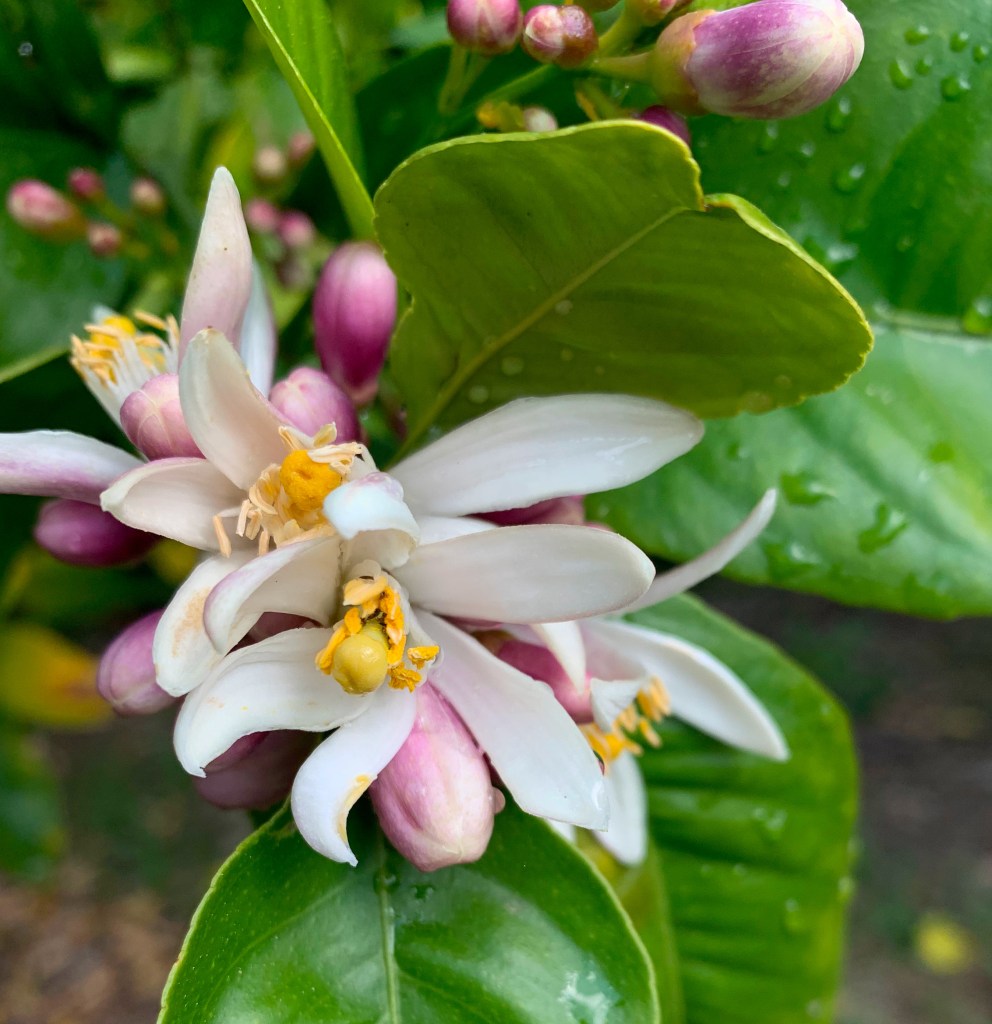
Walking into our April garden brings the sweet scent of lemon and mandarin orange blossoms. They bring to the nose what the flowers bring to the eyes. The song sparrows sing away assuring the ears are not left out. The finches, mockingbirds, acorn woodpecker and other friends add their sounds to the concert.
Here’s a short video tour of the garden with the sights and sounds, just missing the aroma of the citrus!
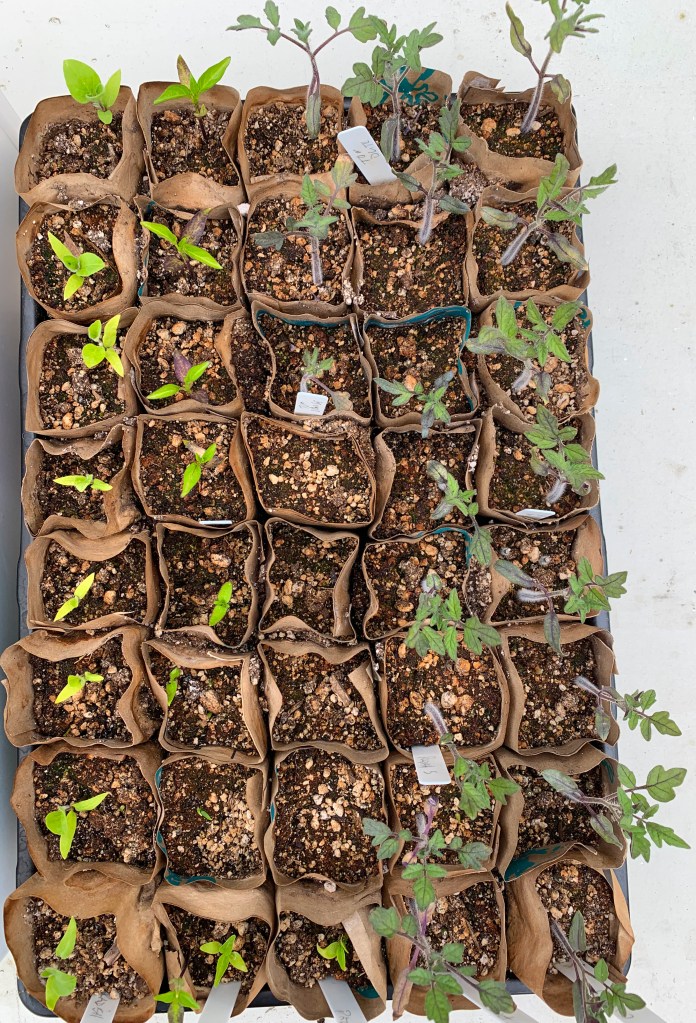
Tomatoes, eggplants and pepper starts got transplanted to their summer homes. Other seedlings are growing quickly, so we’ll be busy getting everything into their beds.
Contents of this Post
Here’s a summary of what’s in this post along with links to each section for quick access.
- Harvesting Now – What’s ready for eating
- Flowers and Herbs – Wildflowers in full bloom
- Coming Soon – Summer planting is in process
- Visitor Log – Who’s been hanging around
Harvesting Now
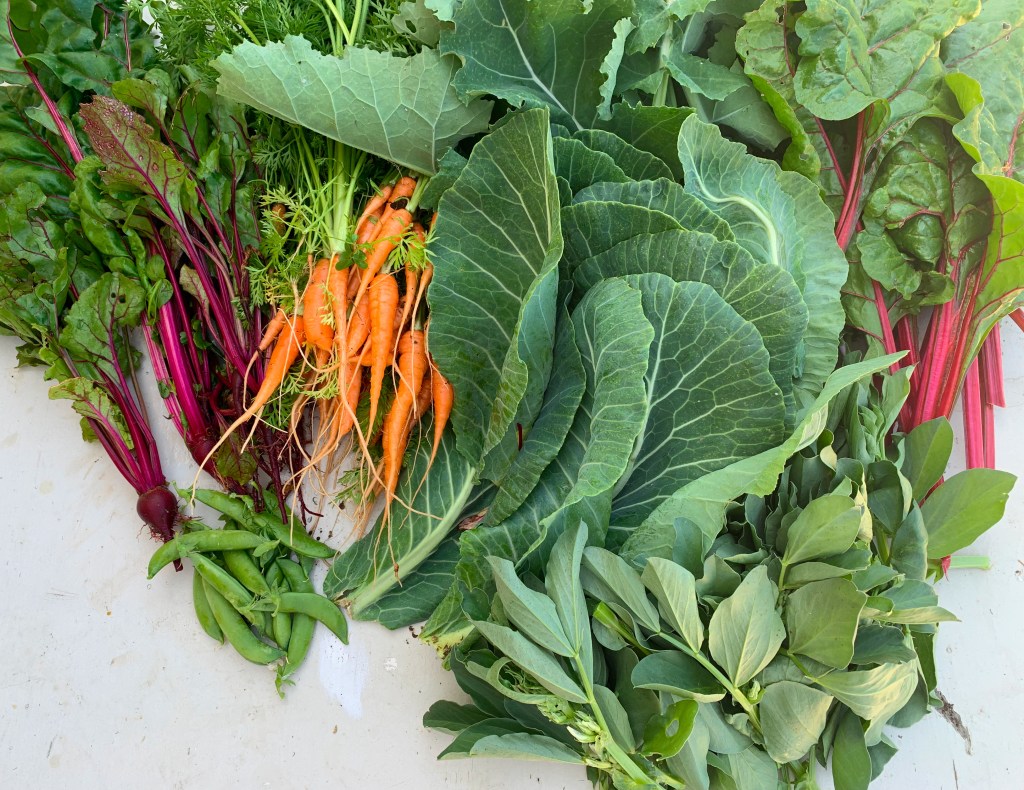
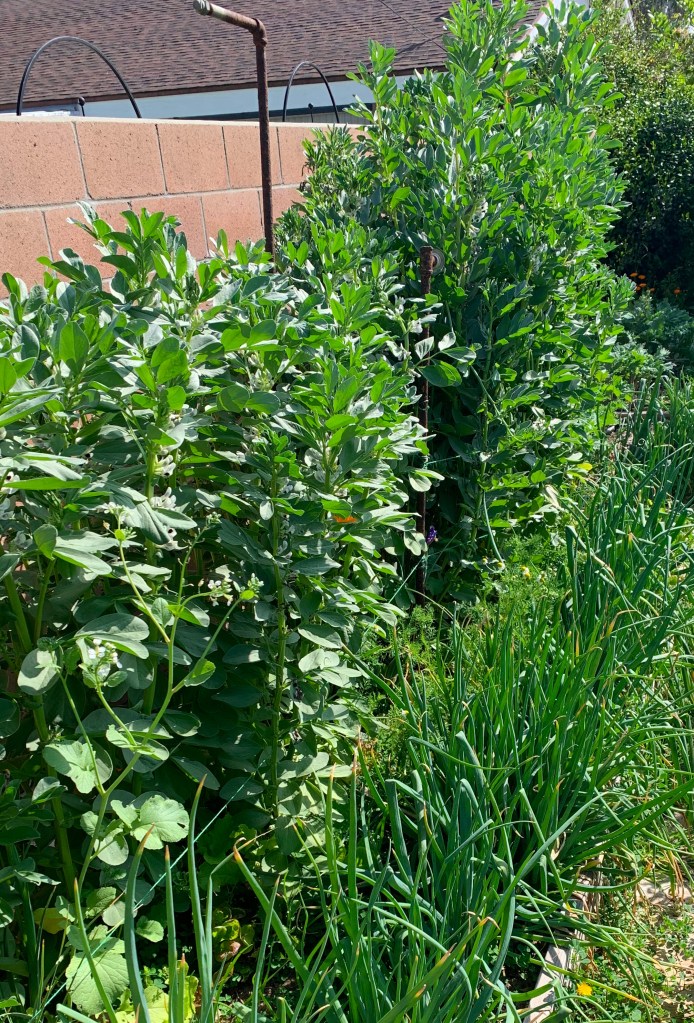

We are still harvesting collards, kale and chard from last season, but as they start to flower, they will be ending soon. This season’s kale is already producing well, so we’ll have a steady supply of greens. Harvest of baby beets and carrots is starting. Sugar snaps are full of flowers and we are getting our first harvests.
One new thing we are harvesting this year is the fava bean shoots. The fava beans are quite vigorous, now up over 6 feet (2 meters) tall with multiple stems per plant. We heard the young shoots are edible as greens, so we’re testing them out (they cook up something like spinach with a fairly mild flavor). A few of them are on the lower right of the photo above. The stems up to about 1/4 inch (5 mm) are still tender. For a quick and tasty recipe, try our Asian style fava greens.
We are also harvesting fenugreek, cilantro, arugula, cress and lettuce for additional greens. The cress we are growing is called “upland cress”, which is similar to watercress but is more tolerant of drier growing conditions as well as having larger more easily harvested leaves. They are quite pungent with a strong flavor. A small handful can add some nice spice to salads and other dishes.
Flowers and Herbs
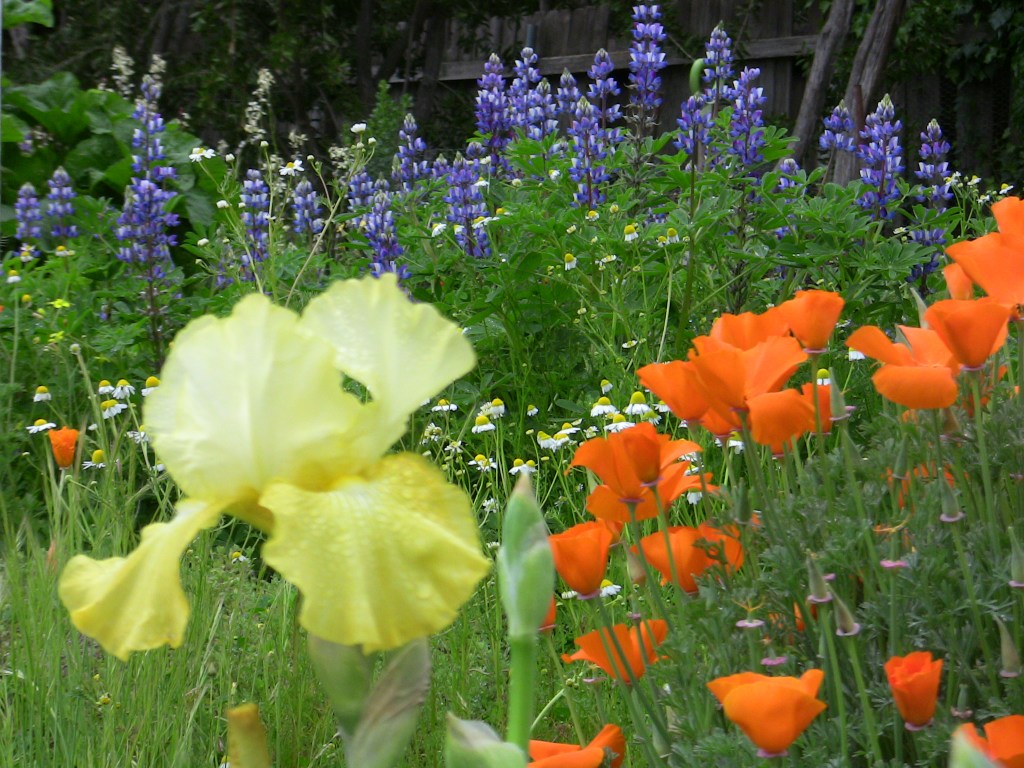
Spring flowers are in full bloom. Lupine and California poppies have taken over many of the garden paths. We enjoy the wonderful color they bring, so let them run wild for now. They will start going to seed in a few weeks and we’ll clear the paths as they die back.
Yellow iris, purple Dutch iris, white and yellow chamomile, red and white flax, blue borage, lavender (in lavender of course), white lemon flowers, red/orange pomegranate flowers, and more are creating quite a colorful display.
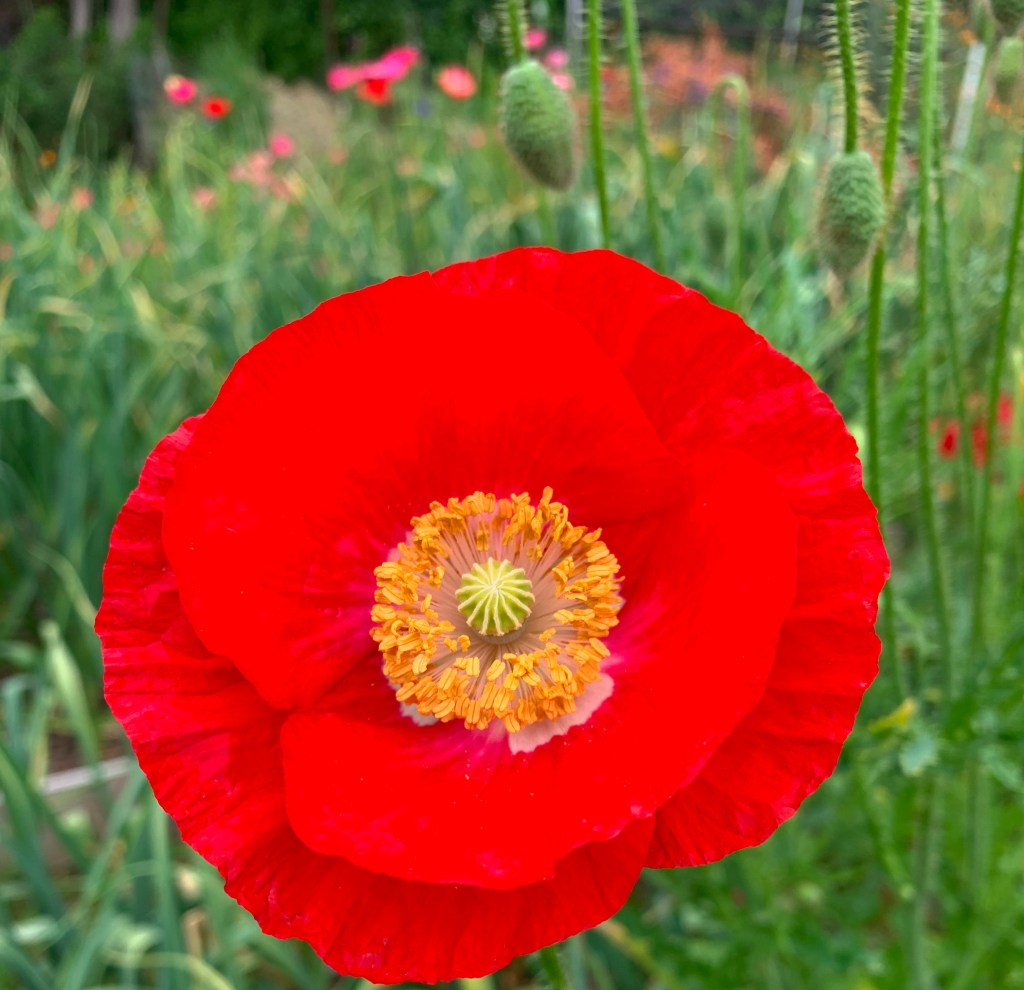
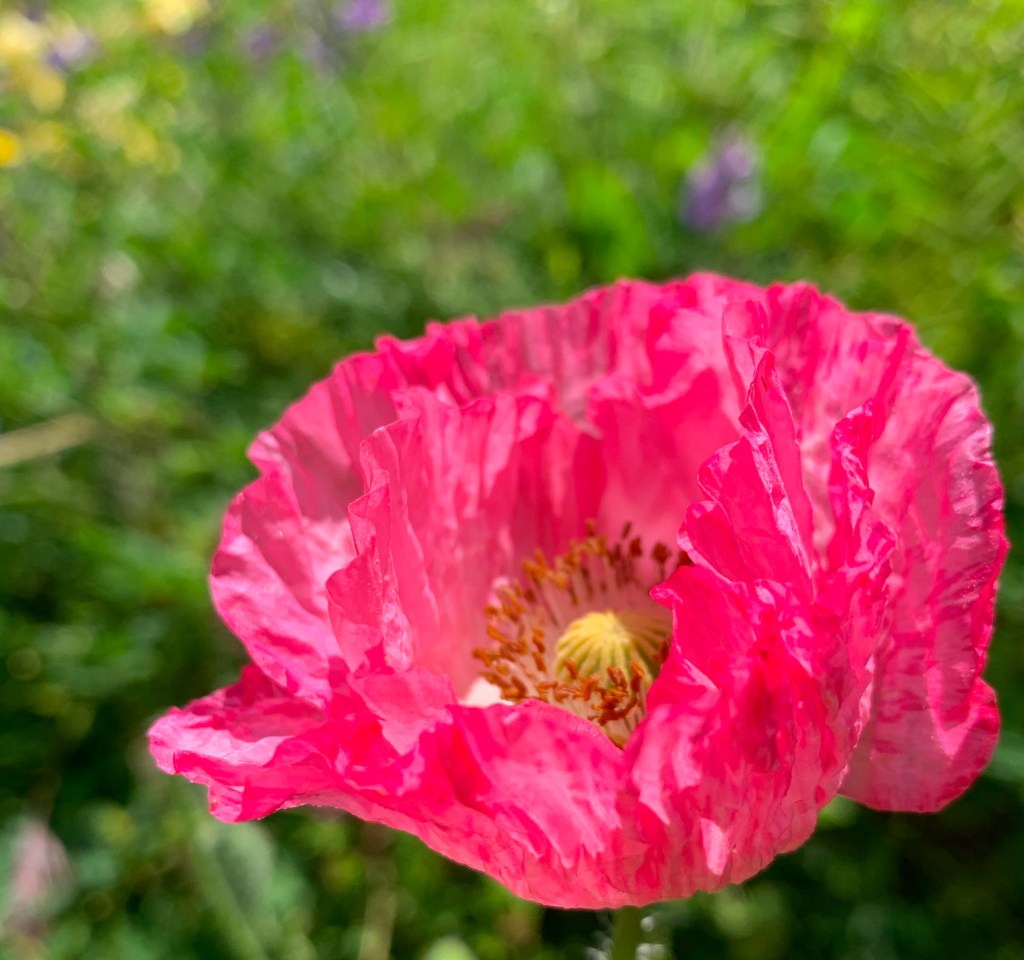
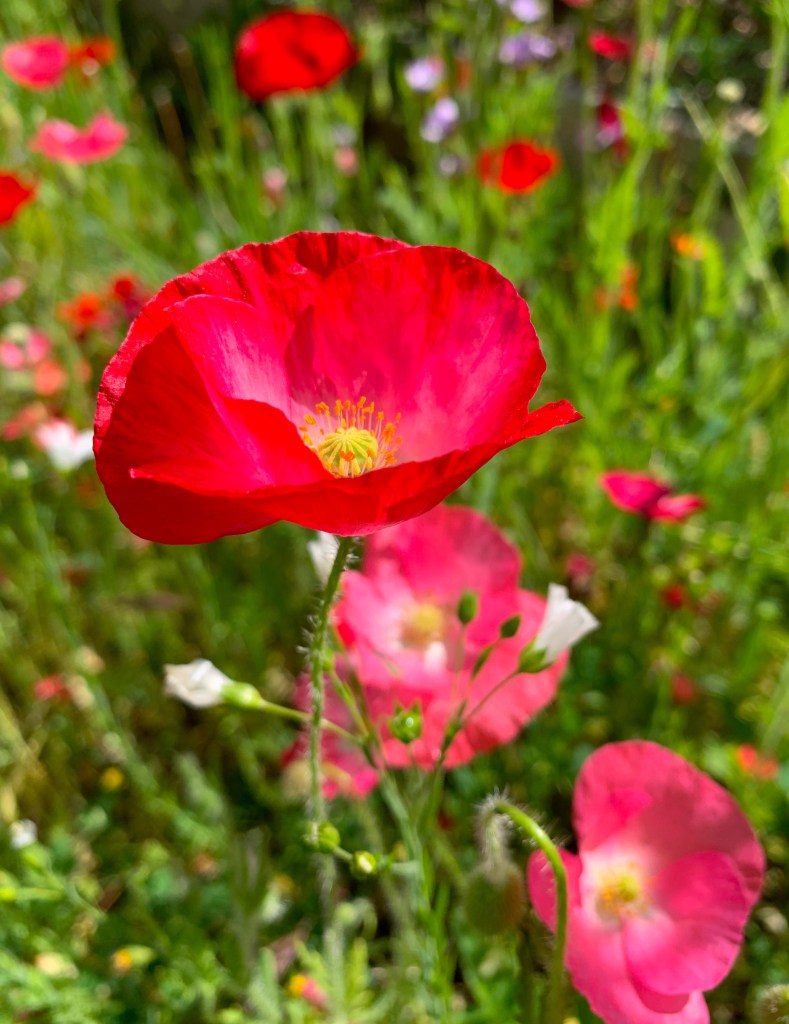
The Shirley poppies are abundant with amazing variations in color and texture.
We started our chamomile flower harvesting. We dry the flowers to make great chamomile tea. It takes hundreds of flowers to get any significant amount, but they produce lots of flowers and when picked they produce more.
Oregano has been trimmed to cut out the old woody stems. New growth is about ready for harvest. Oregano grows great here. The stems grow vigorously and spread quickly. We’ve also found oregano seedlings popping up in other beds around the garden.
Marjoram is a smaller, slower growing cousin to oregano. The marjoram fragrance and flavor is delicate, sweet with definite floral notes. One of our favorite cooking herbs so we made cuttings last fall to start a new section of our herb bed. We also do some layering of marjoram to propagate them. A simple way of layering marjoram is taking some of the longer stems and bury the middle part in soil. A small stake to hold the stem down helps. A few months later the stem will have roots and can be cut off the parent plant and transplanted.
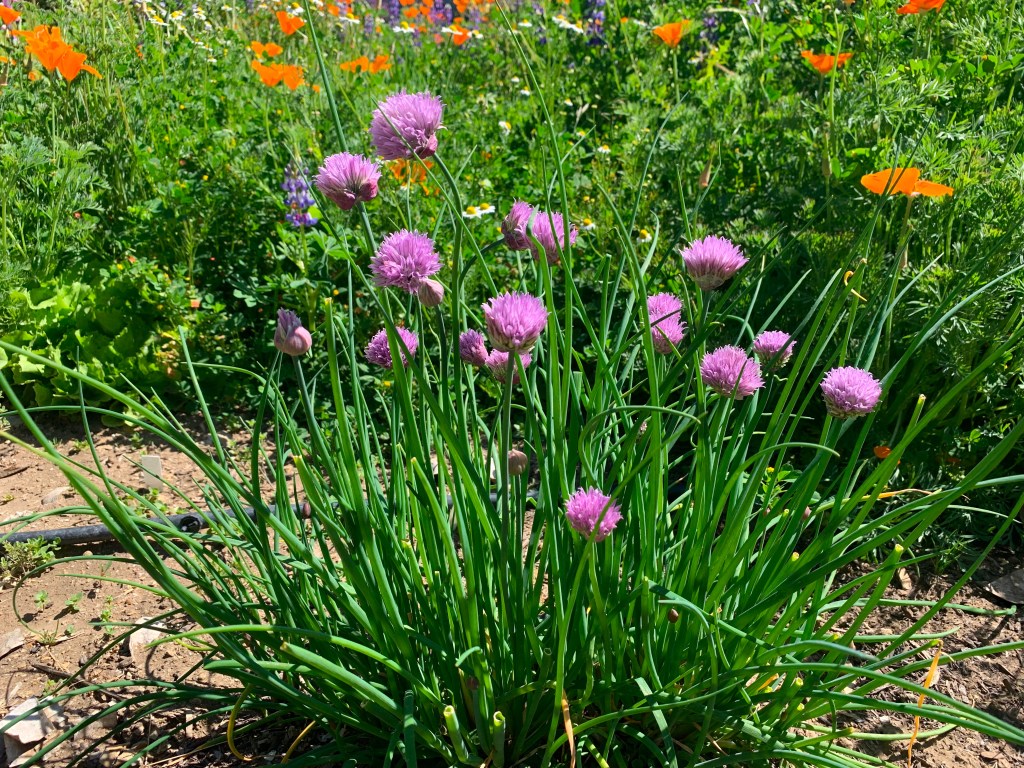
Chives planted last year are filling out this year and producing nice purple flowers. Some new chives seedlings are popping up to expand our chive production.
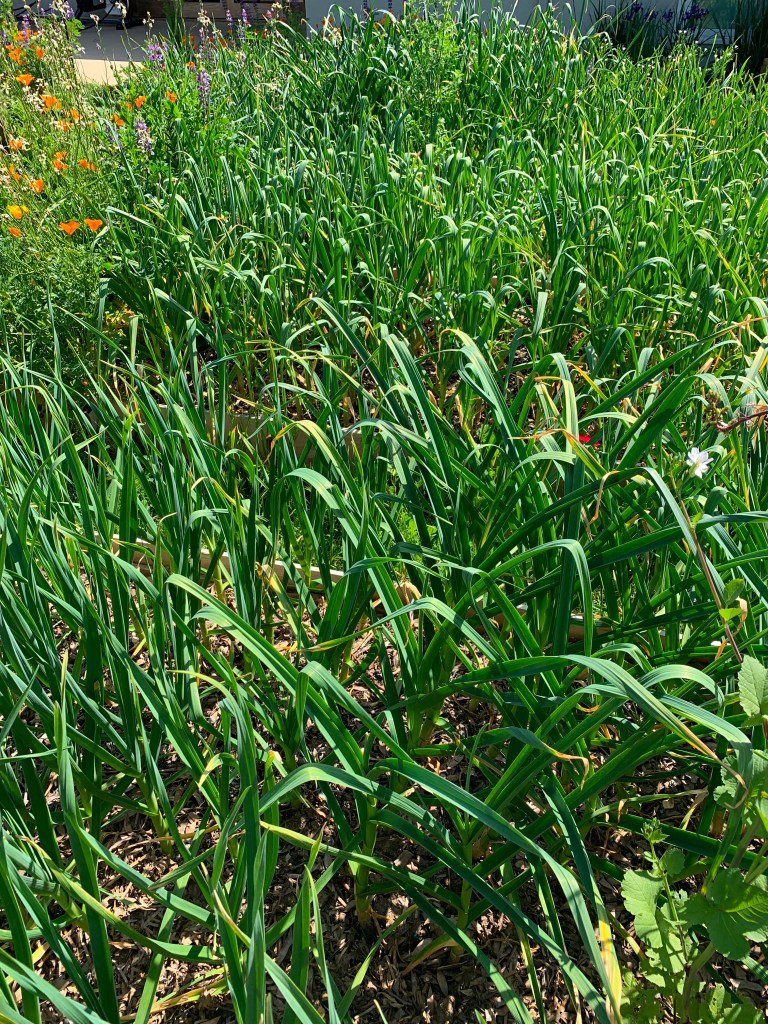
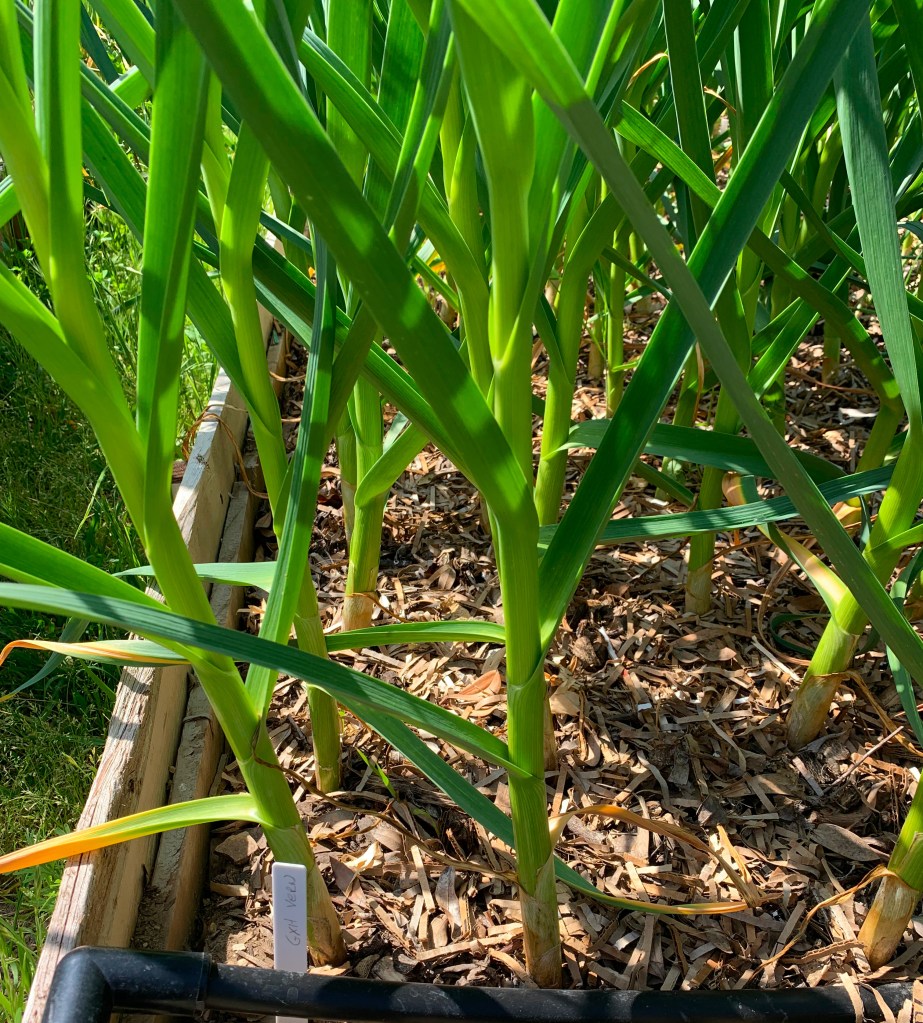
Our garlic and shallot plantings continue to grow well. The photo below shows the 3 beds with garlic in them. All 8 garlic varieties we planted are looking healthy and vigorous. The tallest (porcelain varieties) are now about 3 feet tall (1 meter). Stems are nice and fat. They should be making nice large garlic bulbs.
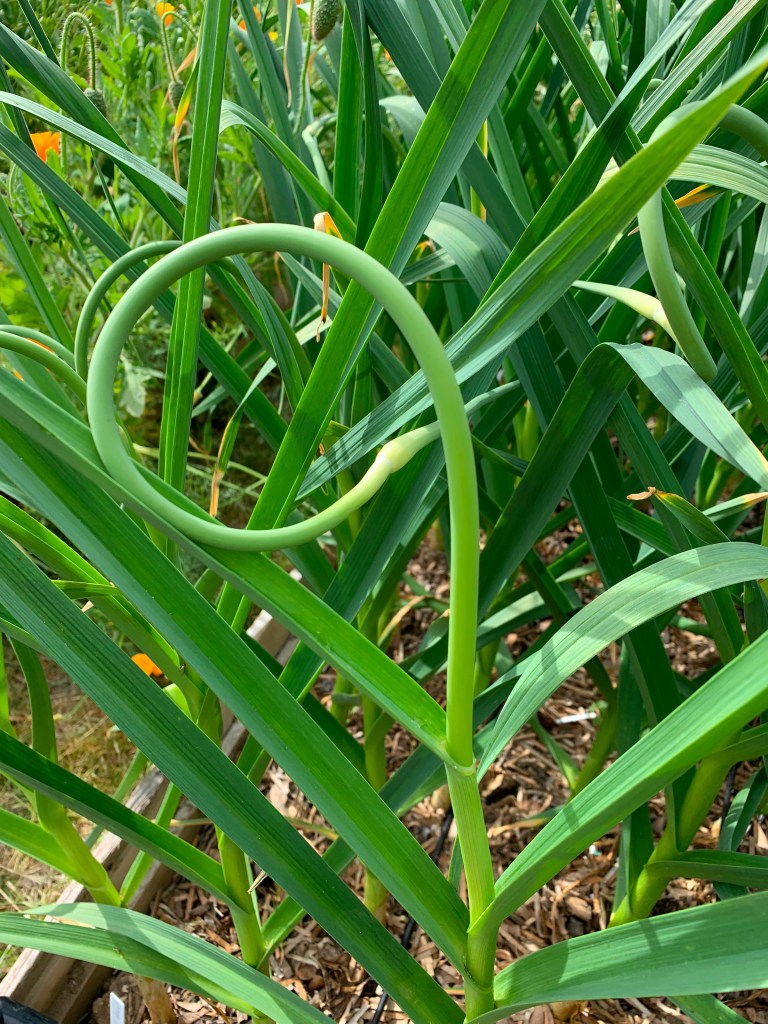
Another specialty harvest item is garlic scapes that are just starting to form. The hardneck garlic varieties send up a flowering stalk, called a “scape” when they get mature. When growing garlic these are removed by snapping or cutting them at the top leaf to encourage more growth of the garlic bulb. That is best done when the scapes start to curl like the one in the photo above.
These scapes are a delicacy with a mild garlic flavor. Our “porcelain” varieties have started making scapes, while the “purple stripe” varieties will probably have scapes in the next month. For more background on our garlic, check out our garlic experiment post.
Once the garlic starts producing scapes they are close to maturity and the recommendation is to stop fertilizing them and get ready for harvest. They still have some growing to do and will be ripe when the leaves start to die back.
The scapes are tasty with a mild garlic flavor and a firm, texture. Kind of like asparagus with garlic flavor. We’ve chopped them and added to vegetables during steaming or sauté. They give great garlic flavor and some crunch to our cooking. The taste is delicate so cooking briefly gives the best flavor. We are experimenting with turning them into pesto as well. They have both the green and the garlic parts of pesto all in one.
Our saffron plants have gone dormant for the summer. The leaves have dried up and they will rest for about 6 months. Then they will wake up and grow new shoots and flowers in October or November. We will leave them alone for now, with no water until October. See our post on the Saffron Experiment for more background info.
Coming Soon
The larger summer vegetables (think tomatoes, eggplants and peppers) have been transplanted from their paper pots to their summer homes. Other summer crops have followed with transplants of green onions, tareh (Persian garden leeks), basil, chard, and lettuce.
Visitor Log
We have been seeing all our regular bird friends around. This includes the mockingbirds, towhees, ruby crowned kinglet, ravens, sparrows, finches and juncos.
This month the junco kids popped out of their eggs on April 11 and the nest was empty on April 22. Pretty quick to raise the family! An interesting observation was mom laid one egg a day for 4 days, but did not spend much time sitting on the nest until all 4 eggs were laid, then she was there most of the time. Maybe that is why all 4 hatched about the same time.
We saw mom and dad bringing in meals for the 4 growing kids. After the nest was empty the parents stayed around the nest area for another week or two. Probably the young ones still needed training before they were fully independent. Now mom and dad were sitting on the telephone wire in the backyard. Looked like they were relaxing and enjoying the freedom that comes from an empty nest!
Our raccoons seem to be coming by on occasion, as we notice some digging around some of the garden beds (see our March 2023 post), and around the bottom of the compost bins, trying to find a way into them. We’ve tried to deter the digging by placing bricks and rocks around the edges of the bins, but they get pulled away. A bit too heavy for the squirrels, but those raccoons have good muscles! We plan to bury some poultry fencing around the edges of the compost bins to discourage them digging.
One unusual sighting was a coyote strolling down the sidewalk. The coyote appeared to be quite at home, walking very properly on the sidewalk rather than the street or yard. Looked like a determined coyote on his way to an appointment, not getting distracted by the neighborhood sights and sounds.
Find Peace in a Garden
Find time to get out in a garden, a park or a spot where nature is on display. Listen to the sounds, observe life, find peace.
If there are topics you would like to hear more about, let us know in the comments below, or send an email to Zanganeh.Garden@gmail.com.
We post quick updates on Instagram @Zanganeh.Garden
Check out our YouTube channel, also @Zanganeh.Garden
Use the subscribe button below to be notified of new posts.
 Zanganeh Garden