

Why talk about plant families?
Understanding plant relationships and their shared characteristics enhances our appreciation of plants growing in the garden. Plants in the same family share common characteristics and ancestry. Knowing a plant’s family can give us insights on growing them and helps us see plants in a new perspective.
For the gardener, understanding plant families can improve our gardening technique. Often plants in one family will grow in similar conditions. Some like it cool, some grow best in warm weather, some tolerate poor soil conditions, etc.
It is also just fun to know more about our plant friends, recognizing family characteristics as we walk through our garden. Kind of like the difference between recognizing someone walking in your neighborhood and learning their name and a few bits of information about them.
What are plant families?
We like to organize the objects around us into categories. When faced with a large number of objects, like many species of plants, grouping them into categories makes it easier to grasp how they relate. We can talk about the characteristics of a category of similar plants without knowing the details of each individual.
We can classify plants in many dimensions, as trees or bushes, annuals or perennials, evergreen or deciduous, edible or poisonous, etc. Different classifications are useful for different situations and uses. Formal plant classification is an attempt to combine many different qualities of plants into one organizational system. The benefit is we put each species of plant into one of these categories. The limitation is we have to make some choices of which characteristics to consider.
The first classification systems were based on similar physical characteristics. We have an underlying assumption that those plants with similar qualities are also related. This means they evolved from a common ancestor. Those evolutionary relationships generally show as common physical characteristics.
A plant “family” is a grouping of plants that have common characteristics and a common ancestry. With the advent of modern DNA analysis, we have better ideas of how plants have likely evolved. The challenge is when we find some plants have evolved in a direction quite different than their relatives. That creates debate about how to group these plants. In the past few decades some plant families have been reorganized to more closely reflect the assumed evolutionary relationships. Some plant families have been grouped together that were previously considered separate families, based on physical characteristics. Our interest is focused on the observable physical characteristics, though it is interesting to consider those evolutionary relationships. We will point out in the family descriptions below where these family reorganizations have been made. For practical use, sometimes the older system is more useful.
Within a family, there are smaller groups of plants with very similar characteristics called a “genus”. Generally plants within one genus will have very obvious similarities. In a plant family, there may be a few or a few hundred genera (that’s the plural of “genus”).
Within a genus we have the category of species, which means one specific kind of plant. There are varieties within a species, and in some cases we might even consider those varieties different kinds of plants. We also organize families into larger groups, called “orders”, but at that level, the similarities between plants is much less obvious. So talking about families is a great middle level where there are recognizable common characteristics we can understand without getting into all the details at the genus level.
Common vegetable garden plant families
We’ll take you on a quick tour of common garden plant families with brief descriptions and examples of plants in those families. There are more families we have in the garden than we include here, but for this article we will focus on the main families in a typical vegetable garden. Considering herbs, flowers and fruits would make a much longer list. We’ll cover some of those in future articles.
Within each family we will give the formal botanical name, sometimes there is more than one acceptable name. The botanical names are derived from a genus within the family that is considered characteristic of the family, or the “type genus”. We will also give the common names of the family and the plants of that family you might find in your vegetable garden.
So join us on this tour of common garden plant families.
The families we are including are:
- Fabaceae – Bean family
- Apiaceae – Celery family
- Brassicaceae – Cabbage family
- Solanaceae – Potato family
- Amaryllidaceae – Onion family
- Cucurbitaceae – Pumpkin family
Note: you can click on the family name above to go directly to that part of the article.
Fabaceae or Leguminosae
Also called Papilionaceae – the Legume, Pea or Bean family.
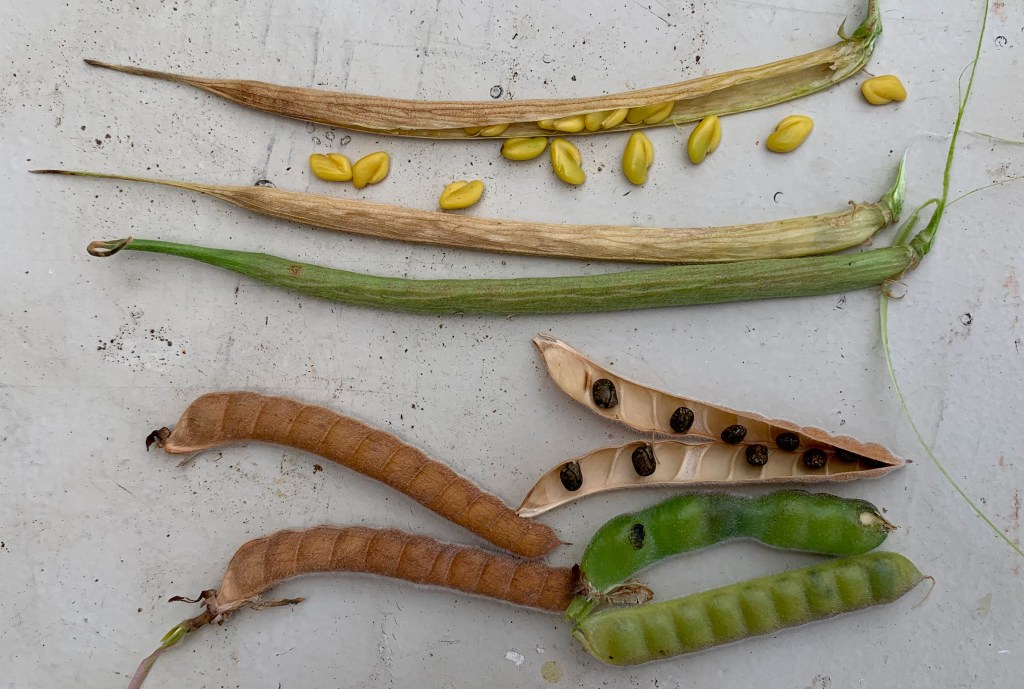
This family is often referred to as the legumes. The familiar bean or pea pod is called a legume, giving the name Leguminosae to the family. These pods typically split open along two seams when dry to release their seeds.

The name Fabaceae comes from the genus Faba, for the fava or broad bean. However, to make life more confusing, the current accepted genus name is now Vicia. The formal name of fava bean is Vicia faba.
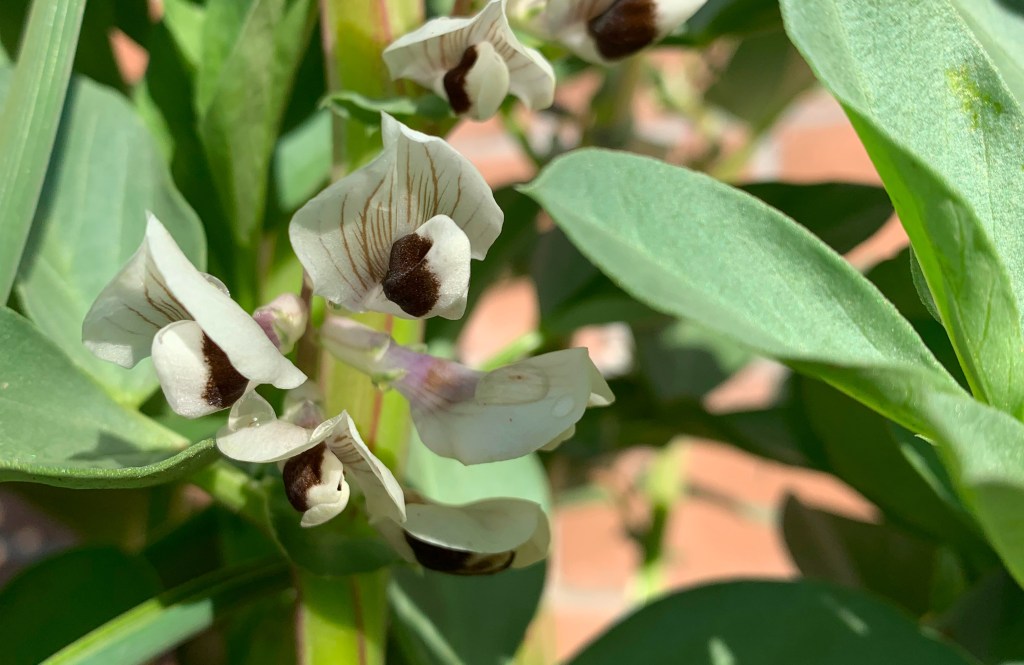
The family name Papilionaceae comes from the latin papilion, meaning a butterfly. This refers to the butterfly-like form of the flowers. Pea and bean flowers have one large petal on top with two smaller petals on the sides and two petals joined together on the bottom forming a boat-shaped structure called a keel. Next time you are in a garden with pea or bean flowers take a look and see if you can identify all those parts of the flower.
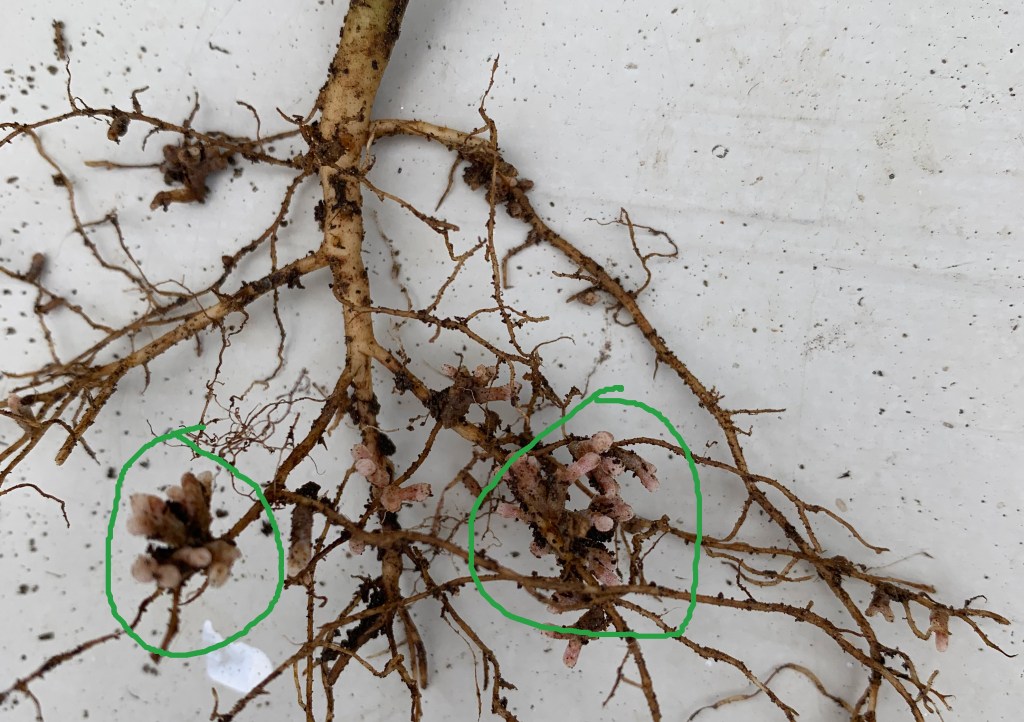
Many legumes enhance soil fertility through their partnership with special bacteria in root nodules. These bacteria capture nitrogen and convert it to a form that is used by plants. Nitrogen is a key element in the formation of proteins and can get depleted in soil. Having legumes in a plant rotation reduces the need for adding nitrogen fertilizer to the soil.
The family is quite large, the third largest family, with over 700 genera and 20,000 species consisting of herbs, vines, shrubs and trees.
Common Garden Plants
- Peas
- Sugar Snap Peas
- Green Beans
- Fava Beans (Broad Beans)
- Fenugreek
Agriculturally Important Plants
- Soybean
- Chickpeas (Garbanzo beans)
- Lentils
- Various Dry Beans (Kidney, Black, Navy, Pinto, Cannellini…)
- Alfalfa
- Clover
- Liquorice
- Peanut
Apiaceae or Umbelliferae
The Celery, Parsley or Carrot Family
The umbelliferae are named for their characteristic arrangement of flowers in an umbel. The flowers are on short stems that all start from one point, something like the ribs of an umbrella. The word comes from the Latin umbella, a parasol or sunshade. Many species have compound umbels, meaning there are umbels within the umbels. Examples are carrots, parsley, and cilantro.
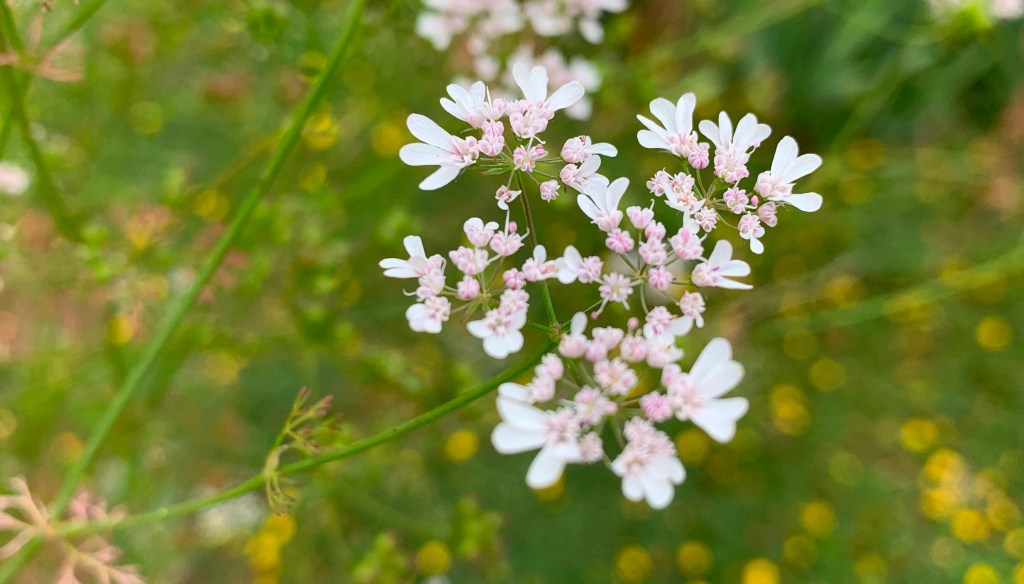
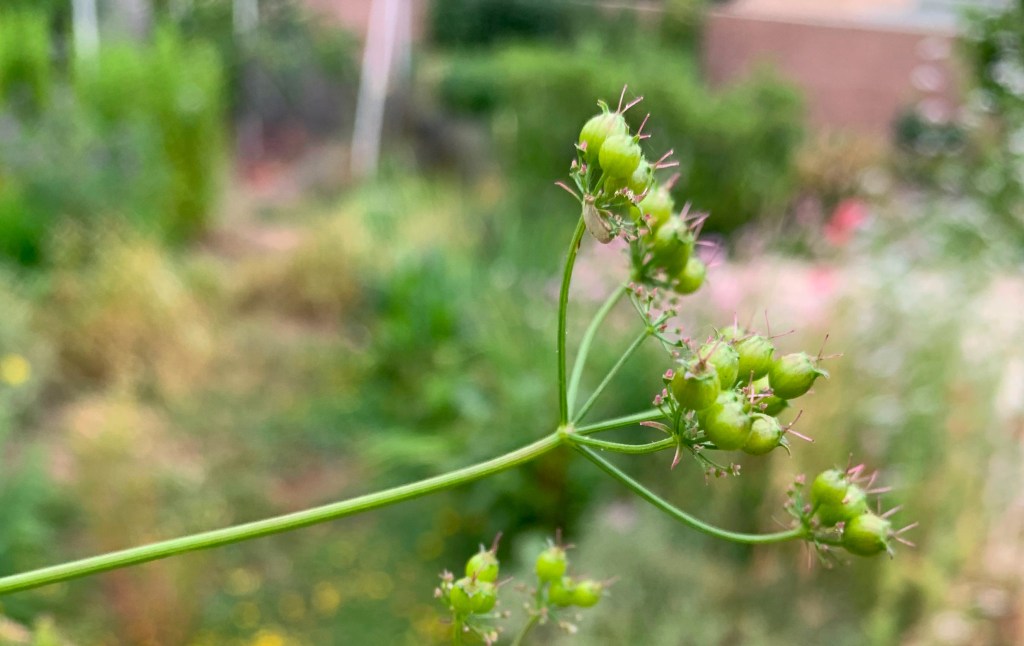
In the photo of cilantro fruits, there are 6 branches from the stem forming a first umbel. Then at the tip of each of those branches is a smaller umbel with 4 to 6 round fruits, making this a compound umbel (an umbel inside another umbel).
The family name Apiaceae refers to the genus Apium, or celery. Apium is Latin and means “bees”. The flowers are a favorite with bees.
Many plants in this family have seeds with essential oils and aromatic compounds we use as spices, such as anise, fennel, caraway, cumin and coriander. This is the 16th largest family of flowering plants with over 400 genera and 3,800 species with many well-known and economically important plants.
In addition to including many plants we use as food, a number of members in this family are poisonous, such as poison hemlock. So if you find some of these plants in the wild, don’t think they are edible just because they look like parsley!
Common Garden Plants
- Carrot
- Celery
- Cilantro (Coriander)
- Dill
- Fennel
- Parsley
- Parsnip
Common Herbs and Spices
- Ajwain
- Angelica
- Anise
- Asafoetida
- Caraway
- Chervil
- Cumin
- Dill
- Fennel
Brassicaceae or Cruciferae
The Cabbage or Mustard Family
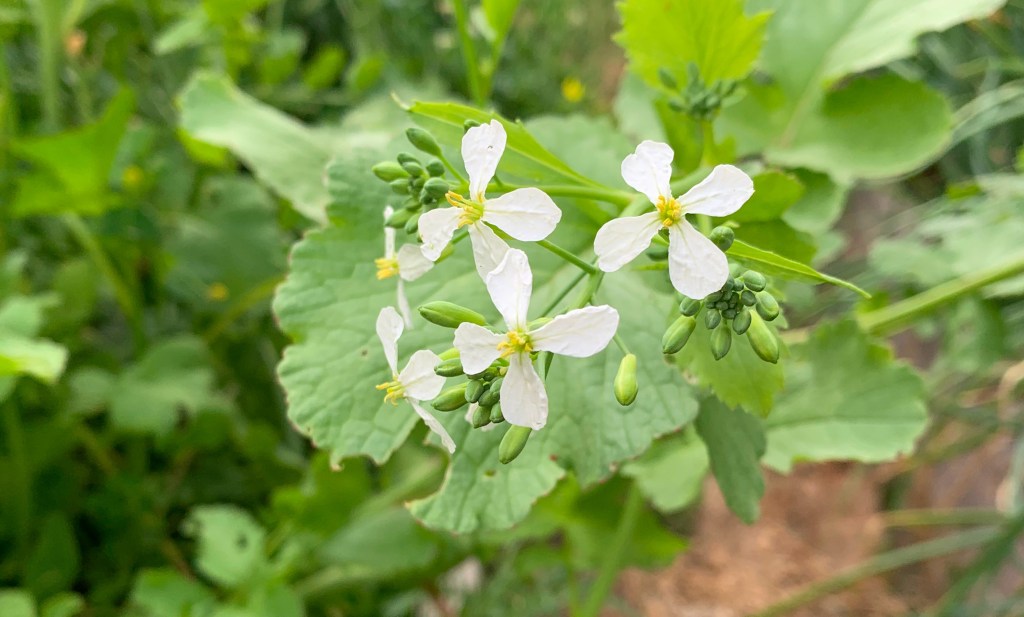
The name Cruciferae means “cross bearing” which refers to the flowers having 4 petals arranged in a cross pattern.
The name Brassicaceae comes from the genus Brassica, which includes many garden favorites like cabbage, kale, cauliflower, broccoli and turnips. Brassica is the Latin name for cabbage-like plants.
Many members of this family produce chemical compounds known as glucosinolates, a group of sulfur-containing compounds that have a pungent or spicy flavor that may act as a defense against pests. Some of us humans enjoy the spicy flavor of radish, mustard and wasabi.

The family contains about 370 genera and over 4,000 species. The agricultural market and our backyard gardens include many vegetables from this family. It also includes species that are used to produce edible oils, like rapeseed oil (also called canola oil).
Common Garden Plants
- Cabbage
- Kale
- Cauliflower
- Broccoli
- Collards
- Brussels Sprouts
- Kohlrabi
- Turnip
- Chinese Cabbage
- Bok Choy
- Radish
- Horseradish
- Rutabaga
- Watercress
- Arugula
Agriculturally Important Plants
- Mustard
- Rapeseed (Canola)
- Wasabi
Solanaceae
The Nightshade or Potato Family
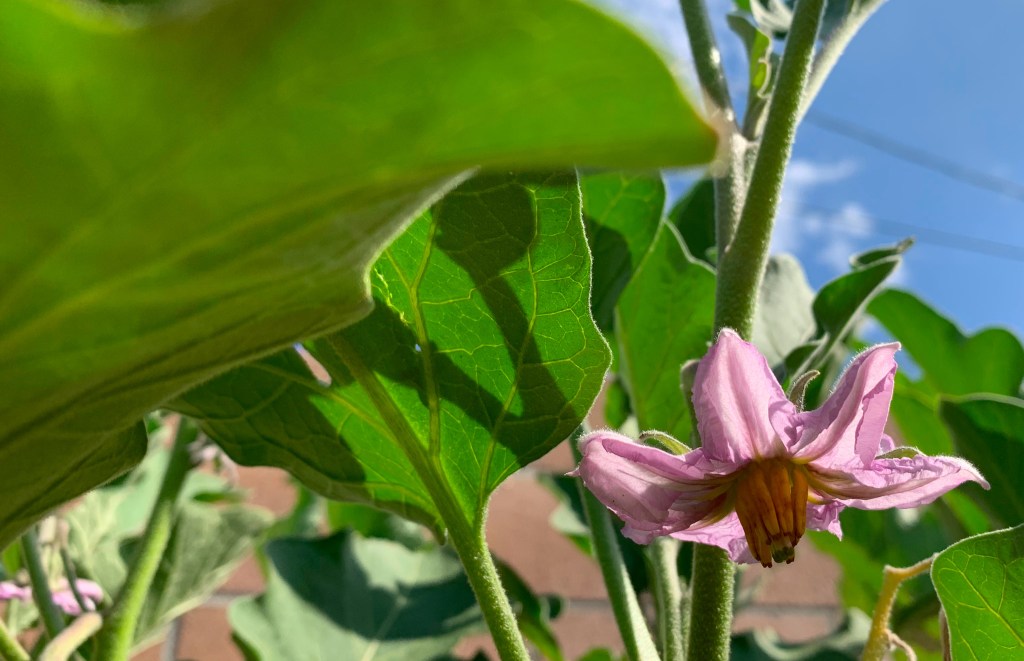
The name Solanaceae comes from the genus Solanum, the Latin name for nightshade. It is thought the name might be derived from the Latin “Sol” referring to “sun”. Some of fruits in the family change colors as they ripen and might be considered to resemble the sun.
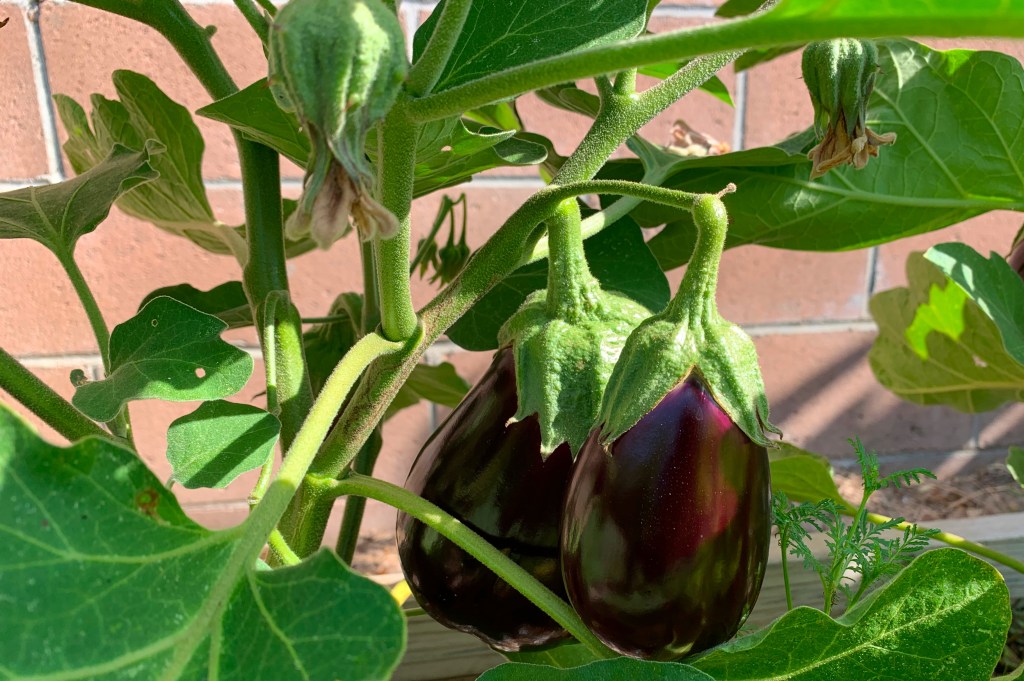
Many members of this family produce chemical compounds called “alkaloids” that can have medicinal, toxic or psychoactive properties. This includes nicotine (from tobacco), atropine (from beladonna) and capsaicin (from chili peppers).
The flowers in this family typically have 5 sepals and 5 petals that are fused together to form a tubular or bell-shaped flower. The fruits can vary widely within the family, though many are a type of berry (yes, a tomato is a berry in botanical terminology). A berry in botanical language is a fruit that has a pulpy or fleshy fruit wall with multiple seeds inside the fleshy fruit wall. Looking at a sliced juicy tomato, you can see that nice fleshy berry with many small seeds.
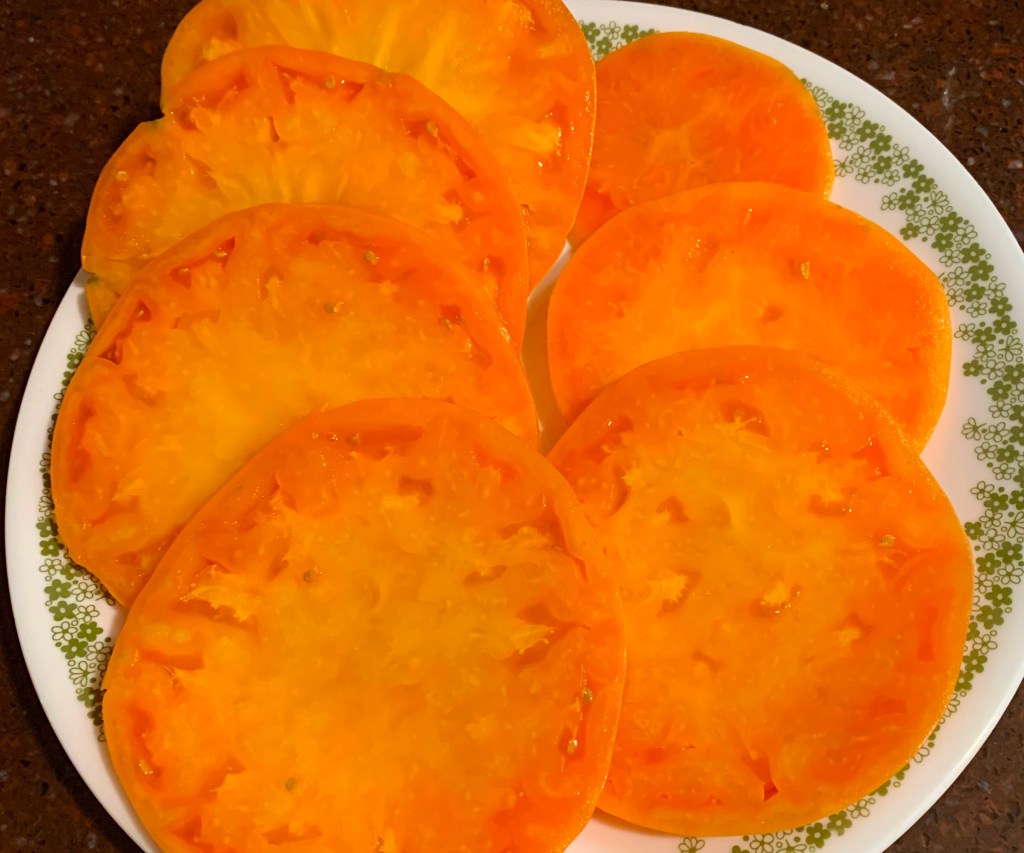
The family has close to 100 genera and around 2,700 species. It is an economically important family with many vegetable garden plants we love to eat.
Common Garden Plants
- Tomato
- Potato
- Eggplant
- Bell Pepper
- Chili Pepper
- Tomatillo
Agriculturally Important Plants
- Tobacco
Amaryllidaceae
The Allium or Onion Family
The name Amaryllidaceae comes from the genus Amaryllis, derived from Greek mythology. In Greek mythology, Amaryllis was a shepherdess who fell in love with a shepherd named Alteo. However, Alteo was indifferent to her affections. In her desperation to win his love, Amaryllis consulted the Oracle of Delphi, who instructed her to pierce her heart with a golden arrow and walk to Alteo’s door for 30 consecutive nights.
Following the instructions, Amaryllis performed the ritual, and on the 30th night, beautiful scarlet flowers bloomed from the blood that fell from her heart onto the ground. When Alteo saw the stunning flowers, he fell in love with Amaryllis. The name “Amaryllis” was later given to this beautiful flower in honor of the shepherdess from the myth.

The plants in the Amaryllidaceae have an underground bulb where the plant stores nutrients that can allow the plant to survive unfavorable conditions (maybe a cold winter, hot summer, or dry conditions). Many of these plants remain dormant part of the year, then come up and flower when conditions are suitable.
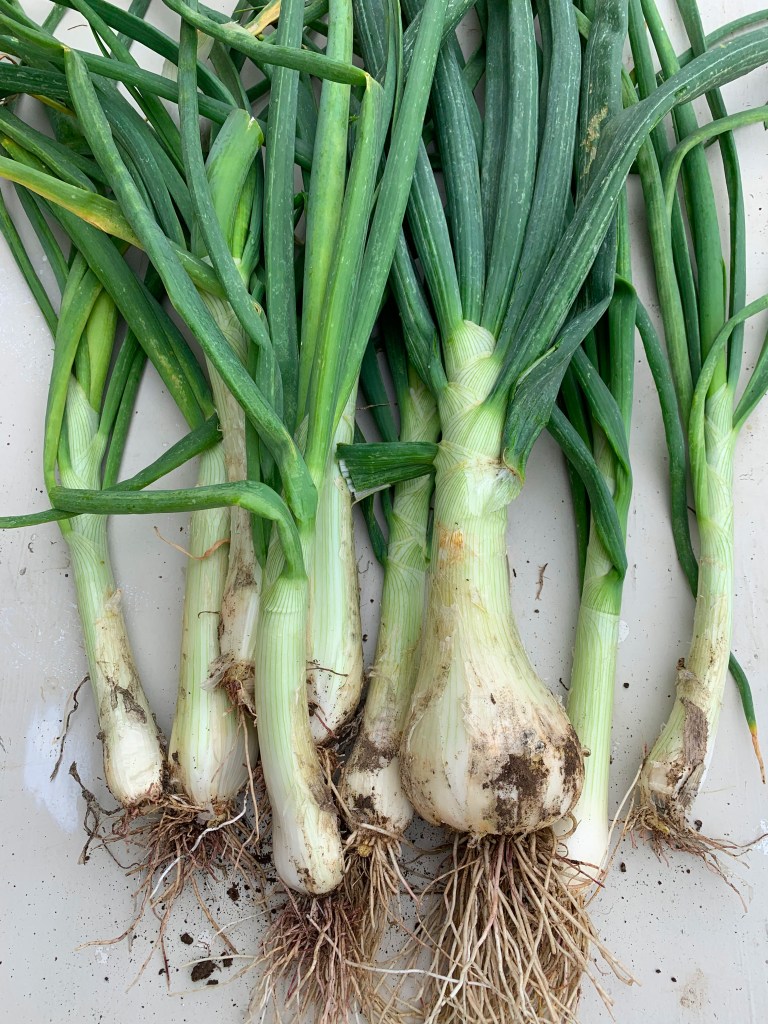
Most members of this family have long strap shaped leaves that come from the base of the plant. The flowers are sometimes single flowers, but many have large clusters of flowers arranged in an umbel (see the Apiaceae family for a description of this type of flower cluster).
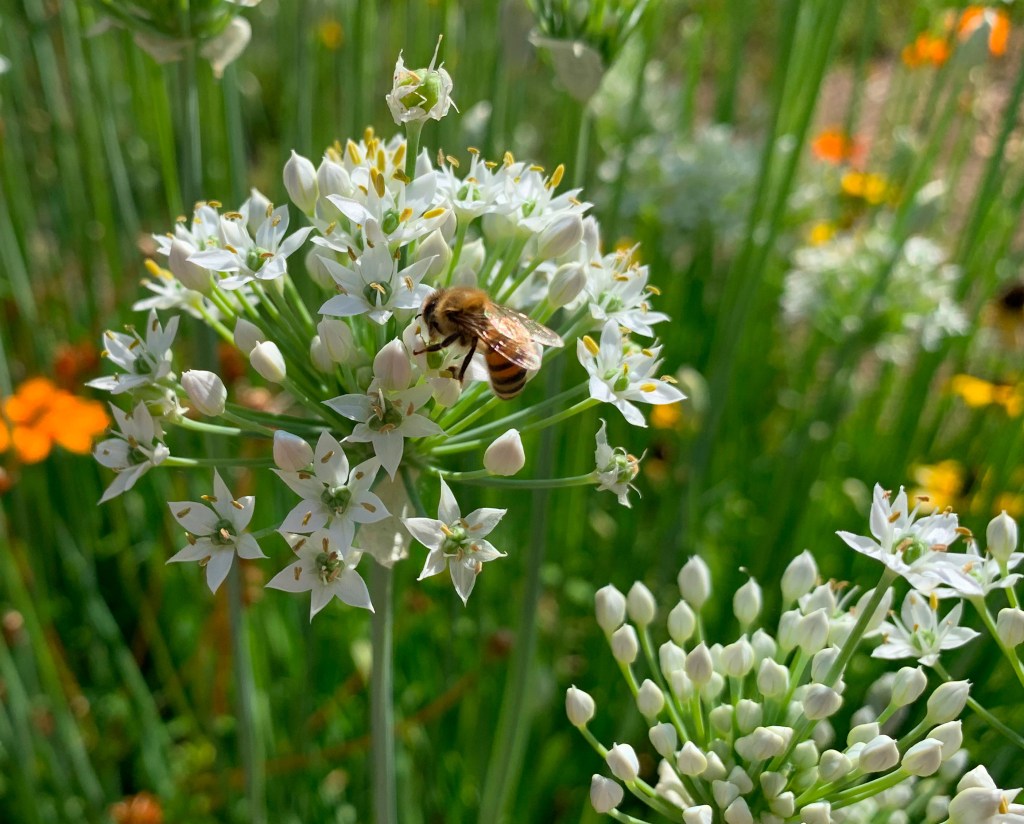
For our vegetable garden, most plants are from the subfamily Allioideae, which previously was considered the separate family Alliaceae. This is one of the cases where the more distinct Alliaceae family is formally lumped into the larger Amaryllidaceae family based on genetic information. The name Allioideae comes from the genus Allium, the Latin word for “garlic”. Interestingly, the Latin name “allium” is believed to have come from an earlier word that meant “to grow” or “to nourish”. So eating garlic was considered nourishing. You may have heard people talk about the benefits of eating alliums. Now you know where this term comes from.
The Allioideae has about 18 genera. They have an underground bulb and typically a pungent aroma, think onions and garlic. The flowers are frequently arranged in large ball-shaped umbels that can be very showy.
Common Garden Plants
- Onion
- Shallot
- Garlic
- Chives
- Leeks
Cucurbitaceae
The Pumpkin, Squash or Gourd Family
The Cucurbitaceae family gets its name from the genus Cucurbita, the Latin name for “gourd” or “pumpkin”. The name in Greek is also similar. There are about 95 genera in the family with around 965 species.
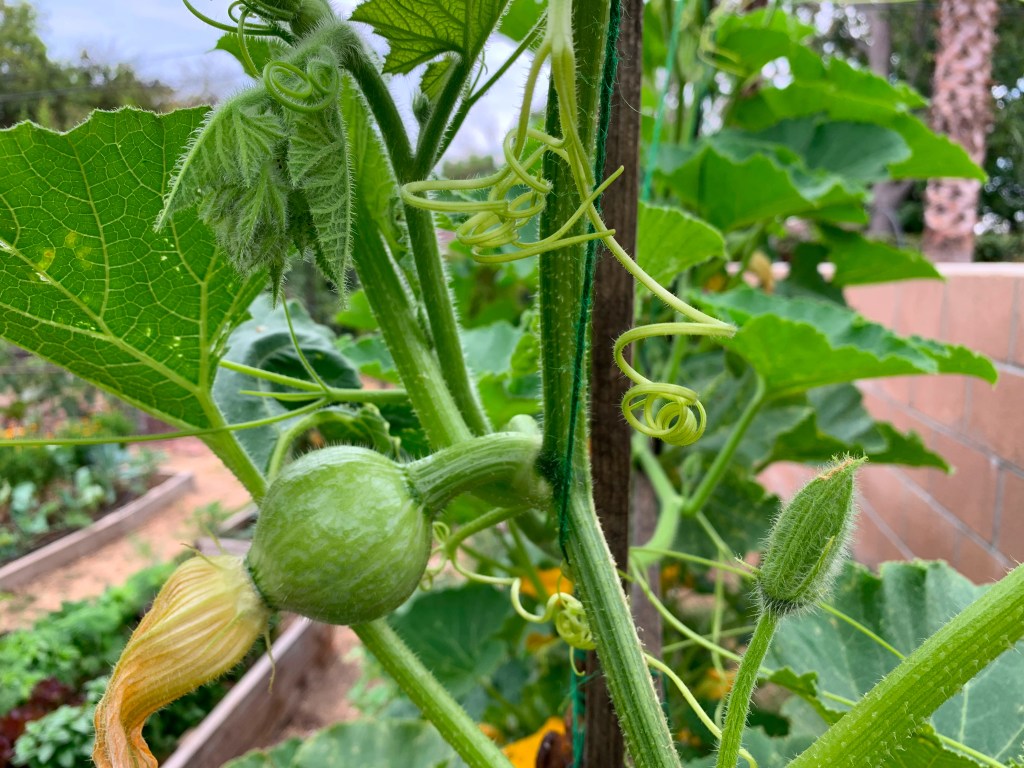
Plants in this family often grow as vines, or have stems that spread widely across the ground. If you have ever grown watermelon or pumpkins, you know one plant can spread over a large area! They typically have tendrils that help them attach to other structures to aid in climbing. We see local wild cucumbers on hikes in our Santa Monica Mountains climbing vigorously over whatever bush or tree is nearby. Leaves are generally palmately lobed (meaning they spread from the base of the leaf like fingers on a hand).
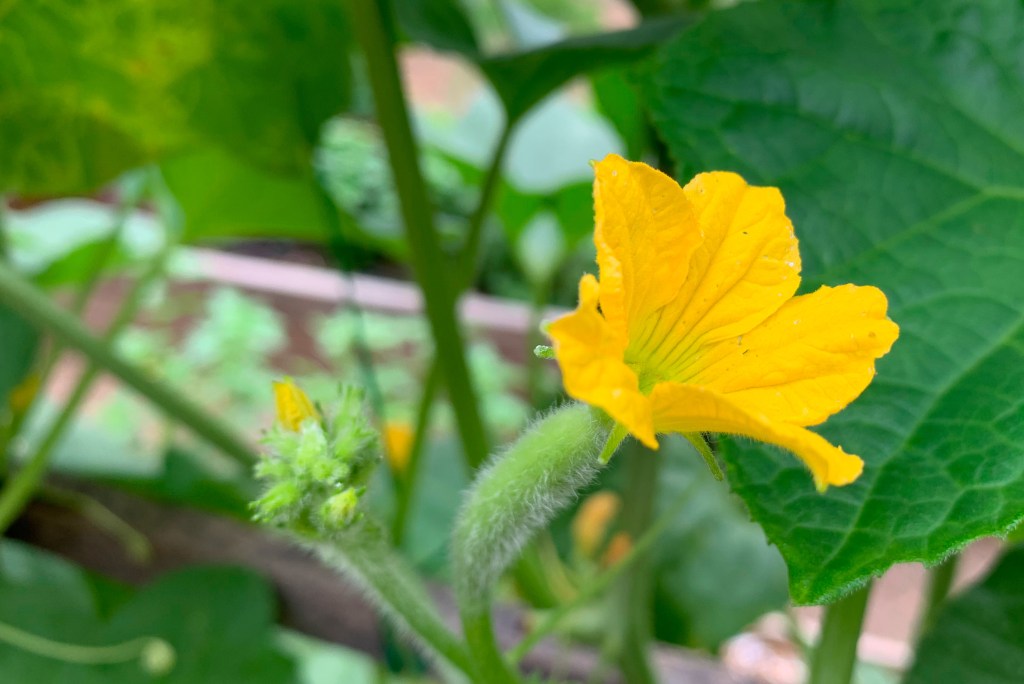
The flowers are unisexual with male and female flowers on the same plants (monoecious) in most of our squash and cucumbers, but can also be on separate plants (dioecious). The female flowers have their ovary below the flower, which will become the fruit when mature. The fruits are usually fleshy with a tough outer rind, like pumpkins and watermelons. These fruits are considered modified berries (see Solanaceae) and are called “pepos”. Many food plants are in this family.
Common Garden Plants
- Cucumber
- Summer squash (zucchini, crookneck…)
- Winter squash (acorn, butternut…)
- Pumpkin
- Watermelon
 Zanganeh Garden