

September has felt a little cooler than normal, yet still warm weather for sure. We often still have hot weather in September, but this year was fairly pleasant on most days. The cooler weather for getting the next round of lettuce started (they don’t germinate well in the heat).
Summer produce is still growing well, including summer squash, green beans, basil, tomatoes and peppers. We are starting to prepare for the fall transition with much of the change coming around November. Figs are still giving us fresh sweet fruit. Sweet potato vines are going wild, so will probably start harvest in October. We will be planting more garlic in November, so time to start vernalization of garlic (putting them in the refrigerator to give them a taste of winter).
Our Red-shouldered hawk was caught on camera in the garden this month. Always nice to see these handsome creatures perched in the garden. Our usual green fig beetles showed up this year visiting the garlic chive flowers. The bees seem to find those garlic chive flowers tasty and this year our colorful beetles appear to be enjoying a few sips of flower nectar.
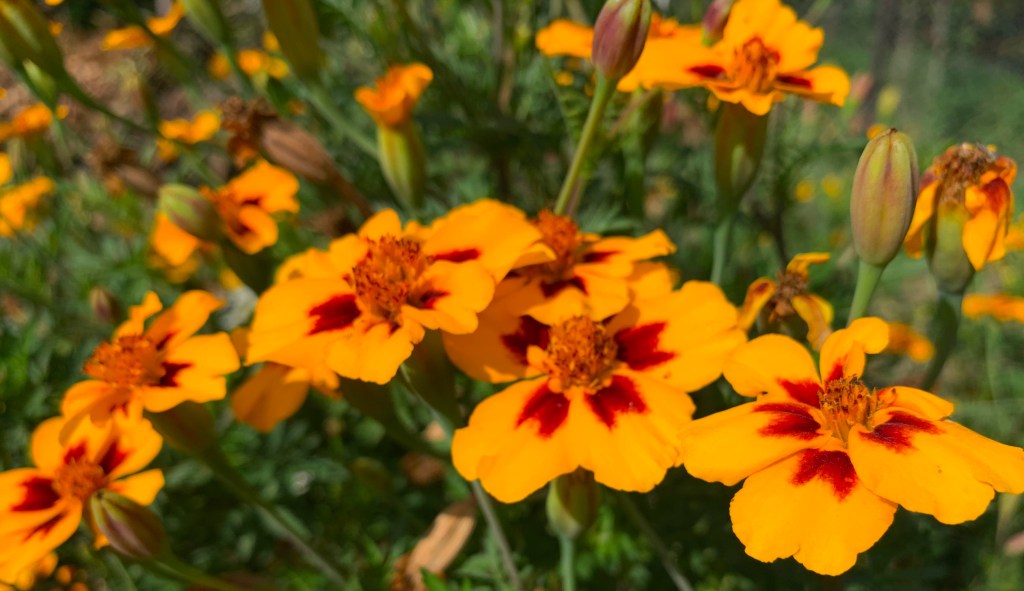
Marigolds, black-eyed Susan’s, garlic chives, cosmos and zinnias are the main attraction for September colors.
Contents of this Post
Here’s a summary of what’s in this post along with quick access links.
- Harvesting Now – What we’re harvesting and eating now
- Flowers and Herbs – Marigolds, garlic chive, zinnias and more
- Coming Soon – Sweet potatoes are almost ready!
- Visitor Log
Harvesting Now
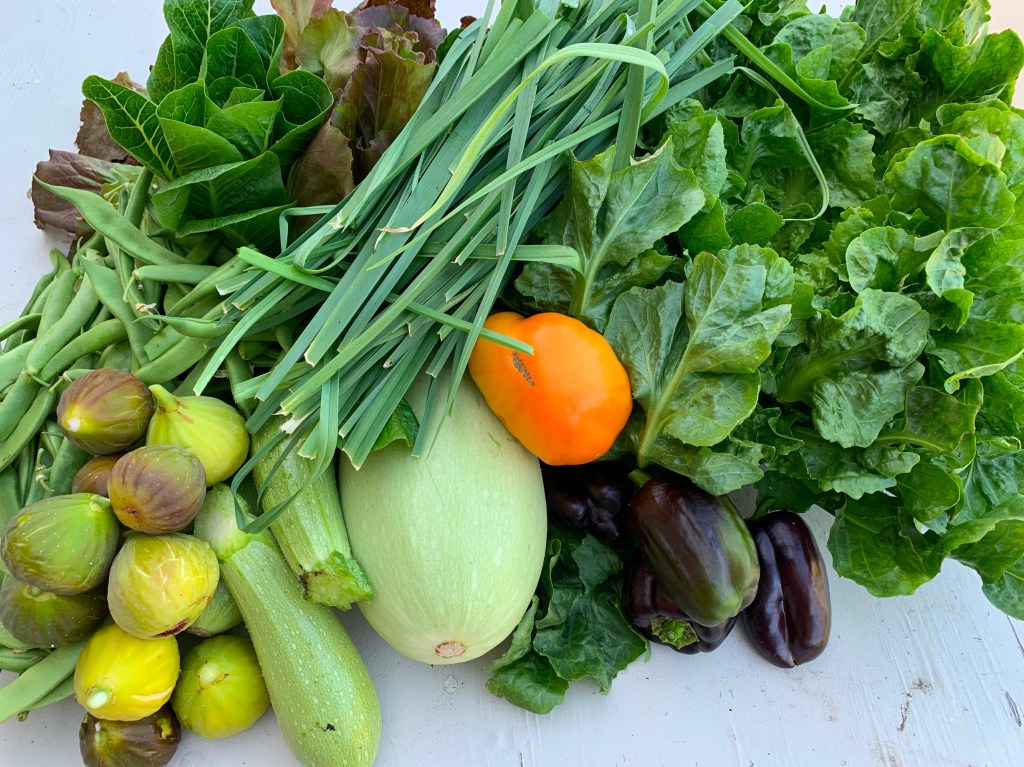
In this photo we have figs, green beans, lettuce, tareh (garden leeks), escarole, bell peppers, tomato and summer squash in this day’s harvest. All those good summer crops are going strong with the green beans and summer squash topping the list.
Although we have only one summer squash plant producing, it is an over achiever giving us 3 or 4 squash every day. The variety is Dirani that has a thin light green skin with a nice mild flavor. We pick some every day, trying to get them small. However, occasionally one sneaks past the harvester for a couple days and ends up like the large one in the photo above.
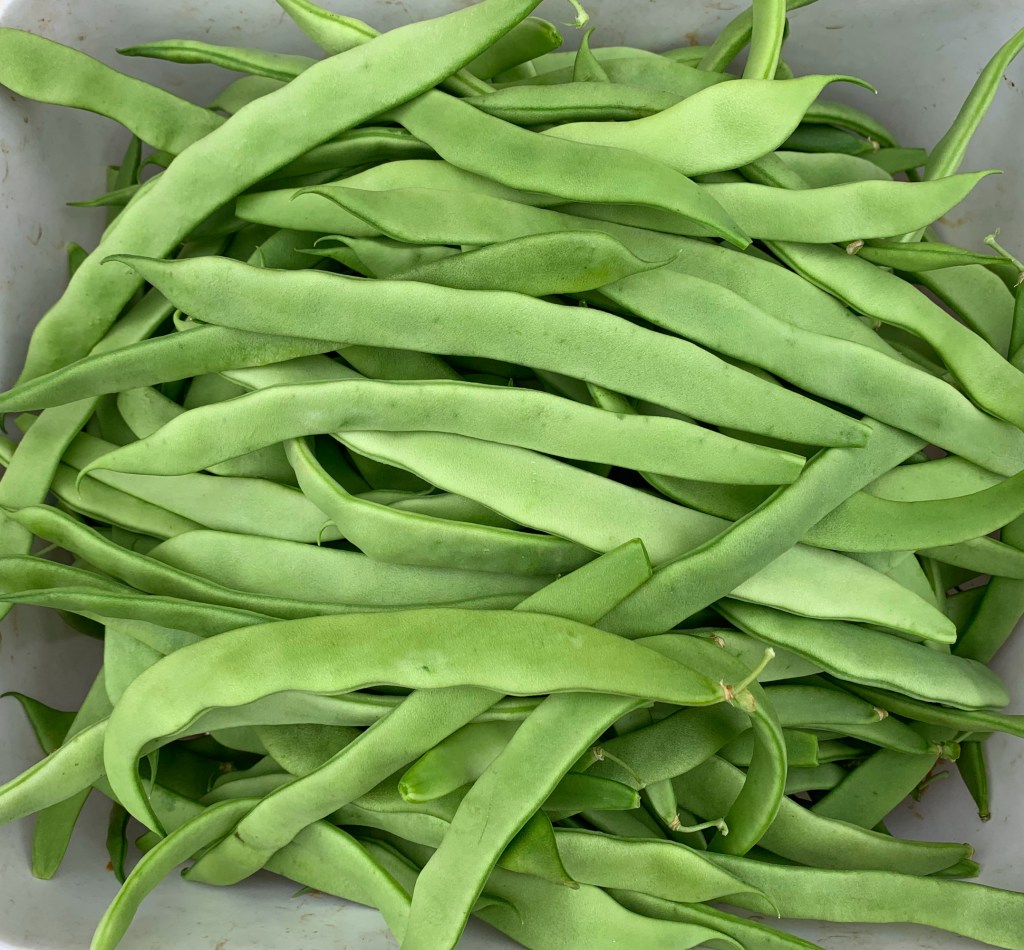
The Northeaster pole beans keep producing an abundance of these wide flat beans. This day’s harvest was about 6 pounds (nearly 3 kg). These pole beans occupy about half of one garden bed (about 11 feet or 3 meters long), so a lot of produce from a small space. Needless to say beans are on the menu nearly every day!
We enjoy green beans steamed then topped with pesto (see our recipe for roasted garlic pesto), or sautéd with garlic, tomatoes and rosemary. Another favorite of ours is making a vegetable sauce out of onion, garlic, bell pepper, squash, tomatoes and some greens that gets cooked (roasting the veggies is always a tasty option) then put in the vitamix. Sometimes we toss in a handful of raw cashews to make it even more creamy.
Lettuce is wrapping up for this season, but as weather cooled of we have started fall lettuce. Figs continue to ripen. Figs are great since they ripen just a few at a time. We get a handful or two every day, about right for a nice sweet daily treat.
Bell peppers are doing well with both green and purple varieties. Two varieties of basil keep us in tasty herbs for pesto, sauces and eating fresh. Tomatoes have been slow this summer. This year we are trying a new variety called Ace 55. It is a determinate variety and does not get as tall as the indeterminate types. They have produced well with meaty tasty tomatoes.
Our volunteer escarole is growing well. They tolerate the late summer heat better than lettuce and are giving us some later season greens. A little tougher leaves than lettuce and stronger flavor. A great addition to salads and we also use some for our green smoothies.
Flowers and Herbs
Marigolds
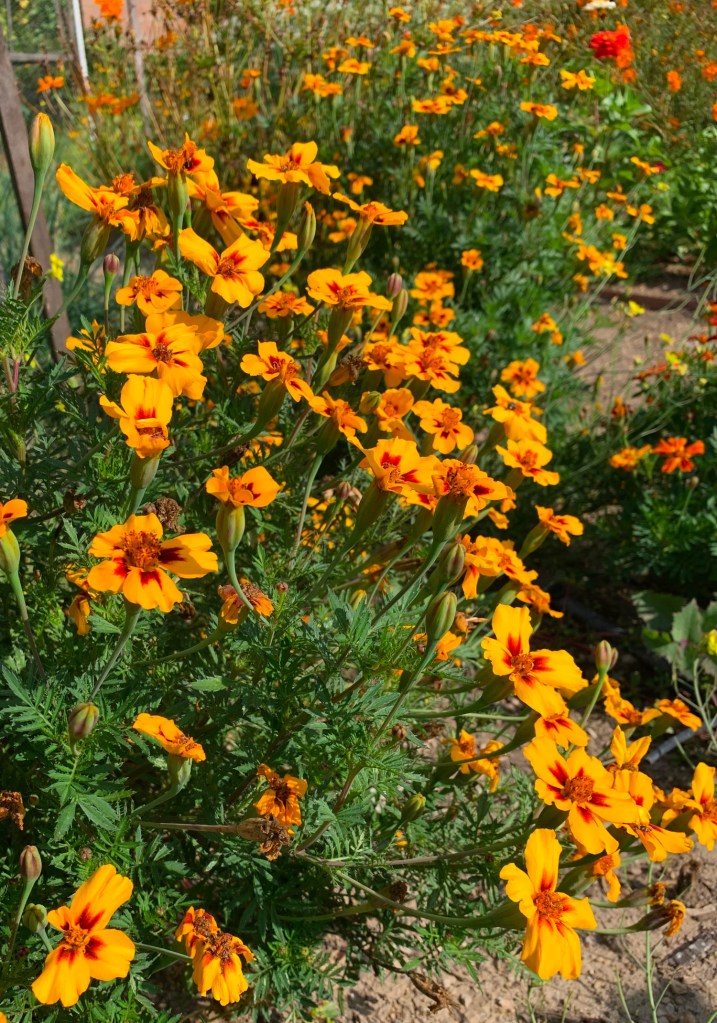
Our marigolds are in full bloom. So many great flowers that we put together a full photo gallery of these colorful flowers. Check out all the variety on our marigold gallery post.
Cosmos, Black-eyed Susans and Chive Flowers
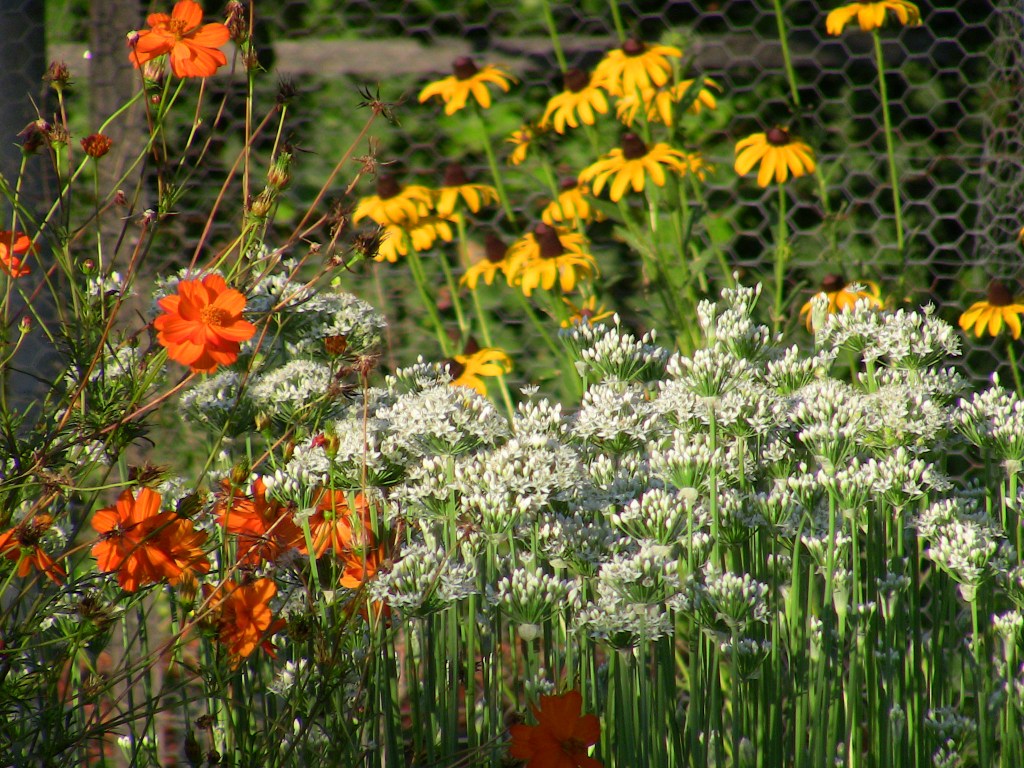
The bright orange cosmos and sunny yellow of the black-eyed Susan flowers make a nice background for all the white garlic chive flowers coming into full bloom this month.
Sweet Potato & Morning Glory Flowers
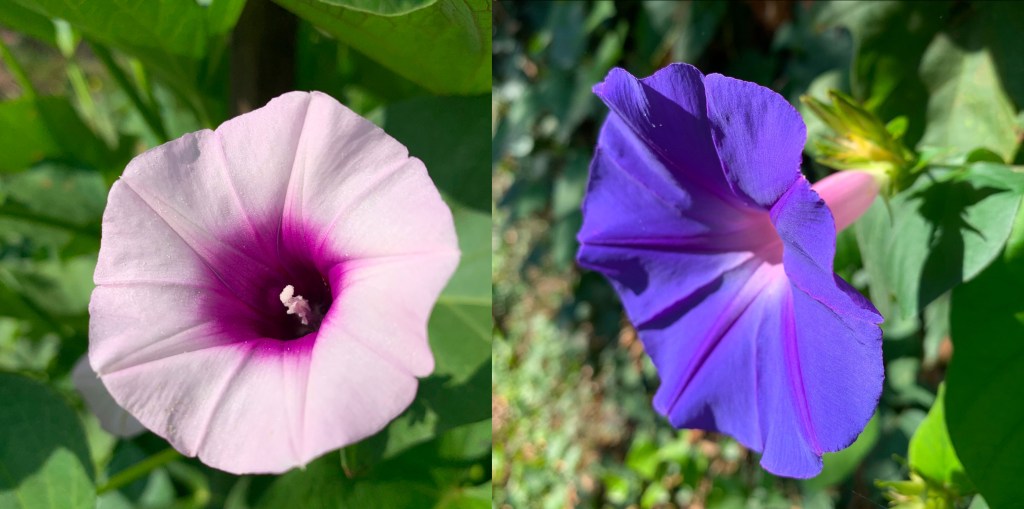
Sweet potatoes and morning glories are “cousins” in the Convolvulaceae family. The same tubular/funnel shaped flowers for both of them show their similarity with the lighter pink sweet potato flower and the darker purple for the morning glory. The flowers have noticeable creases where you can imagine how they were folded up in the bud before opening.
They both share a vining characteristic. Our sweet potatoes keep trying to spread over more of the garden while we tie them up to stakes so they don’t take over the neighboring garden beds.
Zinnia Flowers
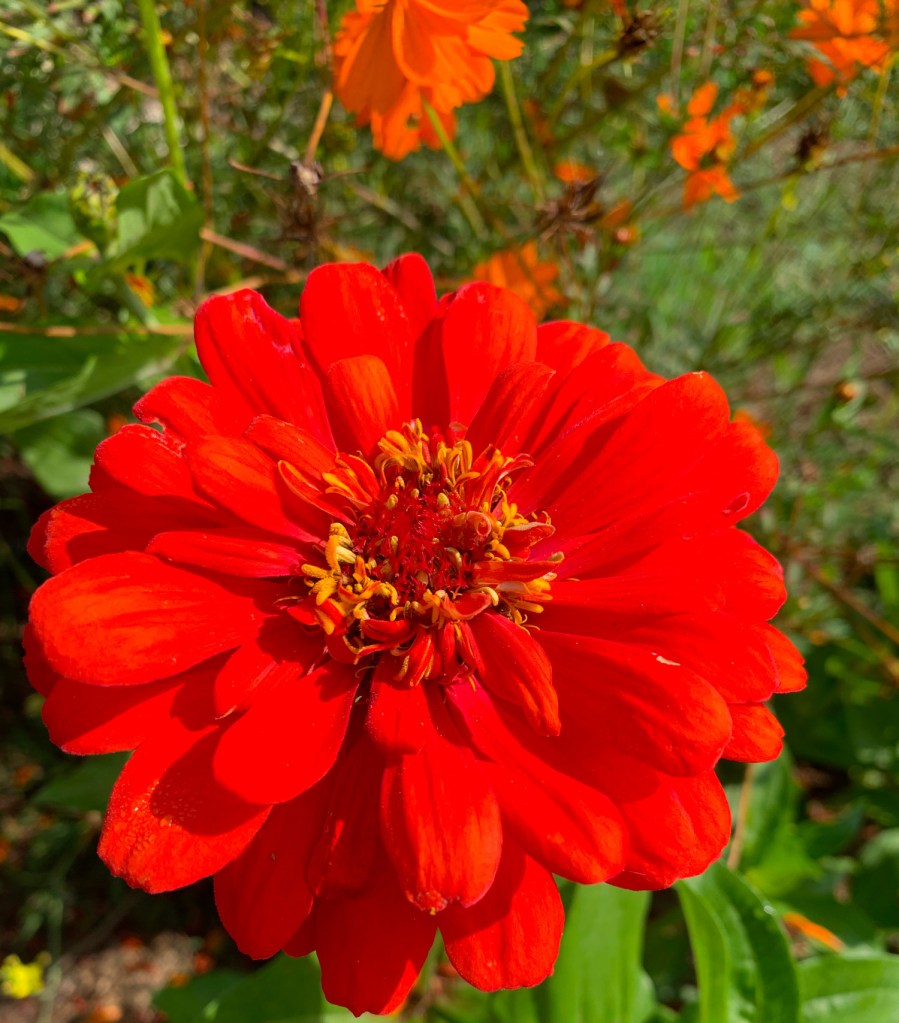
This bright red zinnia is one of many colors of zinnias adding color the the late summer garden. We planted zinnias late this year so they are just coming into full bloom in September. Our tropical storm back in August got some stray zinnia seeds (as well as others) to germinate. Looks like we’ll get some new zinnia flowers blooming in October and November.
Drought Tolerant Landscaping
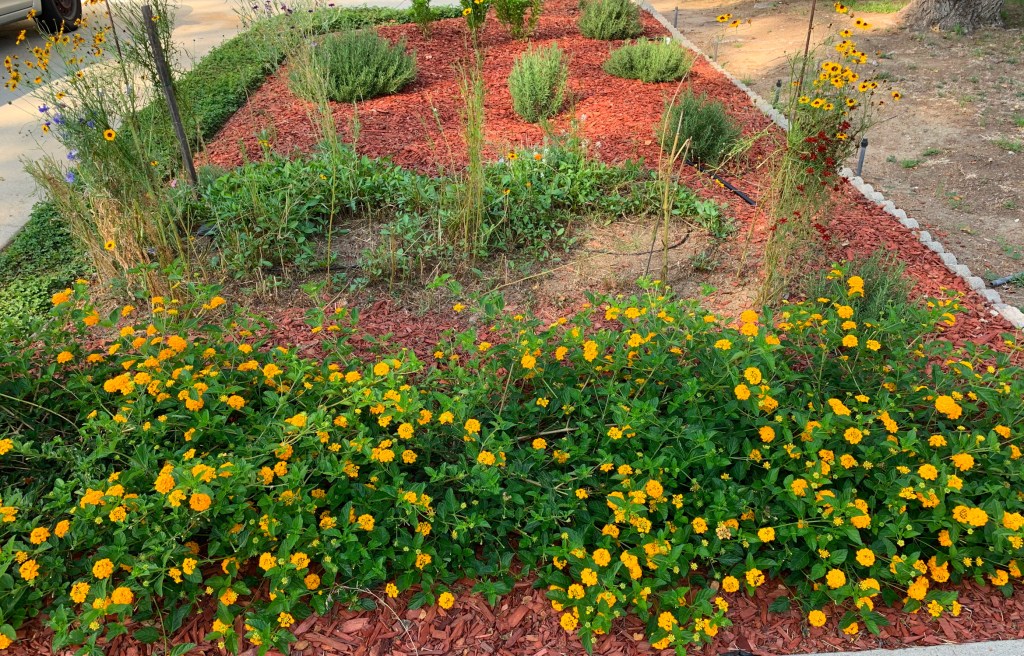
Our test of replacing part of our front lawn with drought tolerant landscaping is filling out nicely. The 3 lantana plants we put in the front have done quite well in covering nearly 20 feet (about 6 meters). Behind the yellow flowered lantana is a wildflower bed that was quite full and now in late summer the coreopsis is the main flower still blooming. Then we have a few lavender and rosemary plants that are growing well. On the left side of this photo is a strip of potentilla ground cover. We planted one plant every 18 inches (about 50 cm) and they have spread well to fill in the whole space. We mow the top to keep them short and trim the edges every couple weeks to keep them looking neat and tidy.
Overall it is looking nice and the drip system and mulch keeps the water use low.
Coming Soon
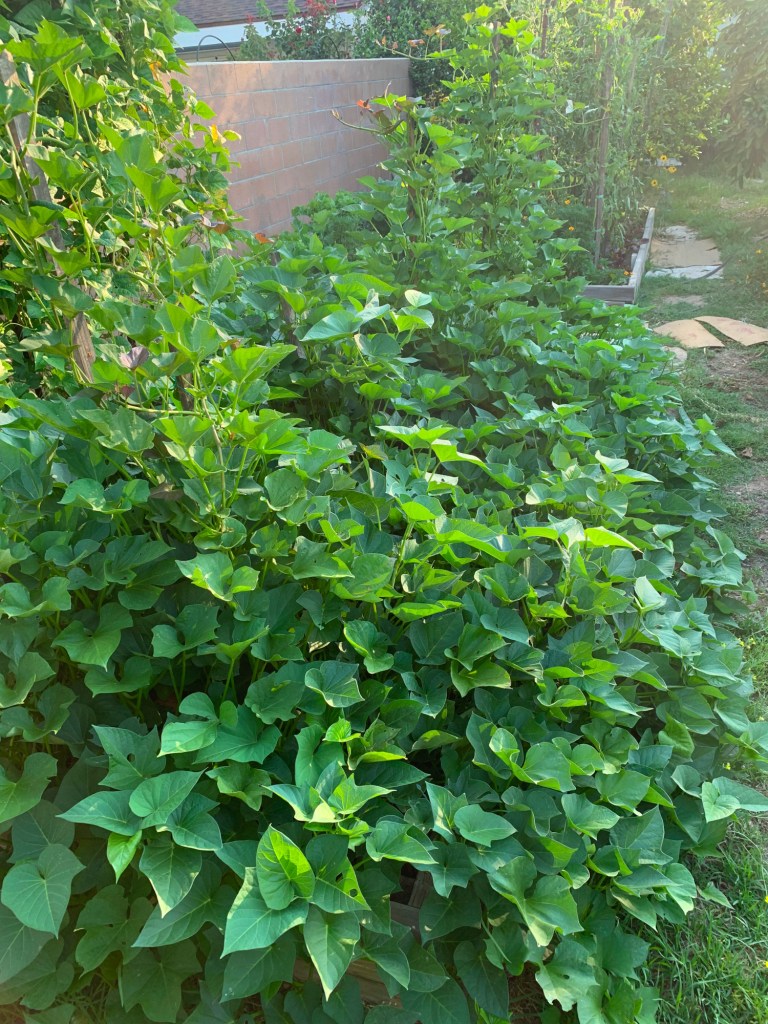
Sweet potato vines are going wild, even as we tie some of the longer branches to posts in an attempt to keep them from sprawling too far. With all that growth we are hoping they are putting as much effort into growing some potatoes under ground. Probably ready to start harvesting in October. Always exciting to start excavating for those underground gems.
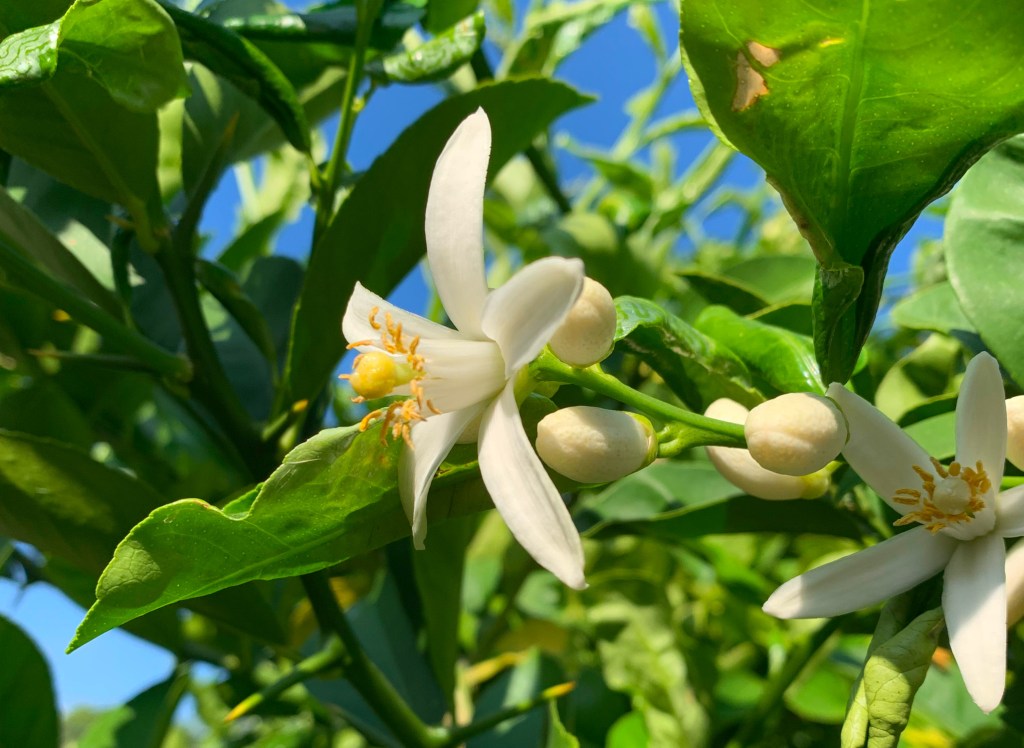
Citrus trees are bending their arms with mandarin oranges, meyer lemons and sweet lemons. Also getting new growth and some fall flowers. Maybe the cooler wet weather got them thinking of spring! Lemons from spring flowers will be ripe in the next couple months. These fall flowers should give us more ripe fruit into next summer.
Visitor Log
Red-shouldered Hawk
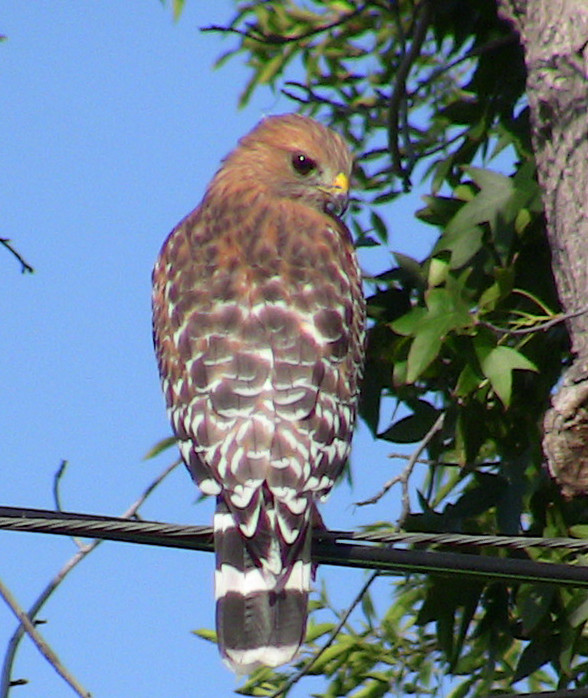
Our red-shouldered hawks appear to have a nest in our neighborhood, as we hear and see them on a regular basis. We even had an adolescent hawk perching in the garden one day. It was slightly smaller than the other hawks and coloring was not as well defined.
These hawks have distinctive markings with black and white stripes on the tail and deep rusty red shoulders and chest. Quite handsome creatures and we hope they keep our squirrel pests from hanging around too much!
We were able to get our hawk on camera. Here is the video.
Green Fig Beetle
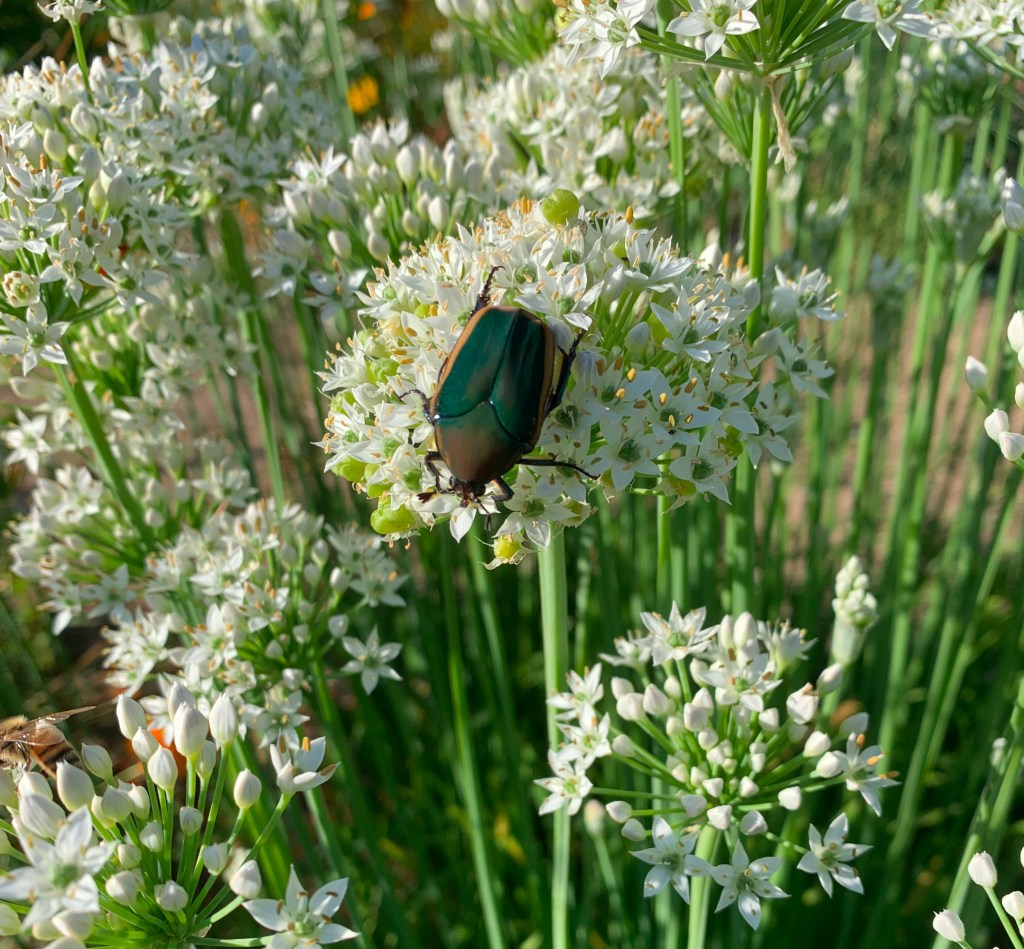
Late summer is when we see these colorful metallic green fig beetles around the garden. They are related to June bugs that many of you may be familiar with. This year we have seen them on the chive flowers a few times. They have a reputation for liking very ripe, or even rotting, fruit (like figs). They don’t have the “teeth” for biting fruit so they don’t bother our figs (unless they are well past what we’d eat anyway).
We see the grub larvae in our compost pile. Some beetle larvae can be pests (like the Japanese beetle larvae) but these guys seem to prefer compost, so we just enjoy the colorful appearance of the adult beetles at this time of year. For more info, check out our post on green scarab fig beetles.
Dragonfly

We see dragonflies of various colors flittering around the garden. They often don’t stay in one place long enough to get a photo, but this one was taking a break on the sweet lemon tree. Or maybe guarding his territory as male dragonflies are known to do. They will fight off other males entering their territory.
Dragonflies are excellent hunters, eating mostly other flying insects. Maybe this one will find some of the citrus leaf miner moths. The leaf miner larvae are what causes these leaves to curl.
Dragonflies are fascinating insects that are strong and very accurate fliers, which enables them to capture 95% of the prey they pursue, catching them in the air. So if you are a mosquito spotted by one of these guys, you don’t have much chance of escape!
An interesting behavior some dragonflies use to sneak up on their target is called “motion camouflage”. Instead of flying directly toward their target, they choose a flight path to intercept their target by flying toward a point ahead of the target position. This makes them appear to stay in the same position relative to the background from the target’s perspective.
Doing a little algebra and trigonometry, if the target if flying at 1.5 meters/sec and the dragonfly is flying at 1.8 meters/sec, and the target is 3 meters away, then the dragonfly can set it’s course at 56 degrees from the current target position. It will intercept the target in 3 seconds after the target has flown 4.5 meters. Those dragonflies must have been paying attention in their math class!
They have two pairs of wings they use to expertly fly in 6 directions, forward, backward, up, down, left and right. They also have excellent eyesight with two large compound eyes with up to 20,000 individual eyes, as well as 3 simple eyes. They get a 360 degree view of the world with thousands of different views.
There is even a company that has built a little “backpack” for dragon flies with a solar cell and microchips that connect to the dragonfly’s nervous system enabling them to steer the dragonfly. The idea is to use them as a mini drone that takes advantage of their small size and expert flight capabilities. Talk about spies putting a “bug” in the room!
Stink Bug Eggs and Hatchlings
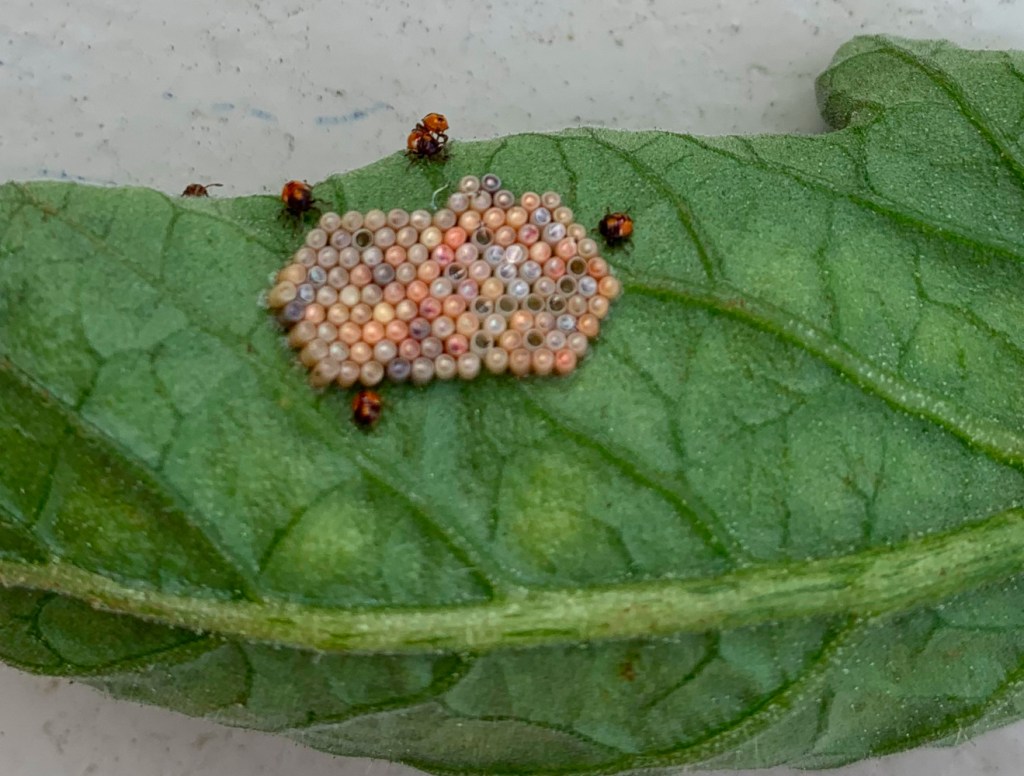
Finding a few bugs in the garden is not unusual. This group of insect eggs just hatching is something not usually noticed. These appear to be some species of stink bug (also called shield bugs), but not sure which one. Some stink bugs can be pests as they suck the juice from plants. We haven’t seen many of them, or damage from them. Maybe our dragonflies are doing a good job of hunting them before they get big!
Find Peace in a Garden
Find time to get out in a garden, a park or a spot where nature is on display. Listen to the sounds of those birds, observe the colors and amazing details in all flowers and plants, find peace.
If there are topics you would like to hear more about, let us know in the comments below, or send an email to Zanganeh.Garden@gmail.com.
We post quick updates on Instagram @Zanganeh.Garden
Check out our YouTube channel, also @Zanganeh.Garden
Use the subscribe button below to be notified of new posts.
 Zanganeh Garden