

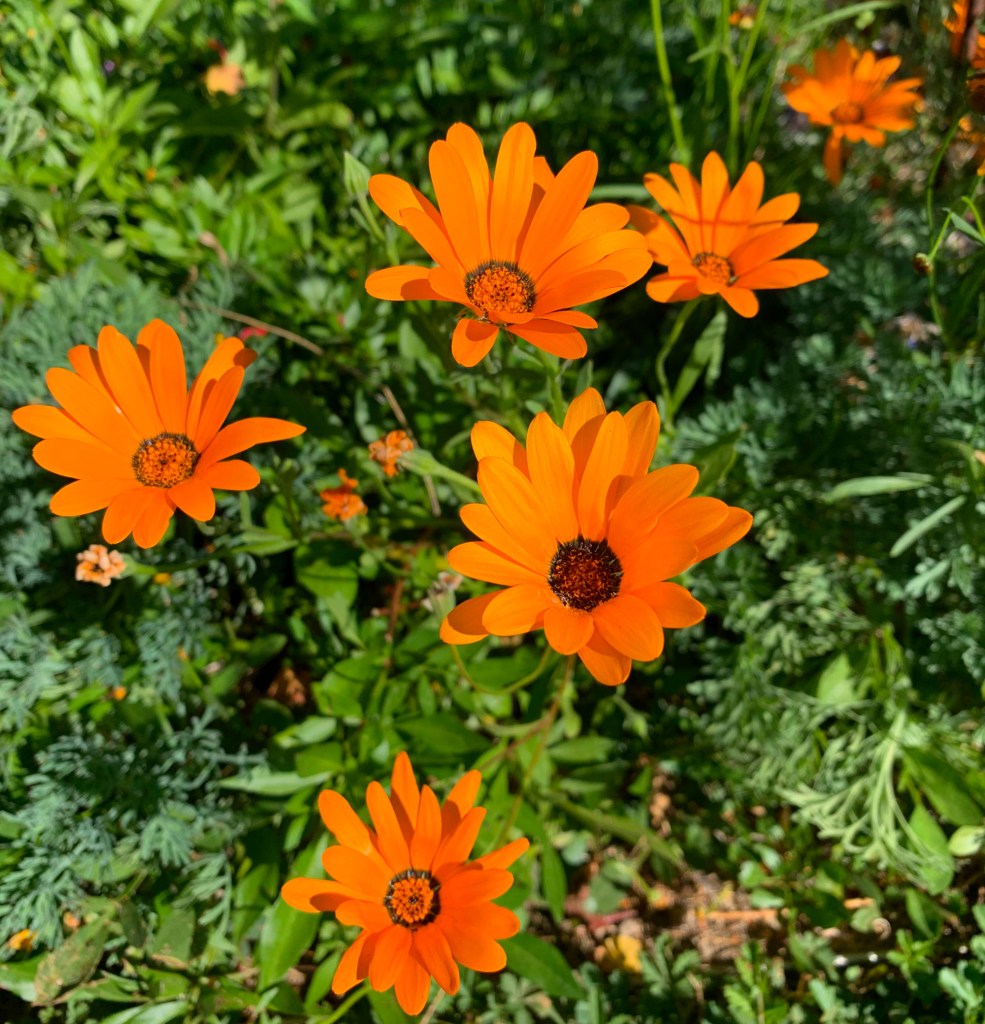
October was still quite warm with a few days of cooler weather indicating fall is on the way. The major harvest this month was digging 50 pounds of sweet potatoes. Summer crops like beans, squash, peppers, okra and tomatoes are still producing. For flowers, the okra, zinnias, coreopsis, hollyhocks, chocolate flowers, feverfew and marigolds continue to bloom. A colorful variety of late summer/fall flowers.
October is usually summery weather here and we had a couple days crossing the 100 degree mark (38 Celsius). A few cooler days as well with temperatures under 80 (25 Celsius). Shadows are getting longer and the shorter days are slowing growth of summer crops.
Meanwhile, the late summer and fall flowers are putting on a colorful show. Our unusual August and September rain caused confusion for wildflowers and other volunteers who thought it was time to sprout!
Contents of this Post
Here’s a summary of what’s in this post along with quick access links.
- Harvesting Now – What we’re harvesting (sweet potatoes and summer veggies)
- Flowers and Herbs – Marigolds, zinnias, coreopsis, hollyhocks, feverfew, Marguerite daisies, chocolate flowers, and time lapse of okra flower opening
- Coming Attractions – Satsuma mandarins in the queue, garlic to be planted
- Visitor Log – Mystery tomato muncher
Harvesting Now
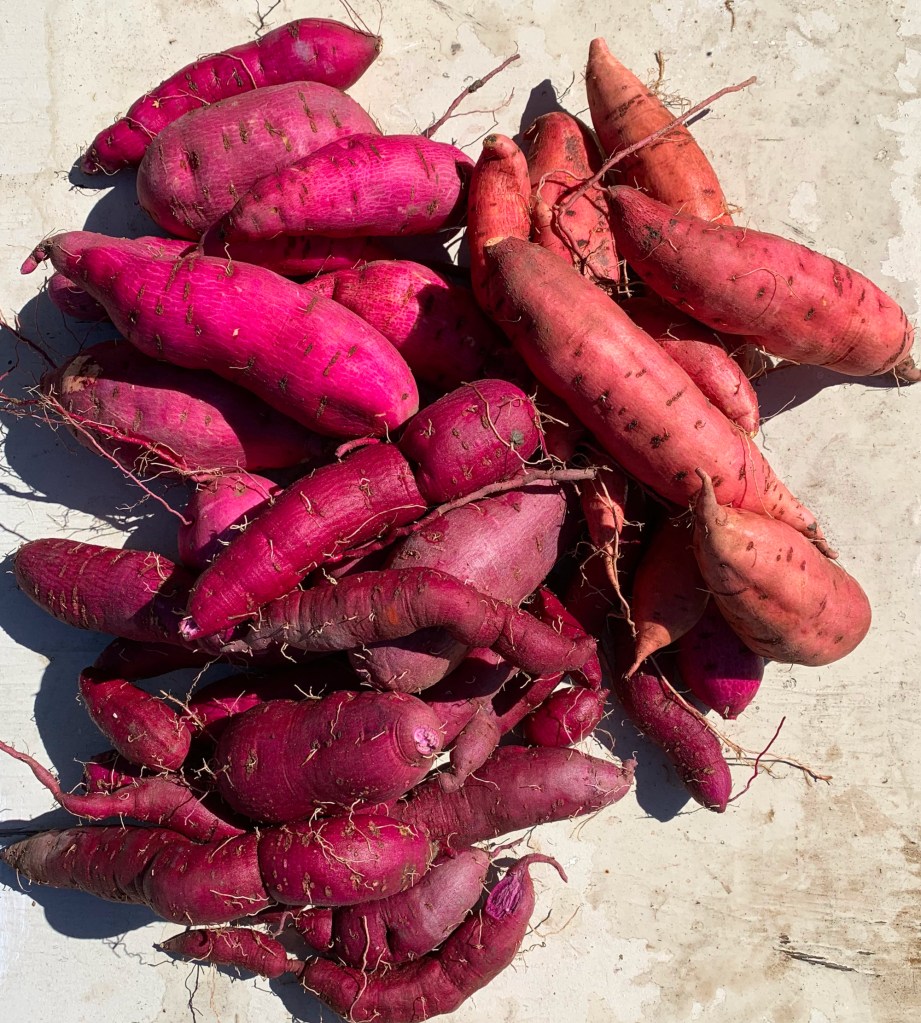
We harvested our 50 pounds of sweet potatoes in October. The photo above shows a sample of the 3 varieties we grew. On the top left are the white fleshed Murasaki sweet potatoes. These have a nice firm white flesh with a pink/purple skin. One of our favorites with their sweet flavor and firm smooth texture.
On the top right are the larger orange fleshed sweet potatoes, probably a garnet or jewel variety. This variety produced the largest potatoes. A few weighed in at over 2 pounds (1 kg) each. They are a traditional style sweet potato with a softer texture than the other two varieties and not as sweet. They grow their potatoes very close to the surface of the soil, so they are the easiest to harvest.
The bottom of the photo shows the purple sweet potatoes. They have an intense purple flesh under their purple skins. These are probably a Purple Stokes variety, though not certain of their heritage. The flesh is dense, firm and sweet. The color gets even darker after cooking, making them quite a colorful addition to a meal. They make an interesting science experiment as the color responds to pH similar to red cabbage. Adding acid (low pH), like lemon juice or vinegar, turns them red while in a higher pH they go blue. This variety tends to grow longer thinner potatoes that grow deeper in the ground than the other varieties. We’ve excavated 15″ to 20″ (0.5 meter) deep to extract them.
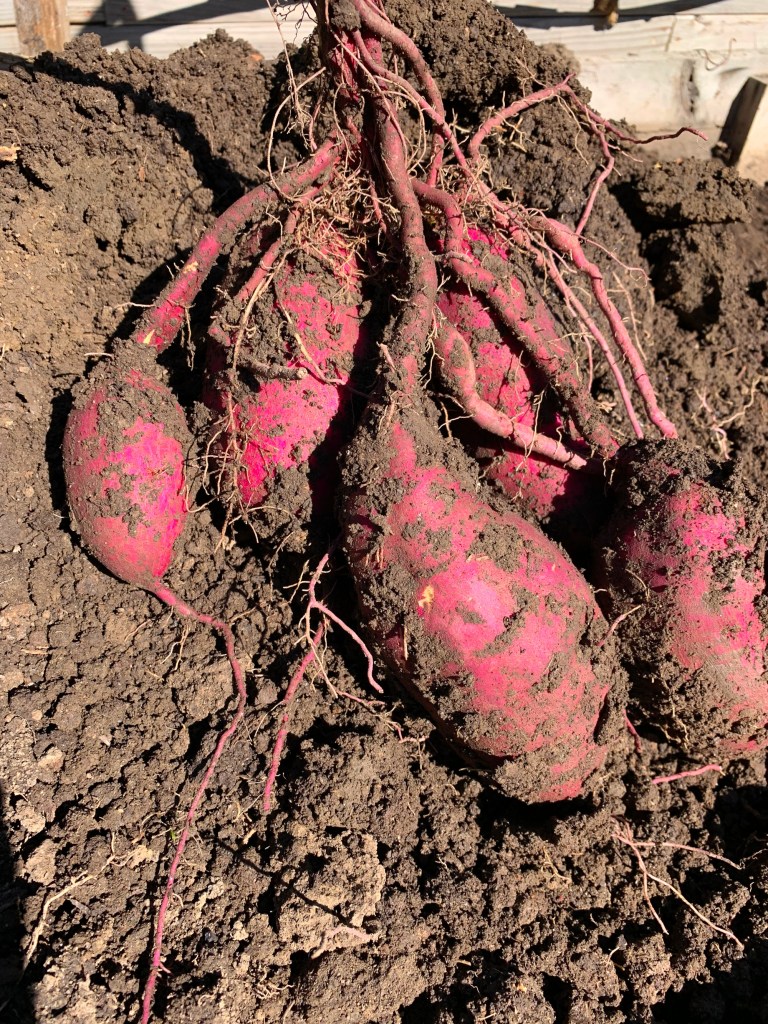
Excavating these Murasaki sweet potatoes is an adventure. We never know what is growing under all those leaves and vines until we do some digging. Like mining for gold, sometimes we hit a good lode like this one.
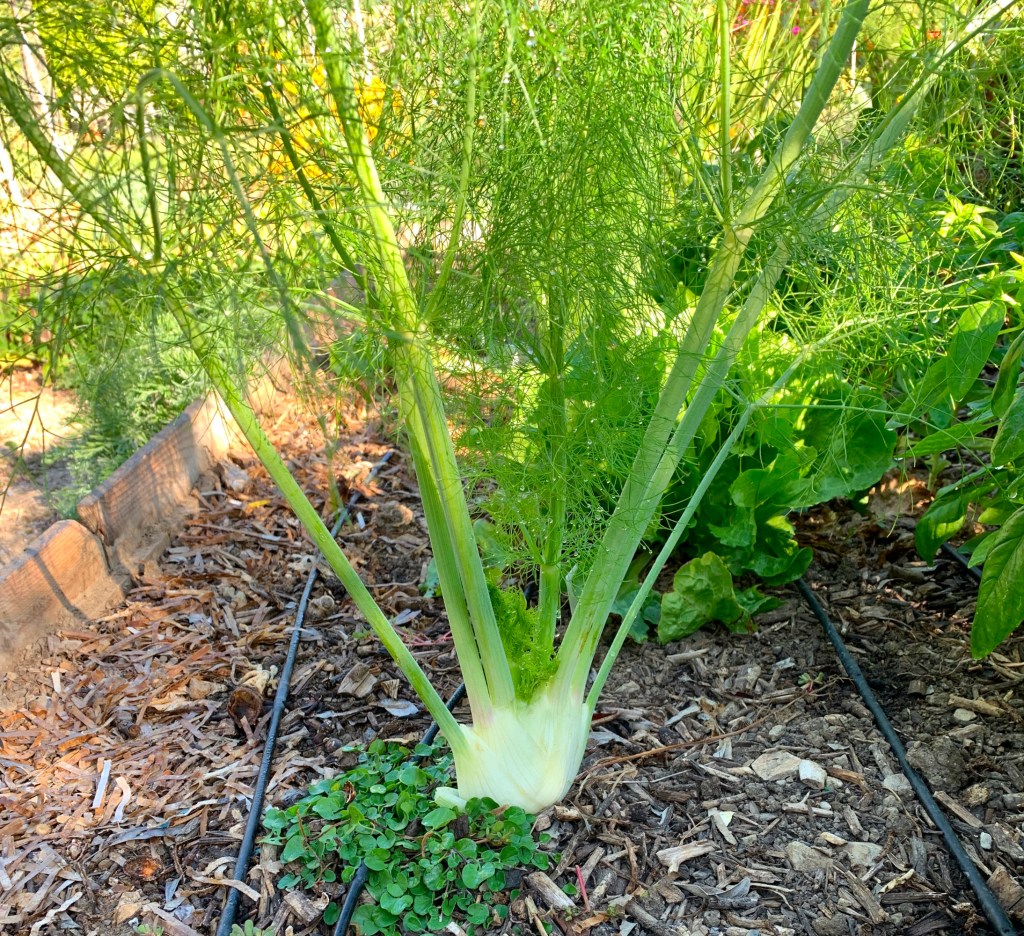
We planted a few fennel this year to see how they would do. They were slow getting started but once they got their feet down into the ground they grew well. When the weather started cooling off this past month they really started filling out. We started them in seedling trays and transplanted them with 4 of 6 we transplanted surviving. Next year we may try starting them earlier and direct seeding them to see if that works better.
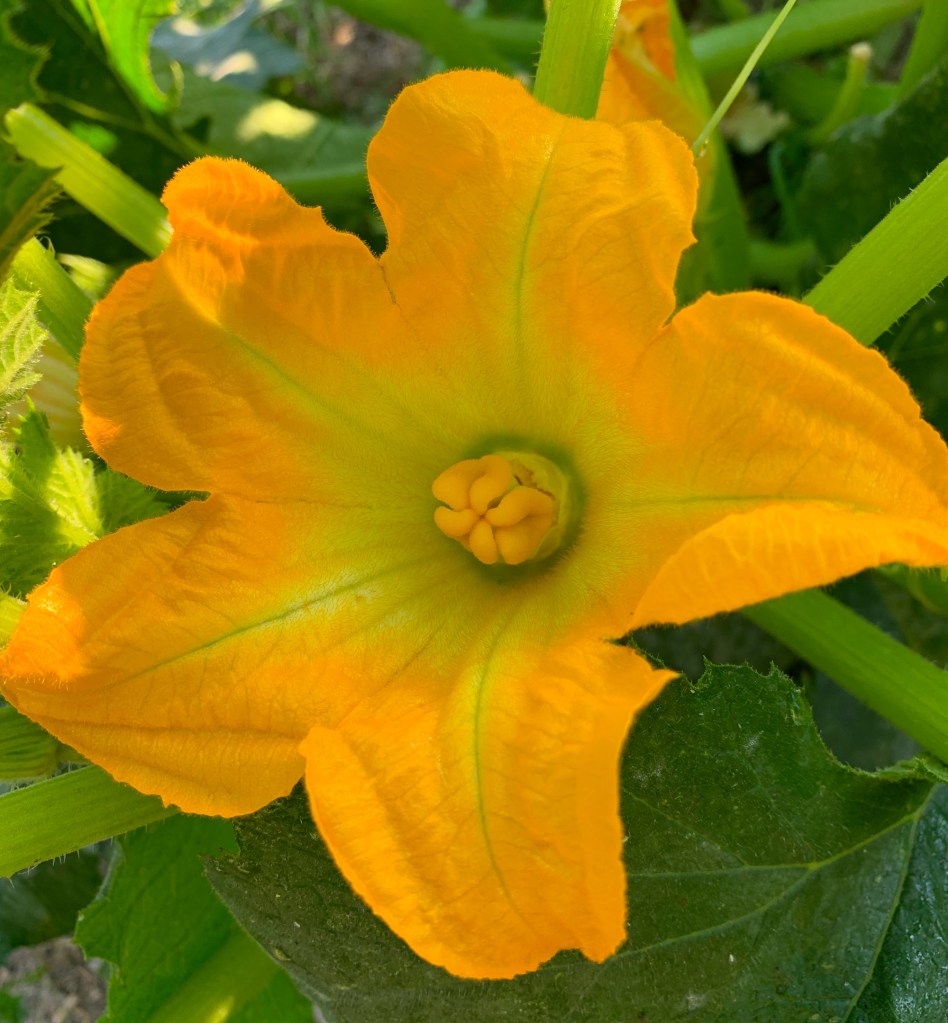
We have one squash plant that is definitely an overachiever! It is quite prolific and gives us all the squash we can eat. Glad we didn’t have more plants this year. We have grown this dirani variety in the past with good success, but this plant is producing twice as much as we’d expect. It’s good we like eating squash!
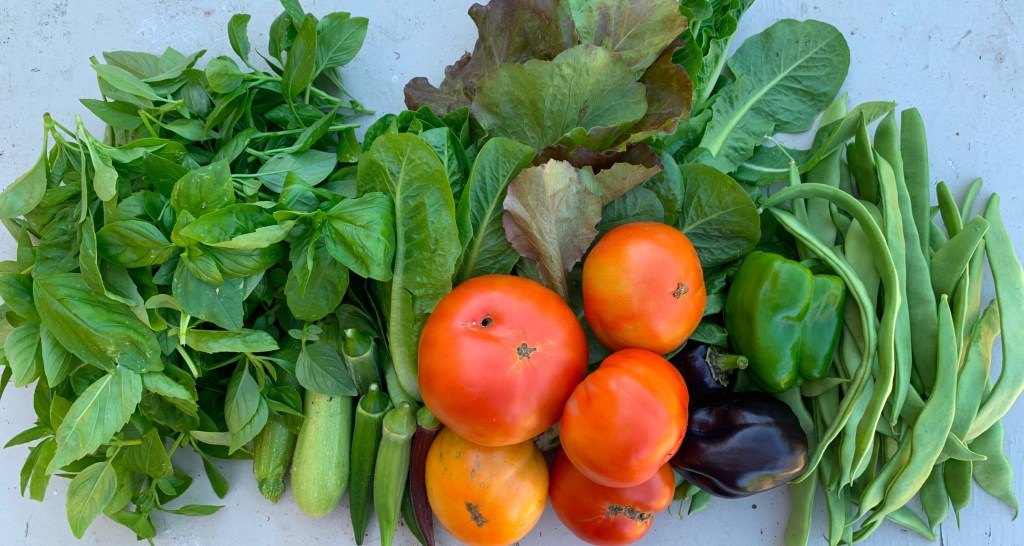
Other summer crops still producing in October include lots of good bell peppers (green and purple varieties), bountiful basil and okra. October marked the end of the summer batch of lettuce, and green beans reached their end of harvest this month as well. Tomatoes are slowing down but still have a few ripening.
Flowers and Herbs
Our unusual rain events in August and September threw the native plants into a growth spurt. Seeds that normally germinate with the first rains that arrive in November or December got an early start. Arugula was just waiting for moisture, along with California poppies, lupines, and a number of stray zinnia seeds sprouted in our garden paths. We encourage volunteers, so those zinnias and other flowers are adding color to the garden that we often don’t see until winter or spring.
Okra Flowers
Okra is still doing well into October. Weather has been warm enough for them and their large showy flowers. Here is a video with a time lapse view of a burgundy okra flower opening. These plants produce beautiful dark red okra fruits. The flowers are creamy white with a dark red/burgundy center.
Flowers open in the mid morning. They go from closed bud to a fully open in just a few hours.
Chocolate Flowers
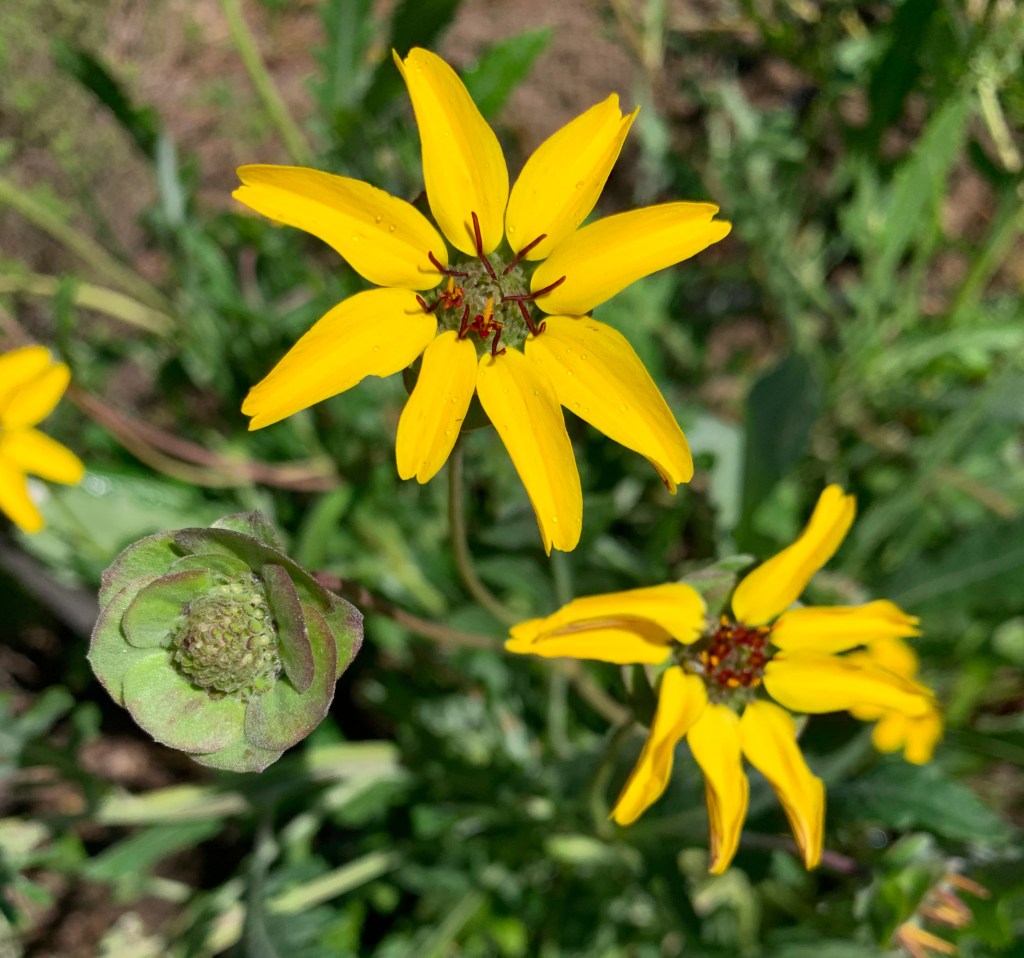
Our chocolate flowers (Berlandiera lyrata) have performed well in our herb and flower bed this year. Lots of bright yellow daisy-like flowers with a sweet chocolaty fragrance! Always fun to work in the garden and get surprised by a whiff of chocolate scent floating in the breeze. They are also called chocolate daisies or lyreleaf greeneyes. The leaves are said to look like a lyre, though it takes some imagination, and after the flower petals fade the remaining green cup looks vaguely like a green eye.
They are a native plant of the Southwestern US (Colorado, Oklahoma, Texas, New Mexico) and are drought tolerant. The anthers are said to be edible with a chocolate flavor, though we have not tried them. Apparently the Native Americans used this plant to help with stomach problems.
Marguerite Daisy
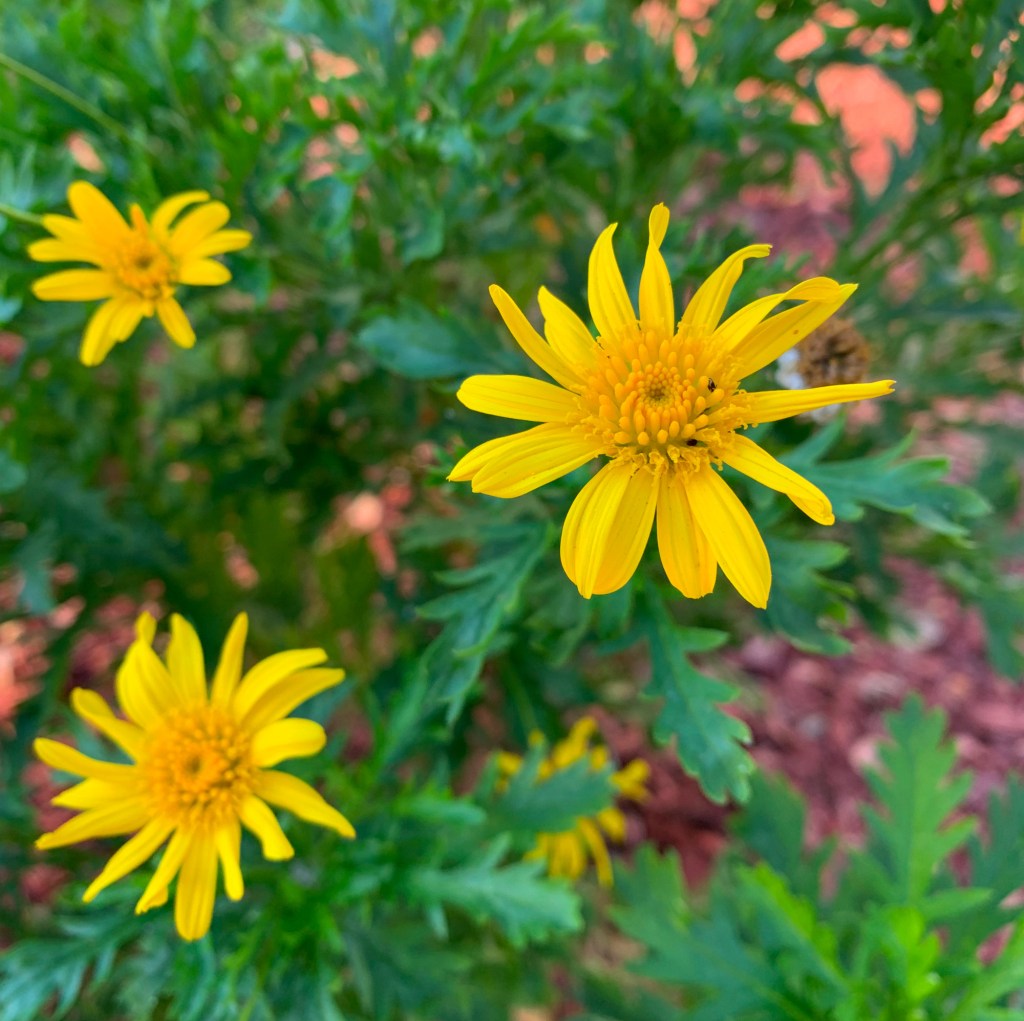
The Marguerite daisies bring their bright sunny yellow to our drought tolerant landscaping. Just planted in the spring they are filling out and blooming nicely. They are a hardy and attractive addition to the garden.
Coreopsis

Looking like a bright orange and red target, these coreopsis bring late summer and fall color to the wildflower patch in our drought tolerant landscaping. Like the chocolate flower, Marguerite daisy, feverfew and zinnia, they are in the Asteraceae family (composite, sunflower or daisy family).
Feverfew
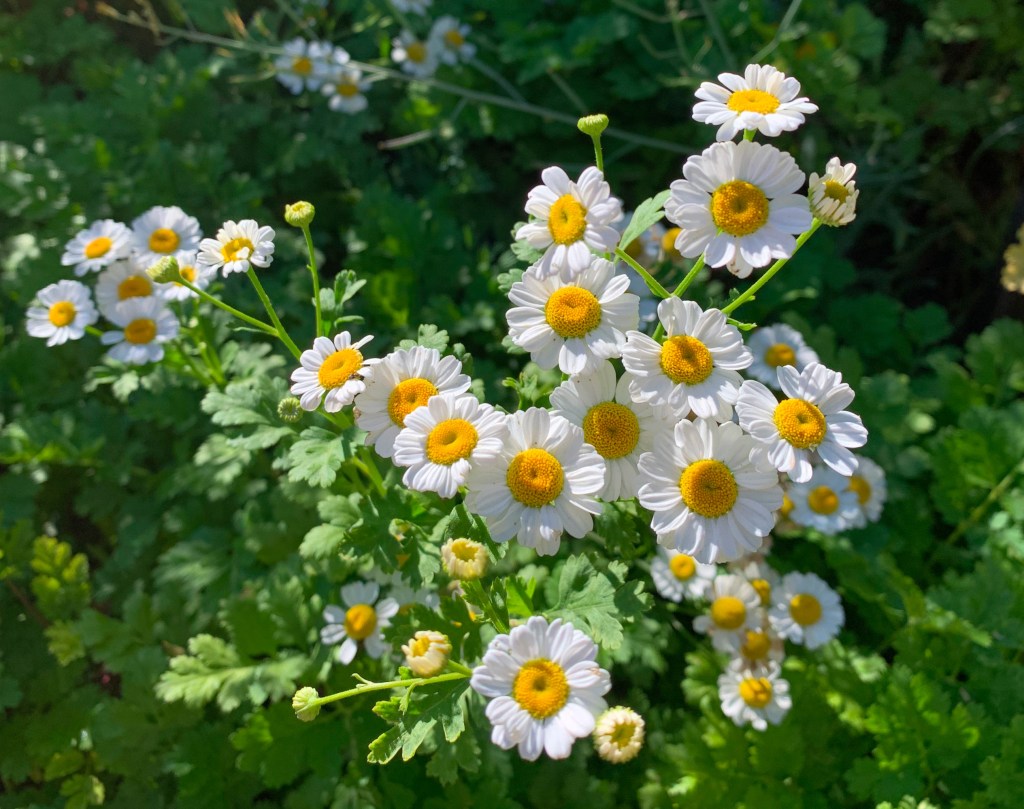
Feverfew flowers are looking sharp with their white and yellow flowers against the deep green leaves. We use the leaves for making tea and enjoy the brilliant white flowers in our herb and flower bed.
Zinnias
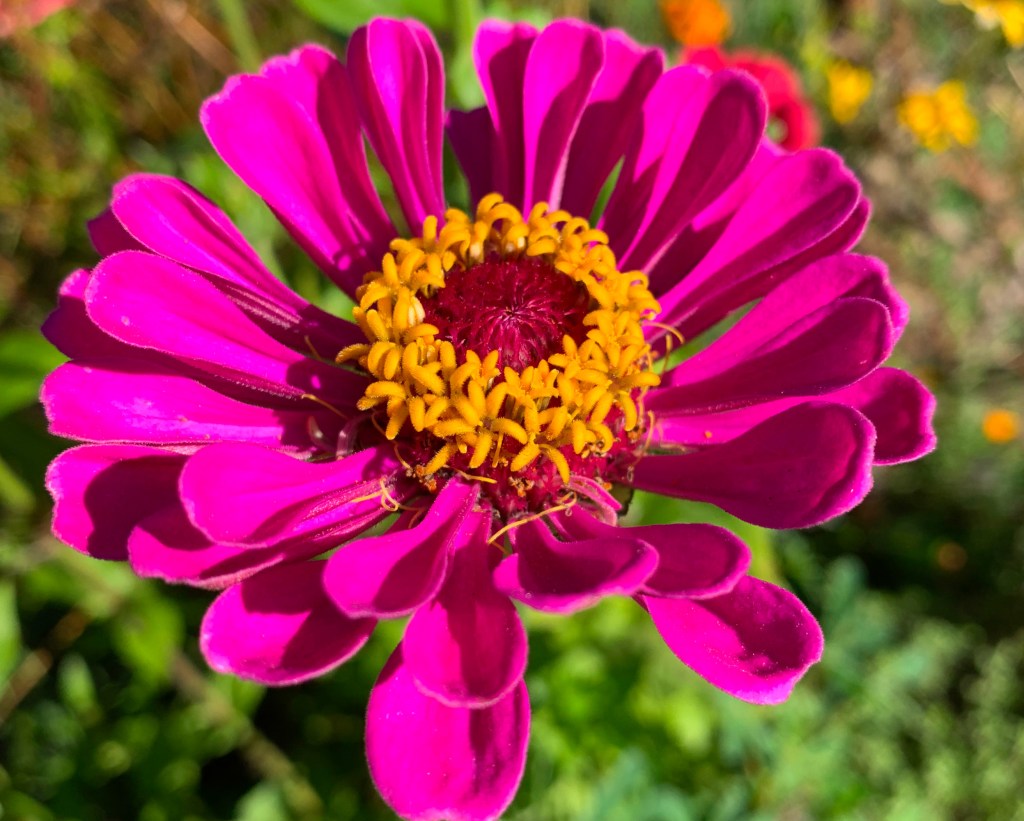
Colorful summer zinnias are going strong in October. They come in many brilliant colors and have been attracting butterflies to the garden. A surprising number of volunteer zinnias sprouted after our rare summer rains a couple months ago. Great splashes of vibrant color in our fall garden.
Hollyhocks
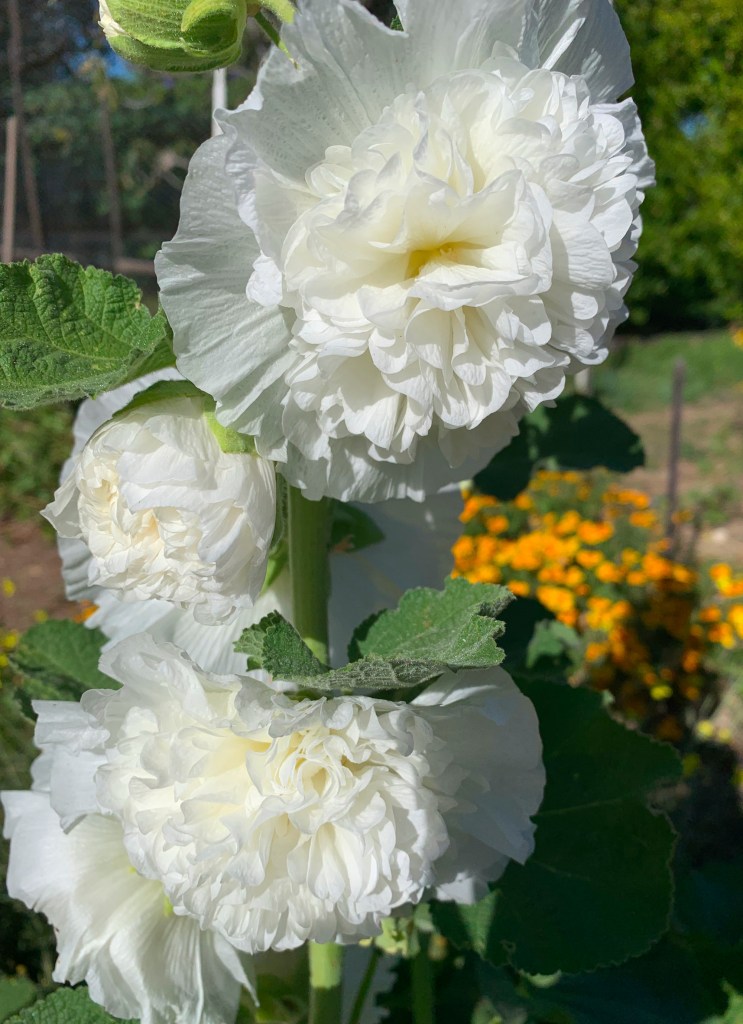
This hollyhock bloomed in the spring and the flower stalks died back after blooming. It has now sent up a new flowering stalk for the late summer and fall. Nice large double style flowers are fluffy and full. At about 6 feet (2 m) tall, it did not reach the heights of the spring flowering stalk that hit 10 feet (3 m), but still a great pillar of flowers.
Coming Attractions
Citrus fruit is nearly ripe with the Satsuma Mandarin hanging its branches nearly to the ground. We are getting blushes of orange on the green fruit so we’ll be tasting them soon! They are on schedule for start of harvest in November. Looks like a bumper crop this year. They develop their best sweet flavor once the nights cool off into the lower 30’s (below 5 degrees for you metric folks), so we like to hold off on the majority of the harvest to wait for those cooler nights.
The Meyer lemon and sweet lemon get ripe a little later, but already seeing some of the dark green starting to lighten up. They won’t be far behind the mandarins.
We are just starting our winter planting as beds get cleaned out from summer crops. Harvesting sweet potatoes has cleared out one bed that will be planted soon. Most summer crops will continue until frost, which is typically in December for us. As weather cools and we have less hours of sunlight, the summer crops decrease their production, so we often pull some before frost kills them to get winter crops started. Crops like lettuce, beets and kale get off to a faster start before the weather gets too cool.
Garlic will get planted in early November. We started our vernalization (putting the garlic into the refrigerator) in early October so they will be ready for planting soon. Since we don’t get cold enough winters to stimulate good production of the hard neck garlics, we give them that artificial winter treatment to improve our yields.
Our saffron crocus bulbs should be sending up flowers in November as well. We planted them last fall and harvested a handful of flowers. We are looking forward to see if they will increase production this year.
Visitor Log
Midnight Snack Visitors
We have surprisingly few problems with insect pests in the garden. Our main varmints are the four footed critters. Squirrels are seen nearly every day looking for some treat from the garden. Then we have our night marauders, the raccoons are the largest, possums come frequently and rats wander around the neighborhood as well.
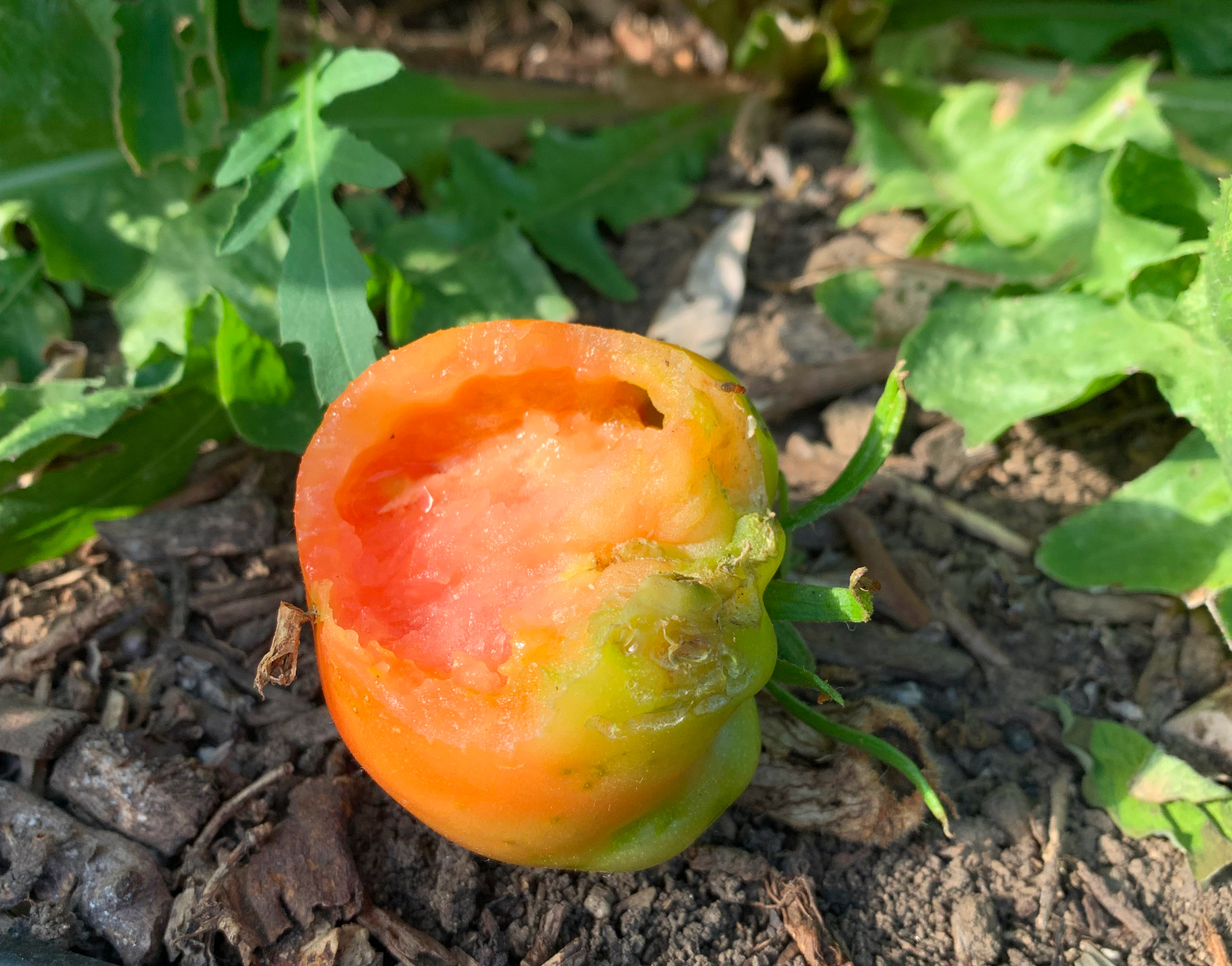
This tomato was found partially eaten, probably by one of those night varmints. The major suspect is a raccoon since there were also signs of digging in the garden beds. They are likely looking for some juicy worms, or possibly the grubs (larvae from our green fig beetles).
Fortunately, whoever was munching on the tomato appears to have found it not their favorite food. Hopefully they will learn to leave them for those of us who like eating tomatoes!
Find Peace in a Garden
Find time to get out in a garden, a park or a spot where nature is on display. Listen to the sounds of those birds, observe the colors and amazing details in all flowers and plants, find peace.
If there are topics you would like to hear more about, let us know in the comments below, or send an email to Zanganeh.Garden@gmail.com.
We post quick updates on Instagram @Zanganeh.Garden
Check out our YouTube channel, also @Zanganeh.Garden
Use the subscribe button below to be notified of new posts.
 Zanganeh Garden