

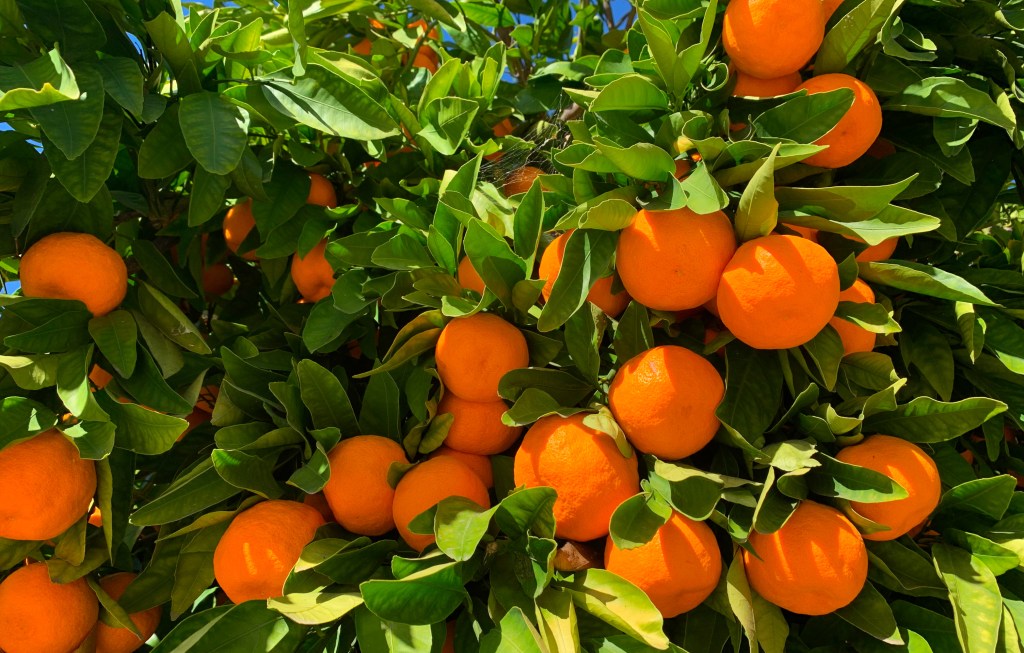
We are in full citrus season here. Our Satsuma mandarin orange is packed with fruit, along with the Meyer lemon and sweet lemon.
Lettuce is going strong, as is cilantro, kale, and collards. They enjoy the cooler weather and thrive at this time of year. Also have peas and beets coming up. Garlic is already well on its way. The largest and most vigorous variety, German extra hardy, is nearly a foot tall. Shallots are starting to push new leaves out of the ground but has a long way to catch up with the garlic.
December seemed a bit warmer than usual with no hard frost, so the tomato and pepper plants kept right on growing. January got colder and we finally cut back the tomatoes and peppers. We’ve pulled most of the tomatoes, but a few look like they may keep growing, so we’ll give them a chance. We cut the peppers back and expect they will get through the rest of the cool season and hopefully will bounce back when warmer weather arrives.
January is our usual season for cleaning out garden beds and getting ready for spring and summer plantings. Fruit trees have been trimmed (figs and pomegranates) to be ready for new spring growth in a few months. It is a good time to clean out perennial herb beds to get them ready for spring growth. Lavendar, rosemary, mints, garlic chives, regular chives, oregano, feverfew, and marjoram beds are getting cleaned up and ready for a new season of growth.
In the fungi of the month prize goes to the stinkhorn. We’ve found a few popping up here and there in the garden this year. As you might guess from the name, it has a distinctive odor!
Contents of this Post
Here’s a summary of what’s in this post along with quick access links.
- Harvesting Now – What we’re harvesting
- Flowers and Herbs – Gaillardia, Marguerite Daisy, African Daisy, Borage
- Coming Attractions – Chive and other herb beds getting prepared for the season
- Visitor Log – Stinkhorns and Katydid eggs
Harvesting Now
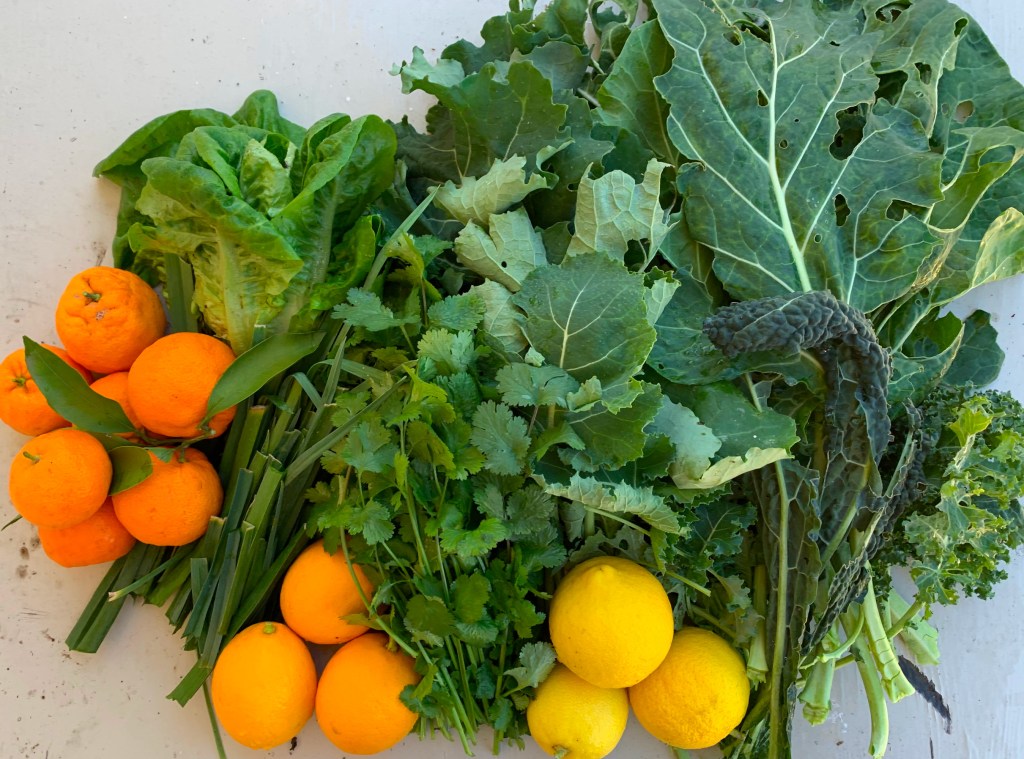
Our Satsuma Mandarin orange went into overproduction this year! We’ll probably get over 150 pounds of fruit this season. We even had a branch break from the load. Looking for creative ways to use them we invented a couple new tasty recipes, Mandarin Oatmeal Bars and Mandarin Cilantro Dressing. Check out our posts for all the details. The Meyer lemon and sweet lemon are also full of fruit, but not enough to be overloaded.
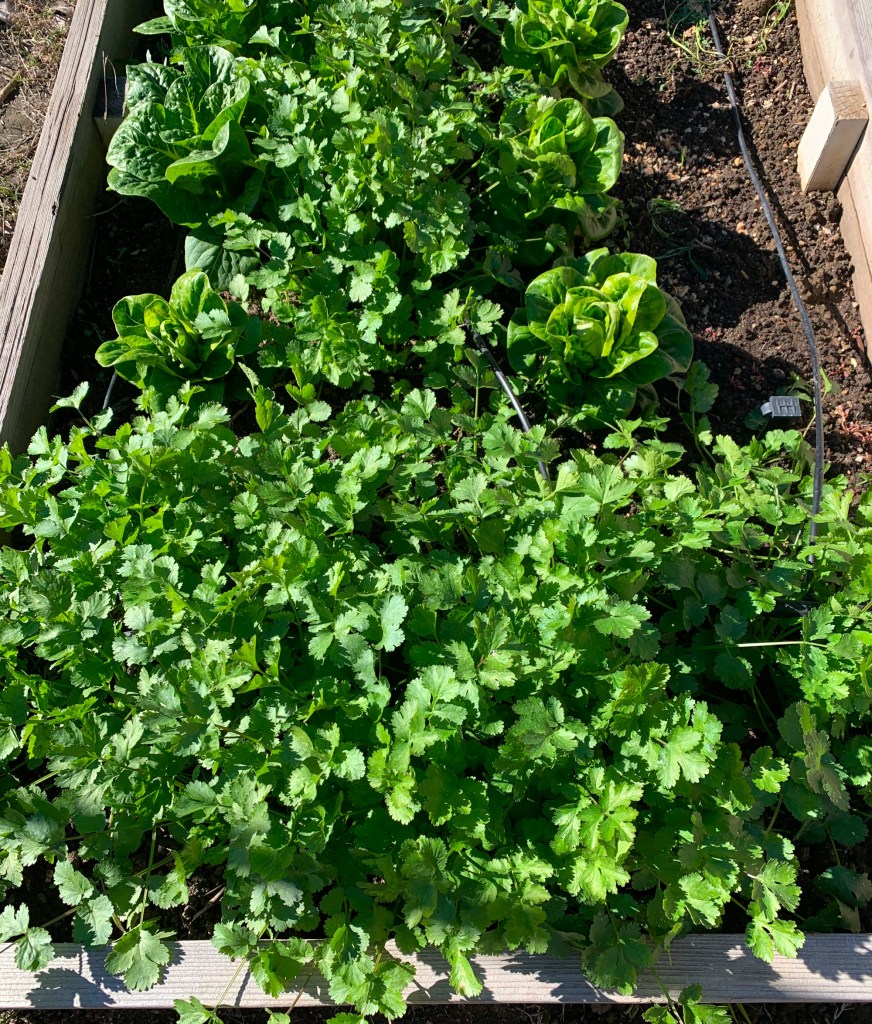
For greens, lettuce that was planted back in November is in full harvest mode. Cilantro is loving the pleasantly cool weather and is producing some of the best full leafy plants we’ve had. Kale and collards from last season are still producing. They were started last summer and continue to give us great greens.
We also have some tareh (garden leeks) we planted last summer. They should keep giving us fresh tasty green leaves until next summer when they will probably start flowering. We harvest them by cutting the tops down to about 10 inches (25 cm). They then continue growing more, longer leaves for repeat harvests. They taste like the standard larger leeks, but milder and more tender. They can be eaten fresh like green onions or radishes, also used in soups and stews.
Flowers and Herbs
Although January is not usually a big flower month, this year we have both late bloomers and early bloomers overlapping to give us more flowers than we’d expect at this time of year. Having an unusual late summer tropical storm got some of our plants thinking it was time to grow. In our Mediterranean climate, rain is the signal for winter and time to get growing. That early rain triggered those local plants to get growing earlier than usual.
Gaillardia

Gaillardia, or blanket flowers, are usually a late summer/fall bloomer. These are still going strong and look like they have decided to be perennials. These bright orange and yellow flowers are welcome in any season, but add nice extra color to the winter garden.
Marguerite Daisy
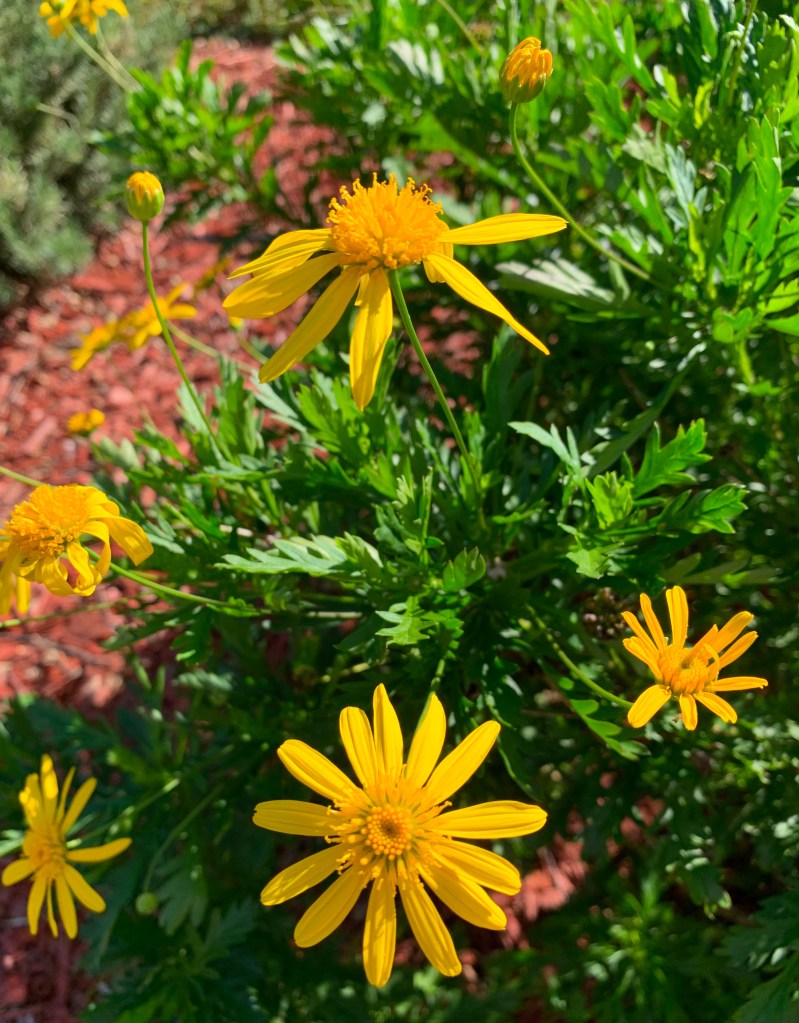
Part of our perennial low water landscape, these Marguerite daisies have bright yellow flowers that bloom year round in our climate. The flowers are amazingly long lasting and require little attention. An occasional pruning keeps them from getting too tall and leggy.
African Daisy
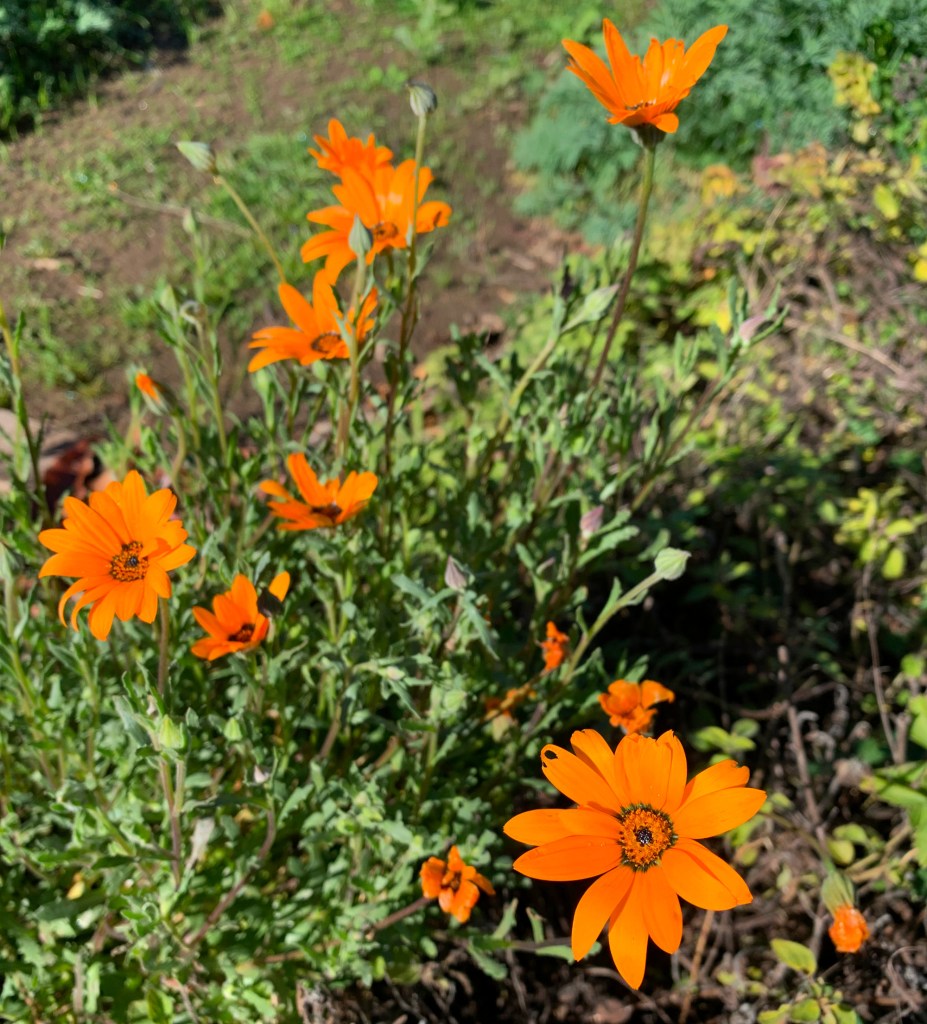
These African daisies (Dimorphotheca sinuata) are another drought tolerant flower with bright orange or yellow flowers. They typically bloom in the early spring. That late summer/fall rain got them off to an early start.
Borage
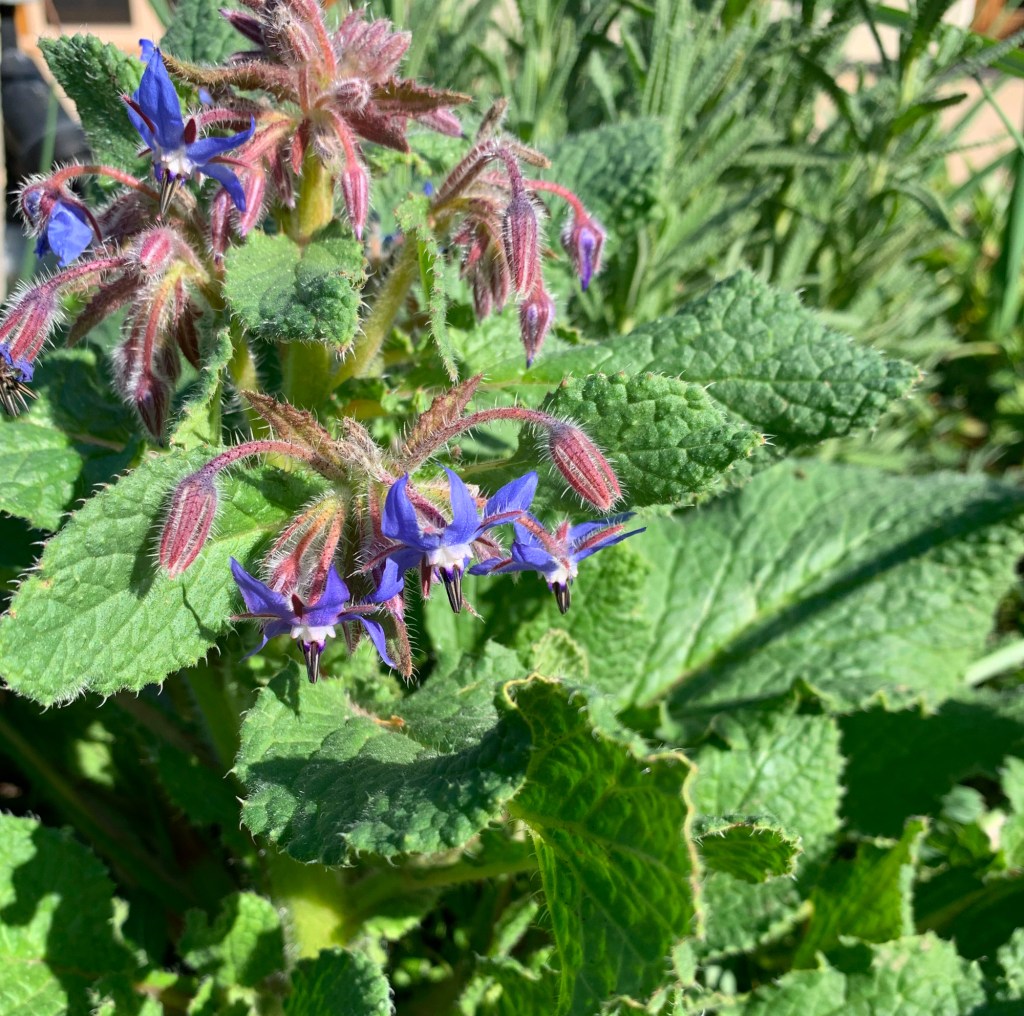
Borage starts growing in winter from volunteer seeds. We have more coming up than will fit in our beds. Each plant can easily grow to 3 feet (1 meter) tall and just as wide. So don’t need too many to fill up a bed quickly.
Some of our bird friends also like the seeds and drop a few here and there so we always get many volunteer plants. Their blue star-shaped flowers attract bees with their sweet nectar. They are also edible for us humans. If you pick some and add to a salad you can taste a drop of the sweetness and understand the why they bring the bees.
In addition to the flowers, the leaves and stems are also edible and can go well in a salad. A bit of a cucumber flavor to them. Some say they are a bit briny like an oyster.
Coming Attractions
The perennial herb beds are in their slower season, so time to thin out, remove old leaves and branches, and trim back to get ready for new growth. This includes the oregano, marjoram, mints, garlic chives, regular chives and feverfew.
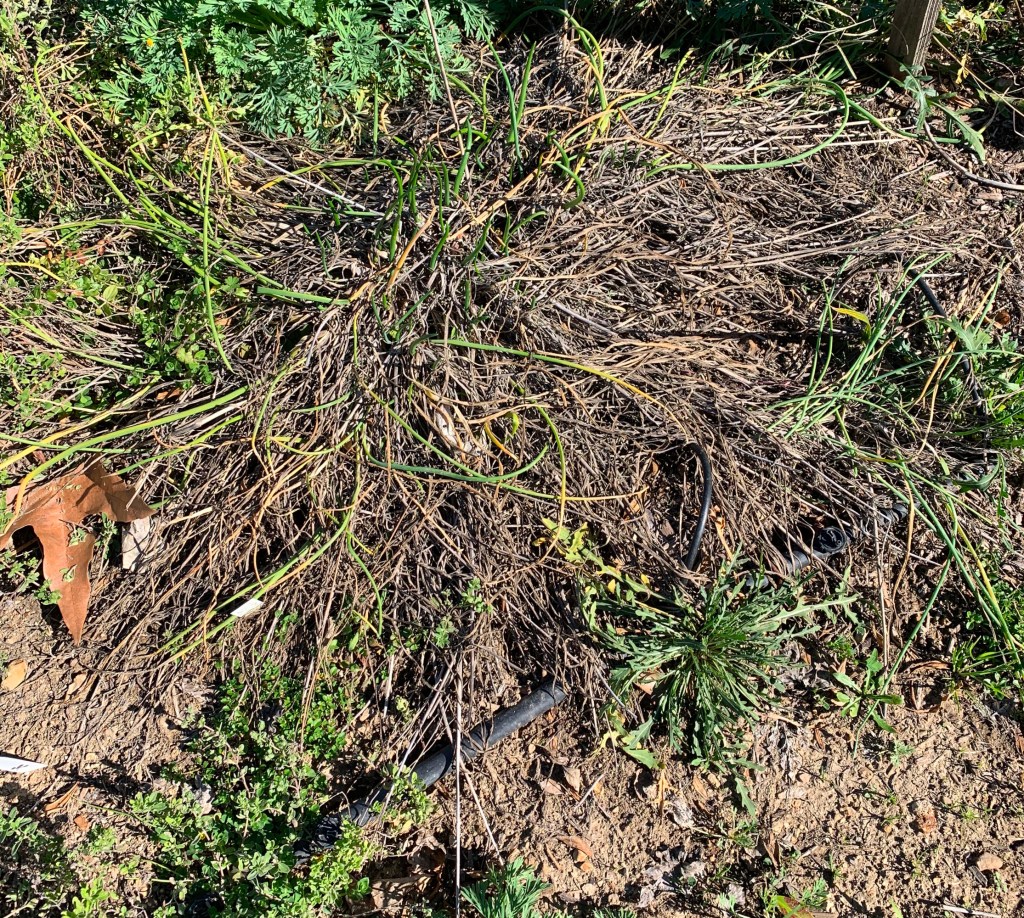
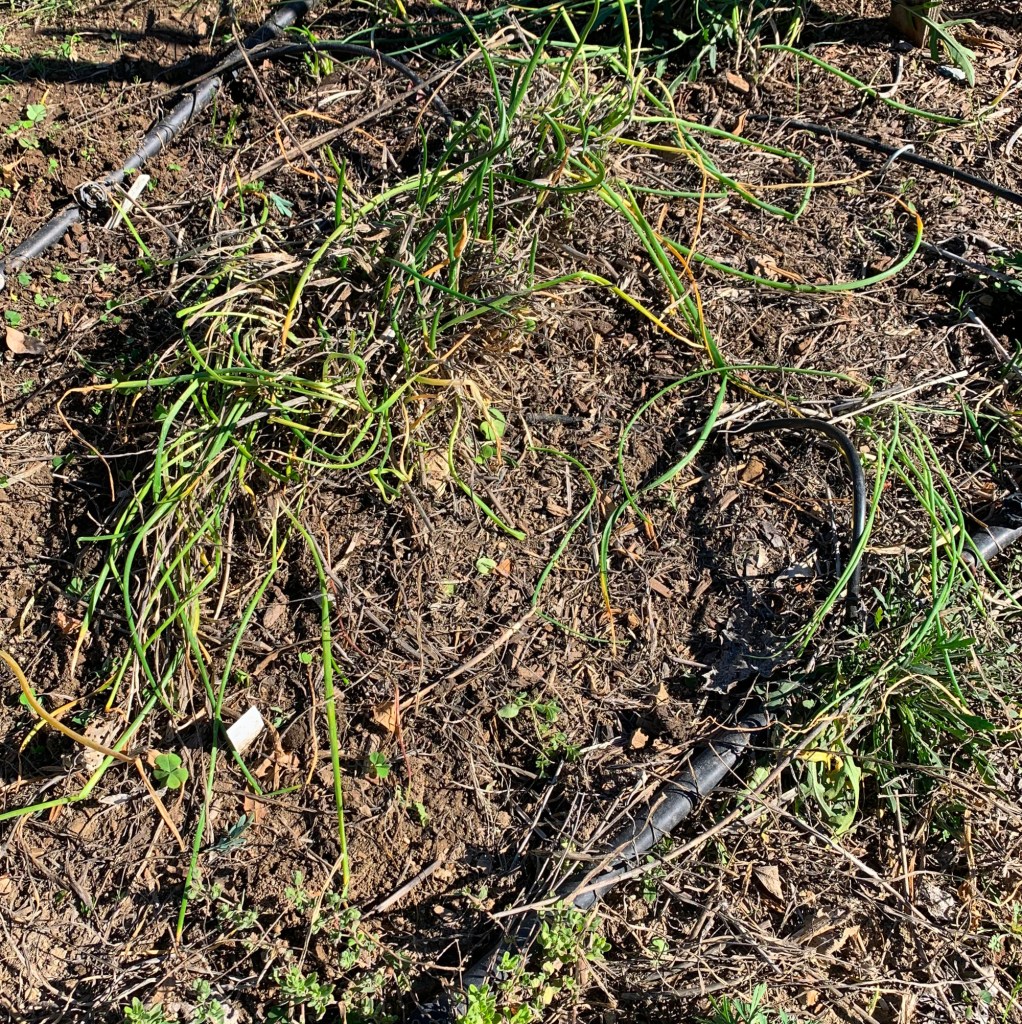
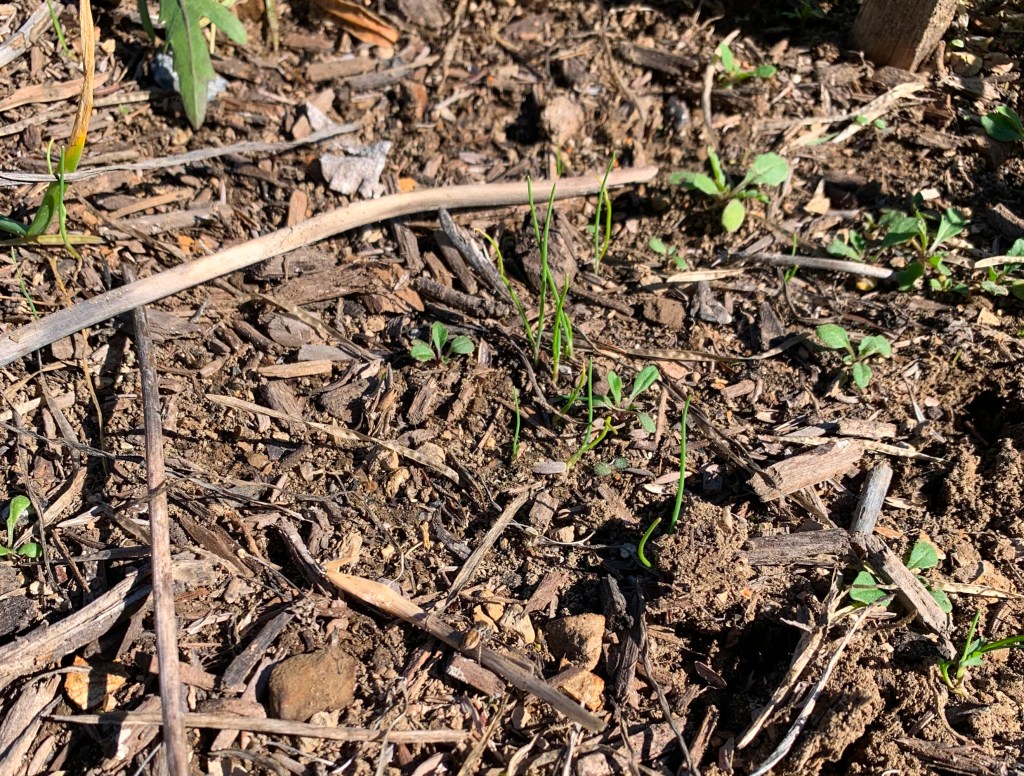
One example is the chives. We had some good chives this past year and started a few new plants to expand the bed this past year. Here are some photos of the chives before and after cleaning up the bed. Once the bed got cleaned up we found a number of new seedlings popping up to help expand our crop for next season.
Visitor Log
Stinkhorn
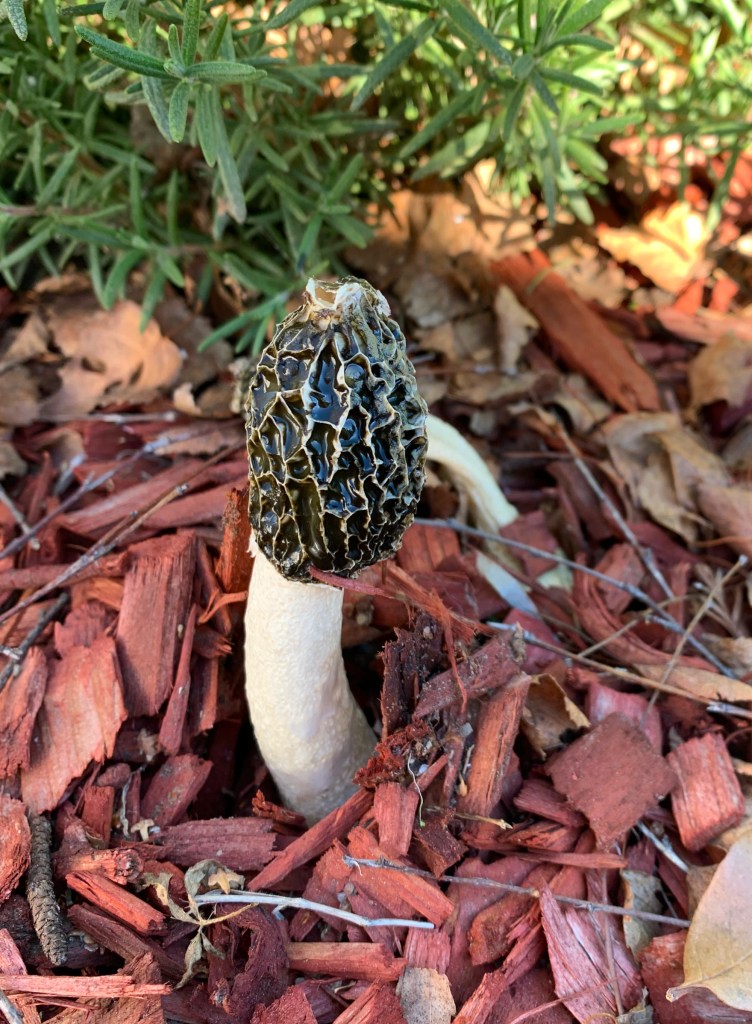
We have seen (and smelled) a number of these stinkhorns pop up around the garden. This one is coming up through the mulch in our low water landscaping near some rosemary.
They live up to their name and sometimes we can smell them before we see them! They have the fragrance of rotting meat, which they use to attract flies. The flies get a nice treat of apparently high nutrient black liquid that also contains the spores for these fungi. The flies then carry the spores to new locations to spread them around.
Some say they are edible when harvested while very young, before they get their strong fragrance. Don’t think we’ll test them out to see.
Katydid Eggs
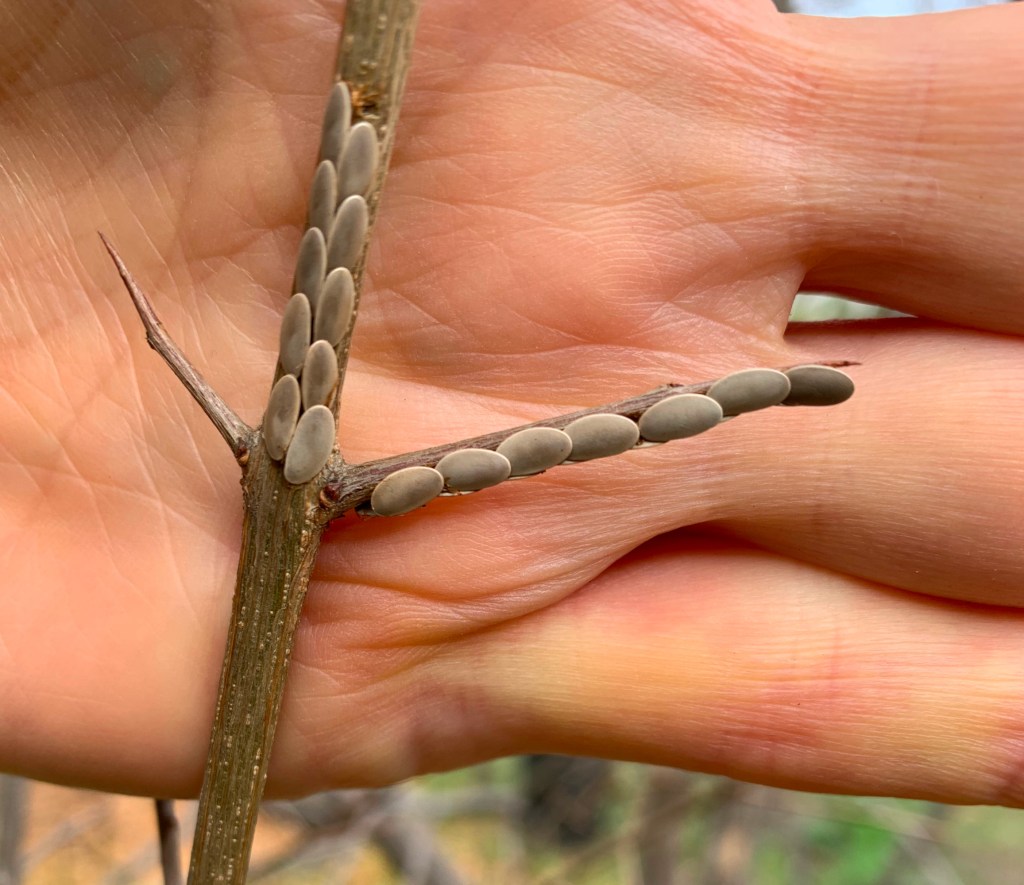
While pruning the pomegranate, we found these eggs. Fairly large for insect eggs, so assumed it might be a larger insect, such as a grasshopper. That was actually close, they are most likely angle wing Katydid eggs (Microcentrum rhombifolium). They adult Katydids look similar to grasshoppers, but are more closely related to crickets.
Their name comes from the sound made by some Katydids reported to be like, “Katy did. Katy didn’t. Katy did. Katy didn’t”. They are not a significant plant pest so we’ll leave the eggs to hatch. The adults are green and look like a leaf to avoid predation. Also they are most active at night, so that probably helps them avoid the birds and lizards that might be looking for a tasty treat.
Find Peace in a Garden
Find time to get out in a garden, a park or a spot where nature is on display. Listen to the sounds of those birds, observe the colors and amazing details in all flowers and plants, find peace.
If there are topics you would like to hear more about, let us know in the comments below, or send an email to Zanganeh.Garden@gmail.com.
We post quick updates on Instagram @Zanganeh.Garden
Check out our YouTube channel, also @Zanganeh.Garden
Use the subscribe button below to be notified of new posts.
 Zanganeh Garden