

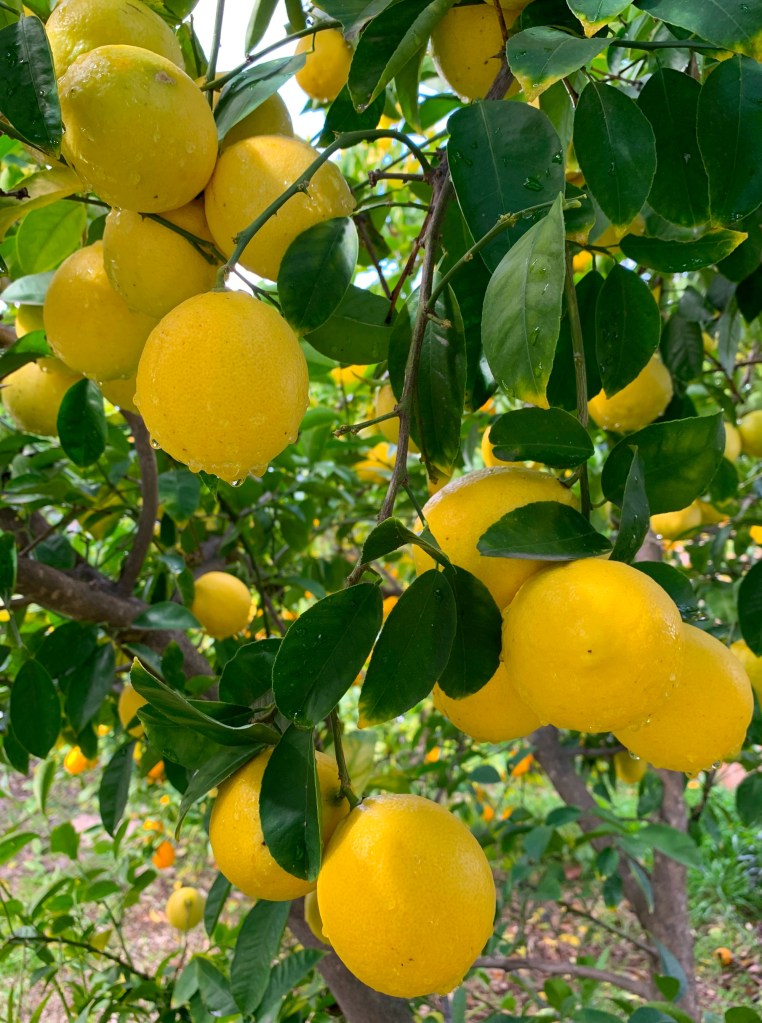
It is citrus season here in Southern California. Although the Mandarins are done for this season, the Meyer lemons and sweet lemons are coming on strong. Both trees are loaded with fruit, so we’ll be enjoying that lemony goodness.
All the greens love the cool and damp weather we’ve had this winter. Lots of kale, lettuce, cilantro and collard greens. Our allium crops (garlic, shallots, leeks, chives and garlic chives) are putting on good spring growth as well.
The weather has been pleasant with good rain but most days still up in the 60’s and 70’s (about 15 to 25 Celsius for our metric friends). A few nights of light frost, but not enough to cause any trouble. Great growing conditions for most plants as well as us humans.
Read on for more detailed descriptions of what is growing and photos of how our garden season is progressing.
Contents of this Post
Here’s a summary of what’s in this post along with quick access links.
- Harvesting Now – What we’re harvesting
- Flowers and Herbs – Lupine, Calendula, Coreopsis, Daffodil, Rosemary
- Coming Attractions – Garlic is well on its way
- Visitor Log – Our regular bird friends hanging around with a few tourists
Harvesting Now
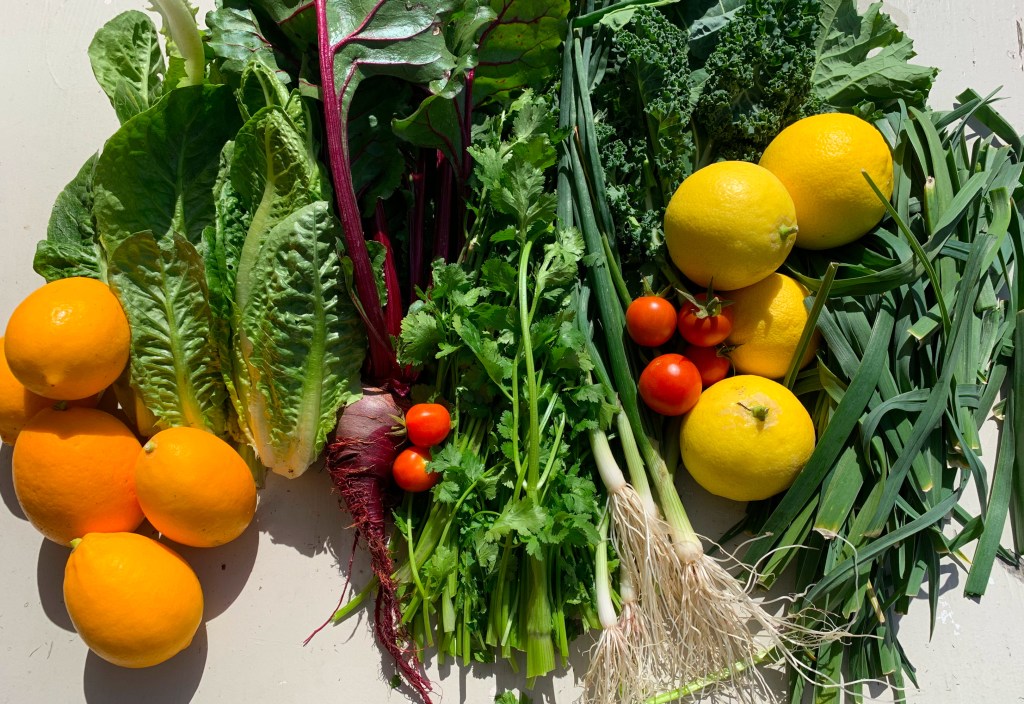
The photo above is a good example of our February harvests with Meyer lemons on the left, lettuce, beets, a few very late season cherry tomatoes, lots of cilantro, green onions, kale, sweet lemons, and tareh (garden leeks).
The Meyer lemons are our “sour” lemon that has a richer flavor and less acidity than the standard Eureka lemon variety. Our tree is filled with fruit this year, so we’ll be finding ways to use lots of lemons. Check out our recipe for cabbage pickles.
The “sweet lemons” are sometimes called “Persian sweet lemon”, or “Mexican sweet lime”. They have a very mild flavor and not at all acidic. Not as sweet as an orange or mandarin, but not tart either. They are juicy and are great for eating plain, however they are more fibrous and seedy than an orange. We make lemonade out of a half and half mixture of Meyer lemons and sweet lemons. No sugar needed! They also get added to our green smoothies.
The cooler weather is being enjoyed by the greens. Cilantro is going strong this year along with our usual kale and lettuce. This tareh, also known as garden leek, was planted last summer and is growing quickly now, so we need to harvest frequently, which is our pleasure. We cut the leaves from the top and in a week or two they grow back and get cut again. Something like mowing the lawn! The leaves are more tender than regular leek, so we chop them and add to salads for that leek flavor. They are somewhat like green onions with a more garlic/leek flavor. We also use them in soups and stews.
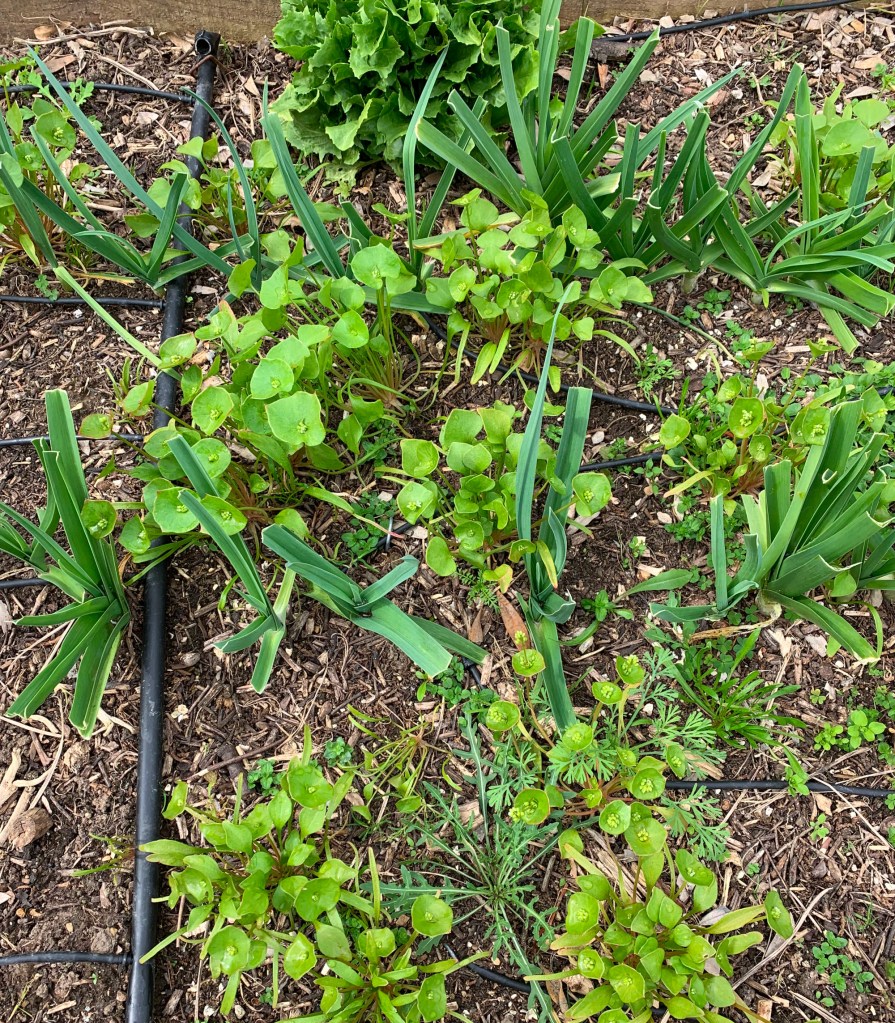
Along with the tareh we have a some volunteer miner’s lettuce with their round leaves. They are also edible and thrive on the cool damp weather we have been having. It is surprising how many have spread into this bed. There were none growing here last year.
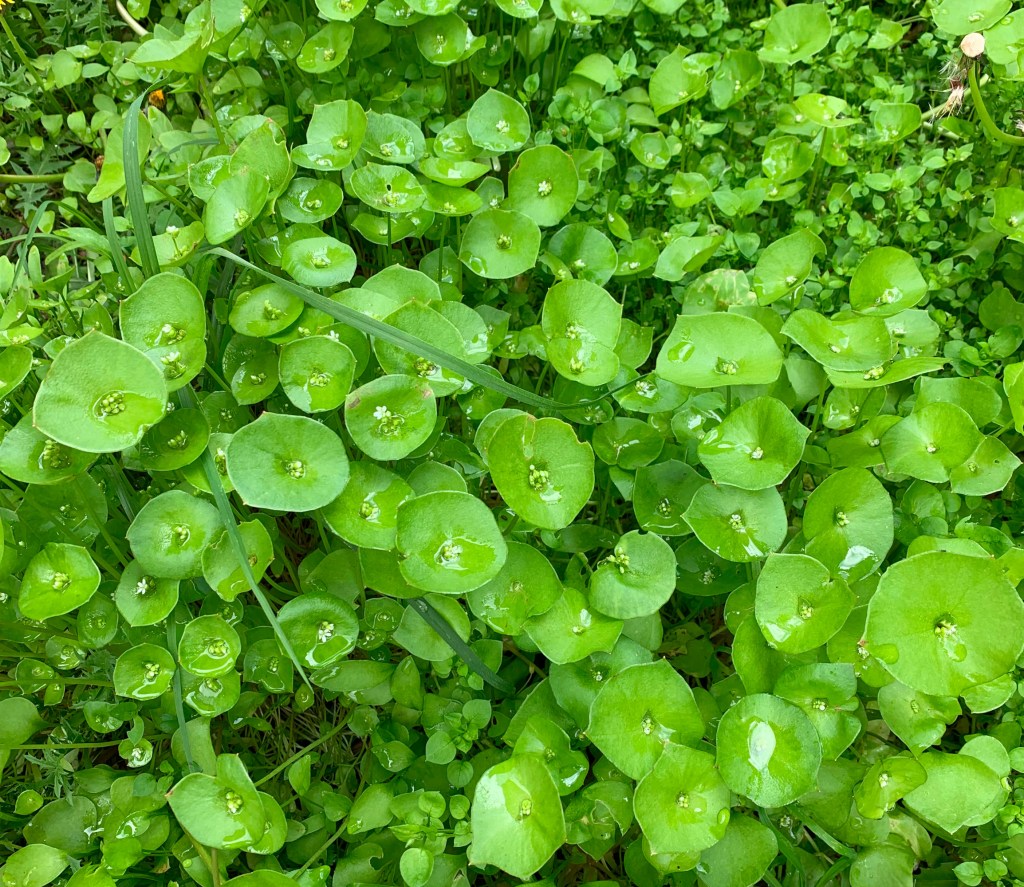
We harvest miner’s lettuce and add to salads. As a volunteer, or “weed” they don’t present much problem as they have very shallow roots and are easy to remove if desired. Also they have a short lifespan and will fade away quickly as the weather warms up. For more interesting information on miner’s lettuce, check out our previous post on miner’s lettuce.
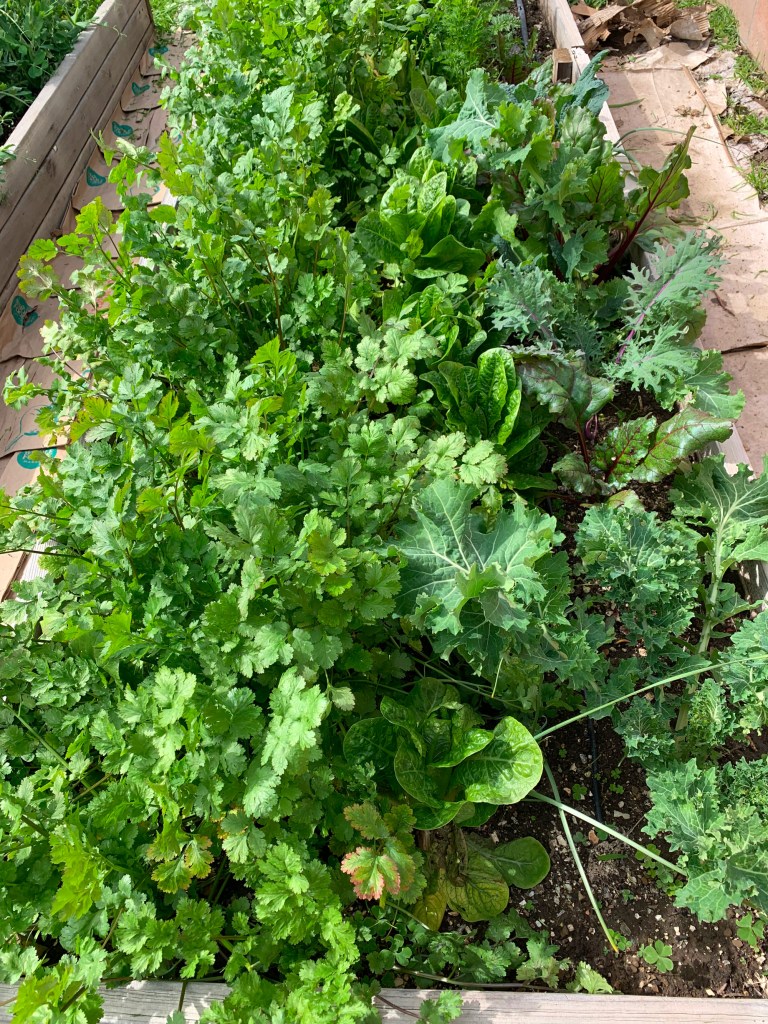
Cilantro is loving the pleasantly cool weather and is producing nice full, leafy plants. We like the flavor of cilantro added to salads, smoothies, soups and stews.
Our new season kale is coming in strong in the photo above. Our older kale from last season is still producing as well, though it will soon start to bolt (flower) as the weather warms up. We have 4 different varieties of kale growing to provide a range of flavors and colors.
Flowers and Herbs
February is when early flowers start blooming in our garden. This year we have even more than usual with some flowers blooming that we’d normally expect later in the season, like coreopsis. They are either really early, or just continuing from last summer and fall. See our January posting for more examples.
Lupine
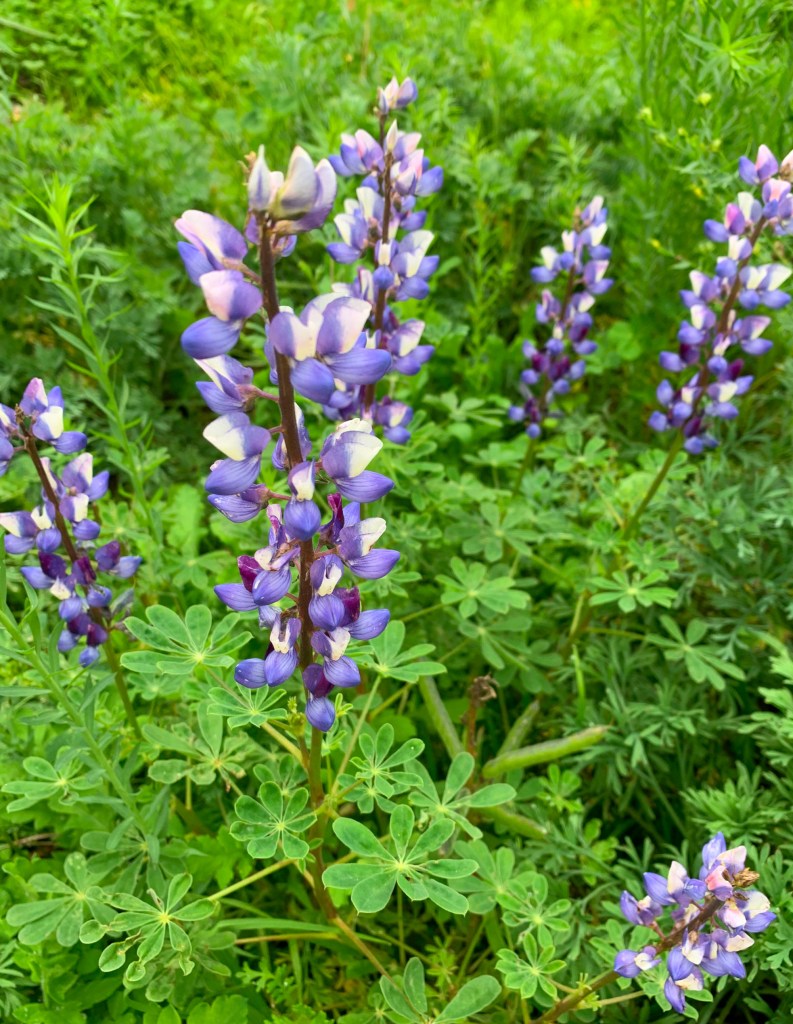
Our local wild lupines that grow in the nearby Santa Monica Mountains, have established themselves nicely in our garden. They have wonderful stalks of purple and white flowers. They come up quickly after winter rain and give us some beautiful flowers, but they don’t last as long as many domesticated varieties.
The lupine produce lots of large seeds that look like small beans (they are in the pea family). The seed pods are interesting to watch when they start drying out. When fully dry the little pea pods split open with a twisting motion and seeds shoot off a surprising distance from the parent plant. We have also noticed our large black bumblebees visiting the lupine flowers. The smaller honeybees don’t take much interest in them.
Calendula
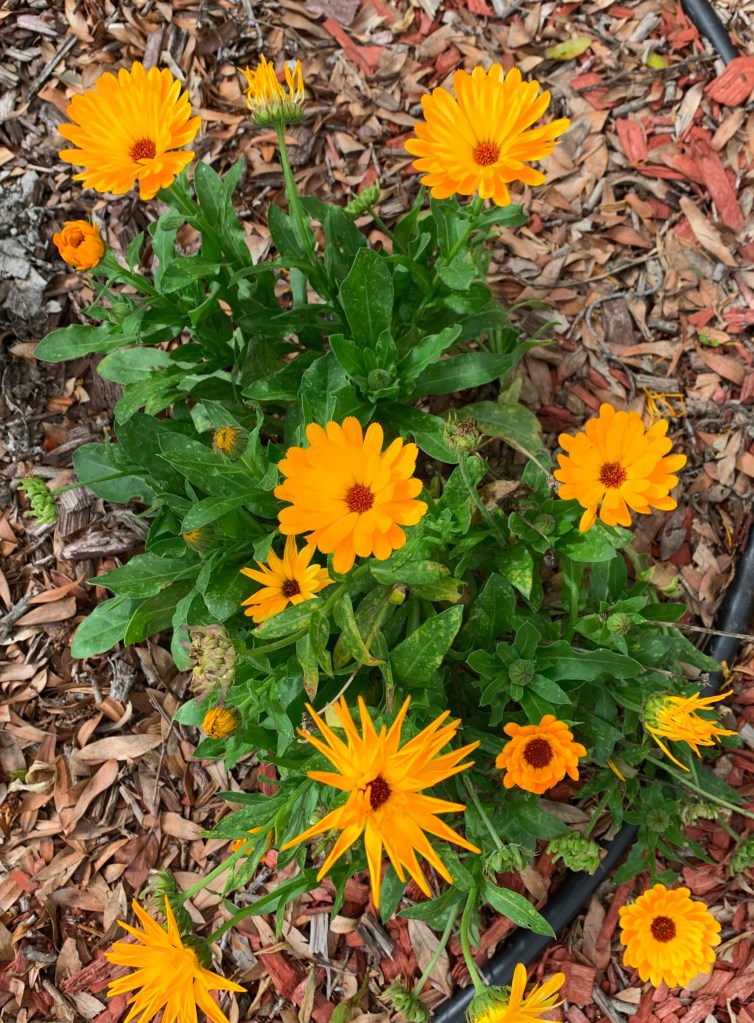
Calendula flowers do well here in the winter and spring. We have volunteers every year as we let them go to seed. We’ve seen squirrels munching on the seed heads at times. Not sure if they are choosing them for their flavor or if they ran out of other tasty things to eat. They do have relatively large seeds, so maybe it is similar to eating sunflower seeds. The flowers are also edible for us humans and add some nice color and flavor to salads and other dishes.
Daffodil
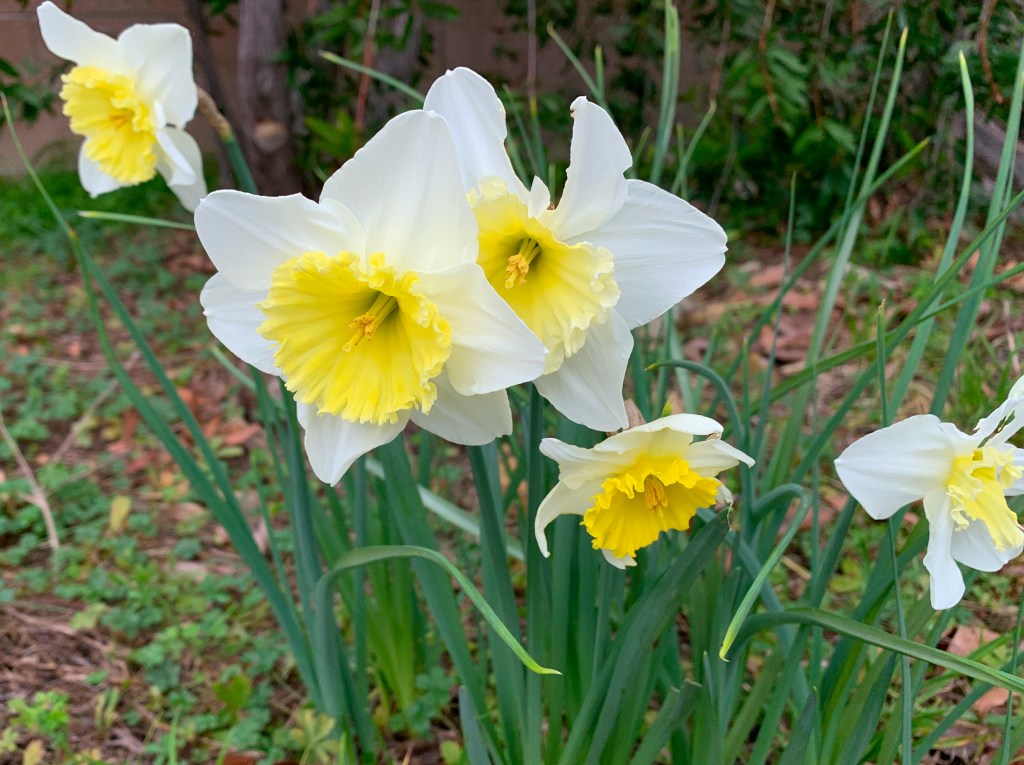
Our sure sign of early spring is the daffodil. We have clusters of them scattered around the garden to add that spring feeling. The flowers pop up before many others and then fade away quickly as well. Have to appreciate them while they are here. Always a nice surprise to see them popping up since they hide underground most of the year and we forget where they are there!
Rosemary
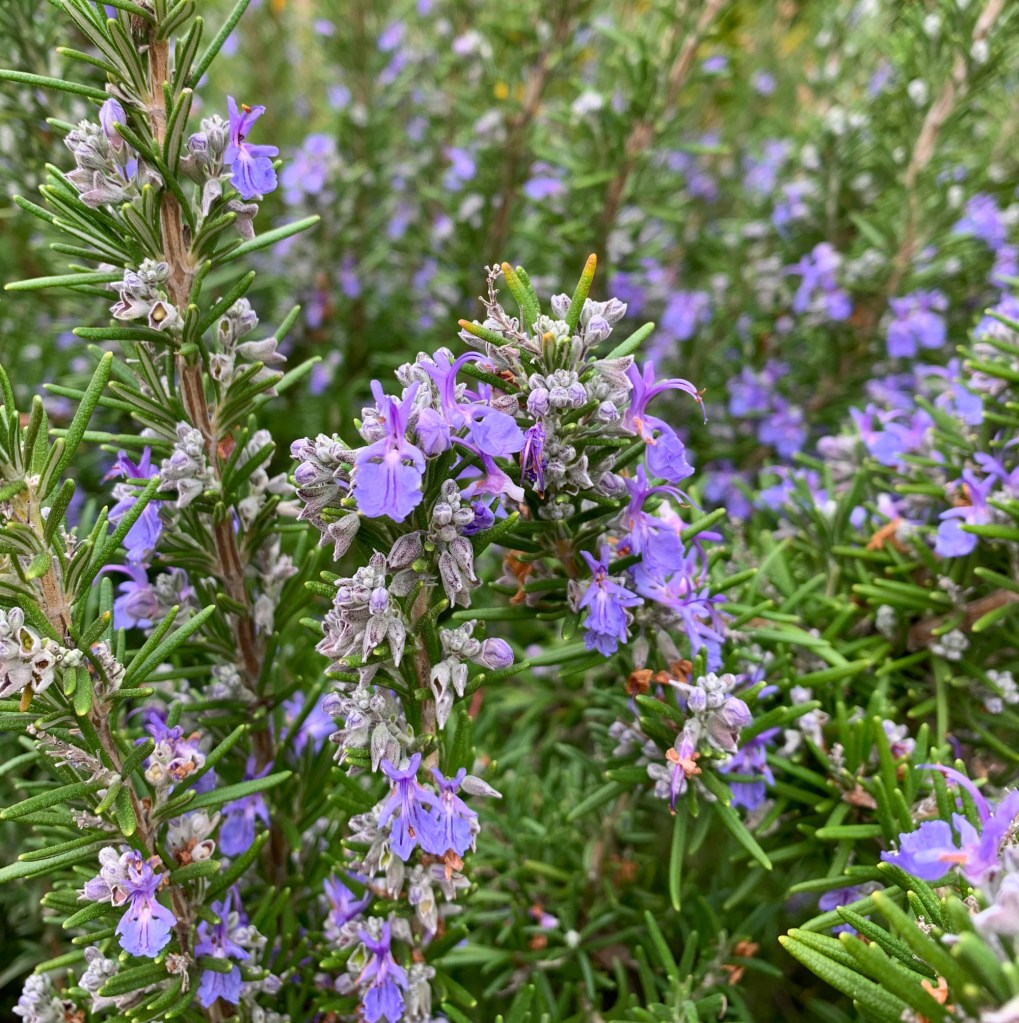
Rosemary is in full flowering mode adding color to their fragrant leaves. These flowers are another favorite of our local bees. With lots of flowers the bees get a real feast. This variety is called “Tuscan Blue” and grows quickly to about 6 feet (2 meters) in both height and width with loads of these blue flowers in the spring and early summer.
We get as much fresh rosemary leaf as we want for use in cooking and for drying. That rosemary flavor goes well with many dishes. We’ve even found tossing a few sprigs into a green smoothie adds a nice savory flavor.
Coreopsis
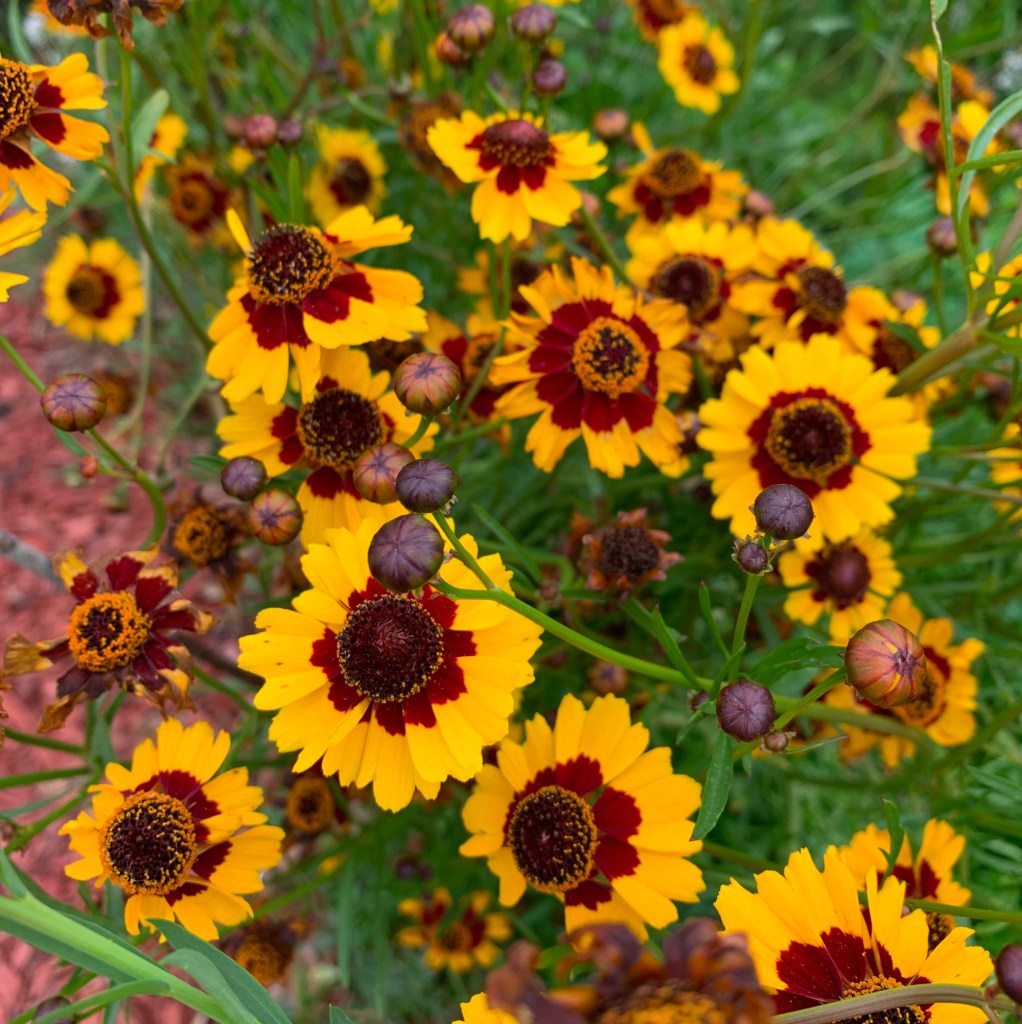
These plains coreopsis bring dramatic yellow and red color to the garden. They are typically a summer and fall flower, but this year things are a bit confused after our late summer tropical storm. In our climate, rain is a sign of winter, so maybe they got their seasons mixed up!
California Golden Poppy
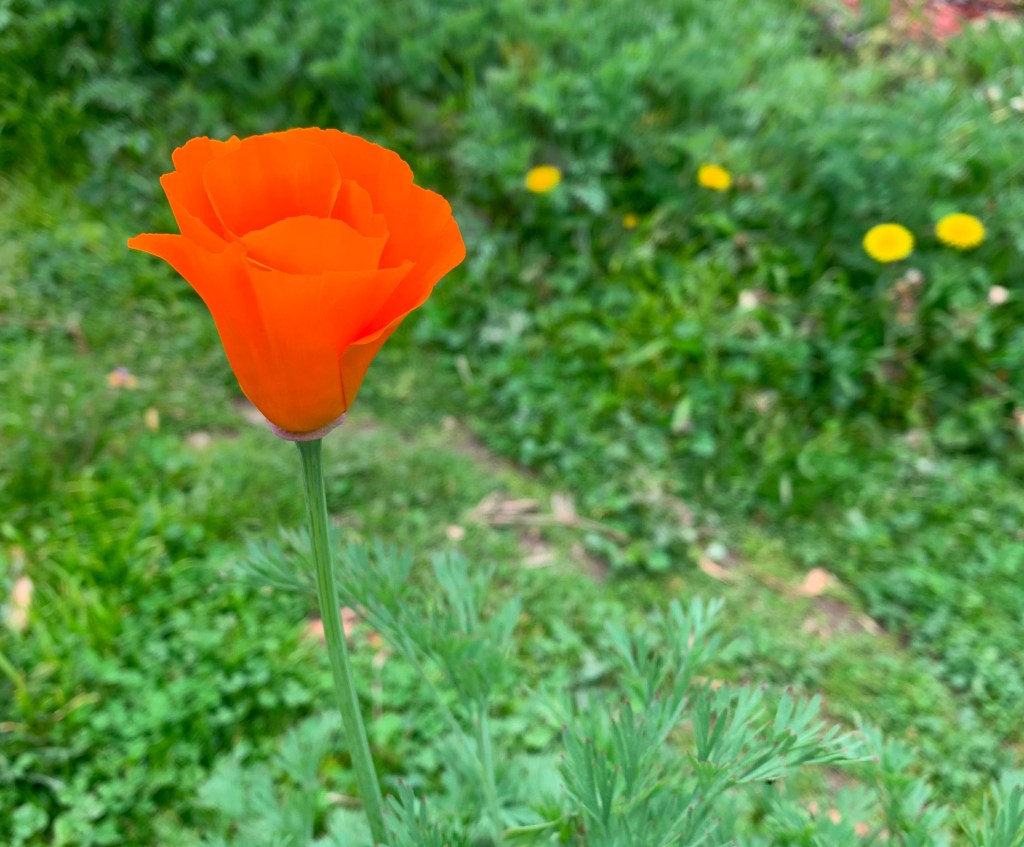
We have tons of California poppy volunteers in the garden. We let them go to seed and they come up all over. In a couple months we’ll have hundreds of flowers, but this is the early bloomer of the bunch.
Coming Attractions
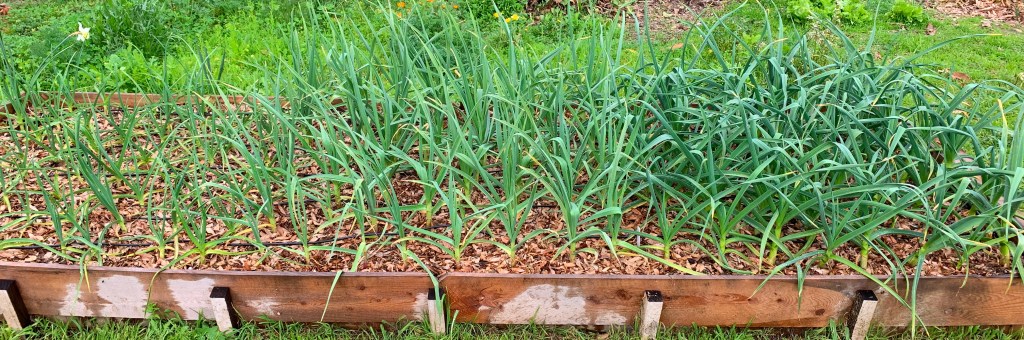
Garlic is on the way and looking great for February. We are growing 3 varieties this year and they are showing their different growth patterns. On the right side of the photo below is the German Extra Hardy, a porcelain variety. They produce very large bulbs on vigorous stalks. In the middle is a softneck Inchelium garlic. They are well on their way and trying to keep up with their German Extra Hardy neighbors. On the left are the smaller Dunganski, a purple stripe variety. They are slower growing and the final bulbs will be smaller than the other two, but we expect their growth will start catching up to the others as spring progresses.
Visitor Log
Our regular winter birds have been hanging around. That includes our juncos, house finches, goldfinches, wrens, mockingbirds, towhees and song sparrows. The goldfinches enjoy munching on dandelion seeds. Amazing that those tiny seeds provide much of a meal, but they come in groups to make our front yard their breakfast stop!
We’ve also seen an occasional yellow-rumped warbler. They have similar colors to the lesser goldfinch, but they are larger and wear their colors in a different pattern.
Western bluebirds are also hanging around catching a few bugs. We usually see them in spring and fall, so assume they are passing through on their travels from one location to another. The bluebirds have a habit of sitting in a tree or post then swooping down to grab a bug, and returning to their perch. They must have great vision to spot those little bugs from such a distance.
We like keeping some of the garden less manicured and it pays off in attracting many of our bird friends. No need to put out bird seed. Some birds like the seeds they find around the garden and others like the small bugs in our organic garden. We have had few insect pest issues, maybe because our bird friends keep eating them!
Find Peace in a Garden
Find time to get out in a garden, a park or a spot where nature is on display. Listen to the sounds of those birds, observe the colors and amazing details in all flowers and plants, find peace.
If there are topics you would like to hear more about, let us know in the comments below, or send an email to Zanganeh.Garden@gmail.com.
We post quick updates on Instagram @Zanganeh.Garden
Check out our YouTube channel, also @Zanganeh.Garden
Use the subscribe button below to be notified of new posts.
 Zanganeh Garden