

Harvesting Miner’s Lettuce
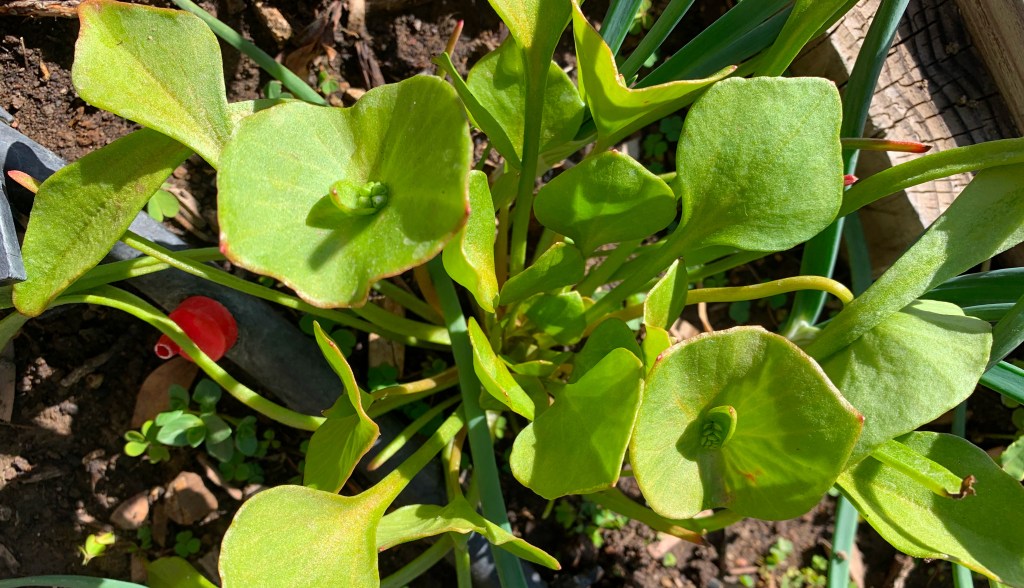
After our good rains in January we have lots of Miner’s lettuce (Claytonia perfoliata) popping up around the garden, even in our vegetable beds. It is a native plant in Western North America ranging from Southern Alaska and Canada all the way to Central America. The name comes from the California gold rush miner’s eating them as a green to help prevent scurvy. It is a nutritious green with high vitamin C and vitamin A content.
We’ve been foraging Miner’s lettuce around the garden to supplement our other greens. Miner’s lettuce is an all volunteer crop, we have not planted any seed, but have noticed it seems to be spreading to new areas each year. Maybe you can find some around your yard, garden, or in wilder places. Some seed suppliers even sell miner’s lettuce seed if you can’t find any in your area.
It has a fairly unique appearance, giving it a low risk of confusion with other plants, if you go looking for it. Of course any time you go foraging in the wild, or your own garden, make sure you have a positive identification of what you are harvesting.
Claytonia Botanical Info
Miner’s lettuce, also called Indian lettuce or winter purslane, belongs to the genus Claytonia, with the common name “spring beauty”. As the name suggests, many of the species in this genus bloom in early spring. The flowers are small in miner’s lettuce, and other species of Claytonia, but they can be notable since they are one of the early spring bloomers. They like moist shady areas, so look for them on north facing slopes, under shade of trees, or along streams.
It is in the Montiaceae family, which is a relatively small plant family with no well known relatives. However, in the past it had been considered part of the Portulacaceae or purslane family and does have some similarity to purslane, another plant commonly foraged in the wild (or considered a garden weed). Purslane comes up all over in our garden, but likes the hot weather, so we won’t see any for a couple months at least. In fact purslane has a special ability to “hold its breath” in hot weather to avoid losing moisture. Something for a later article!
Most of the leaves of miner’s lettuce grow in a basal rosette, with many leaves growing from one point at the base of the plant. Those first leaves can be long and thin, but become heart shaped as they mature. The flowers form on a stem with a circular leaf and flowers coming out of the center of the leaf. This is actually two leaves that are joined to look like one circular leaf. The botanical term for this circular leaf is “perfoliate”, hence the species name perfoliata.
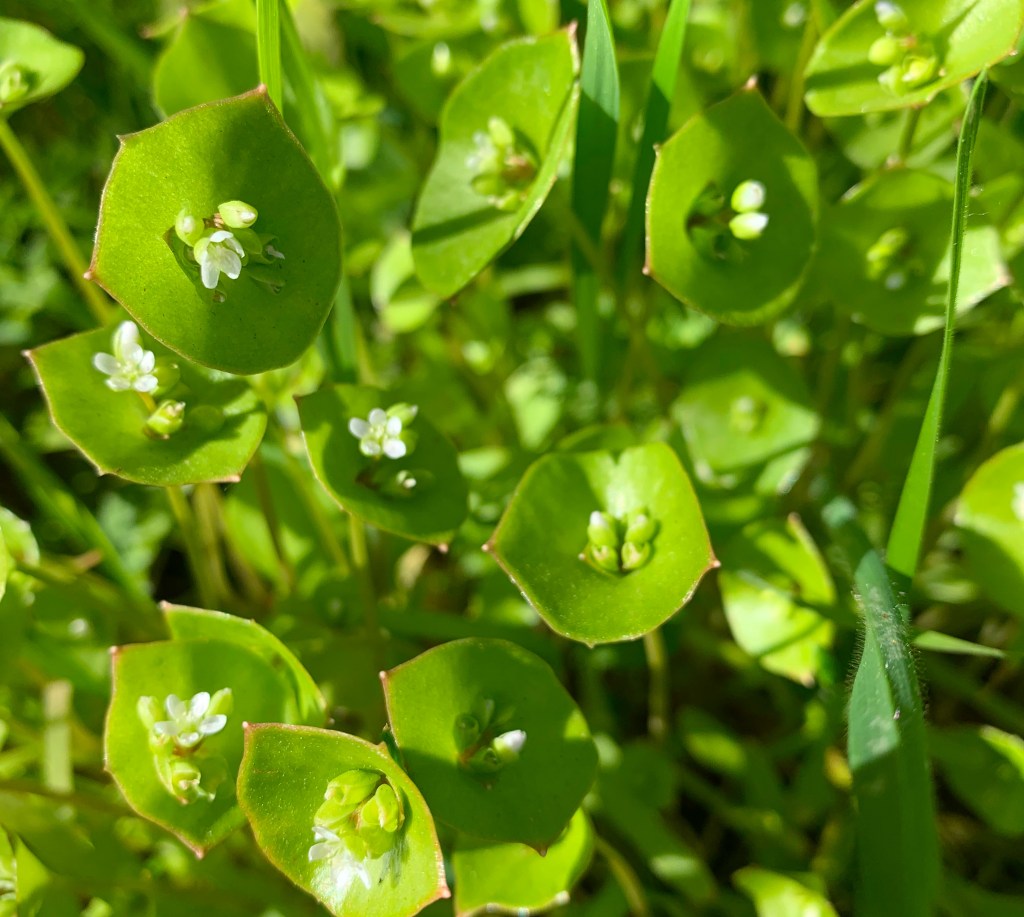
Flowers are small with white or pink petals and not very showy. There can be 5 to 40 flowers in a group on each of the leaves. In our area they are starting to bloom here in February. In cooler locations they will be a bit later, but will be one of the earlier plants up in the spring.
Miner’s lettuce was eaten by the natives of this region. Miner’s lettuce was called piyada̠ʼ in the Western Mono language, spoken by the natives of Eastern California. It was called palsingat in the Cahuilla language, spoken by the indigenous residents of San Jacinto and Coachella Valley region.
Claytonia is Nutritious
The plant is low in calories and high in vitamin C, vitamin A, and iron. It has a mild, slightly nutty flavor, and can be used in salads or as a garnish. In addition to its use as a food source, miner’s lettuce is also used in traditional Native American medicine to treat a variety of ailments.
Here’s a breakdown of its nutrient content:
- Vitamin C: Miner’s lettuce is an excellent source of vitamin C, with 100 grams of the plant providing about 34% of the daily recommended intake. That is about double the vitamin C content of regular lettuce.
- Vitamin A: It is also a good source of vitamin A, with 100 grams providing about 22% of the daily recommended intake. Also about double the vitamin A content of lettuce.
- Iron: Miner’s lettuce is a good source of iron, with 100 grams providing about 14% of the daily recommended intake.
- Potassium: It is also a good source of potassium, with 100 grams providing about 6% of the daily recommended intake.
- Calcium: Miner’s lettuce contains some calcium, with 100 grams providing about 3% of the daily recommended intake.
- Fiber: Miner’s lettuce contains 1 – 2 grams of fiber per 100 grams. Considering it is more than 90% water, that’s a good amount of fiber.
- Omega 3 Fats: Although some sources report high amounts of omega 3 fats, those reports appear to be by association with purslane, which is known to be high in omega 3 fats. We have not found any research to confirm it really has good amounts of omega 3’s.
In addition to these important vitamins and minerals, claytonia also contains small amounts of other micronutrients such as magnesium, phosphorus, and folate. There may also be relatively high levels of oxalates, similar to spinach or chard. For those concerned about oxalates, probably best to treat miner’s lettuce like spinach.
Eating Miner’s Lettuce
When harvesting Miner’s lettuce in the wild, avoid places that may have contaminants, such as close to busy roads. Since it grows in abundance in locations with a shady moist environment, you might be able to harvest quite a bit in one spot. Whenever harvesting wild plants, be careful not to pick too much. Leave enough to repopulate for the next season.
The large leaves can be easily picked off the tender stems. If they are not mixed with other plants, you can cut a bunch of leaves at one time. Otherwise, pluck individual leaves, which can get fairly large. The stems are edible, but the succulent leaves will be the most tender.
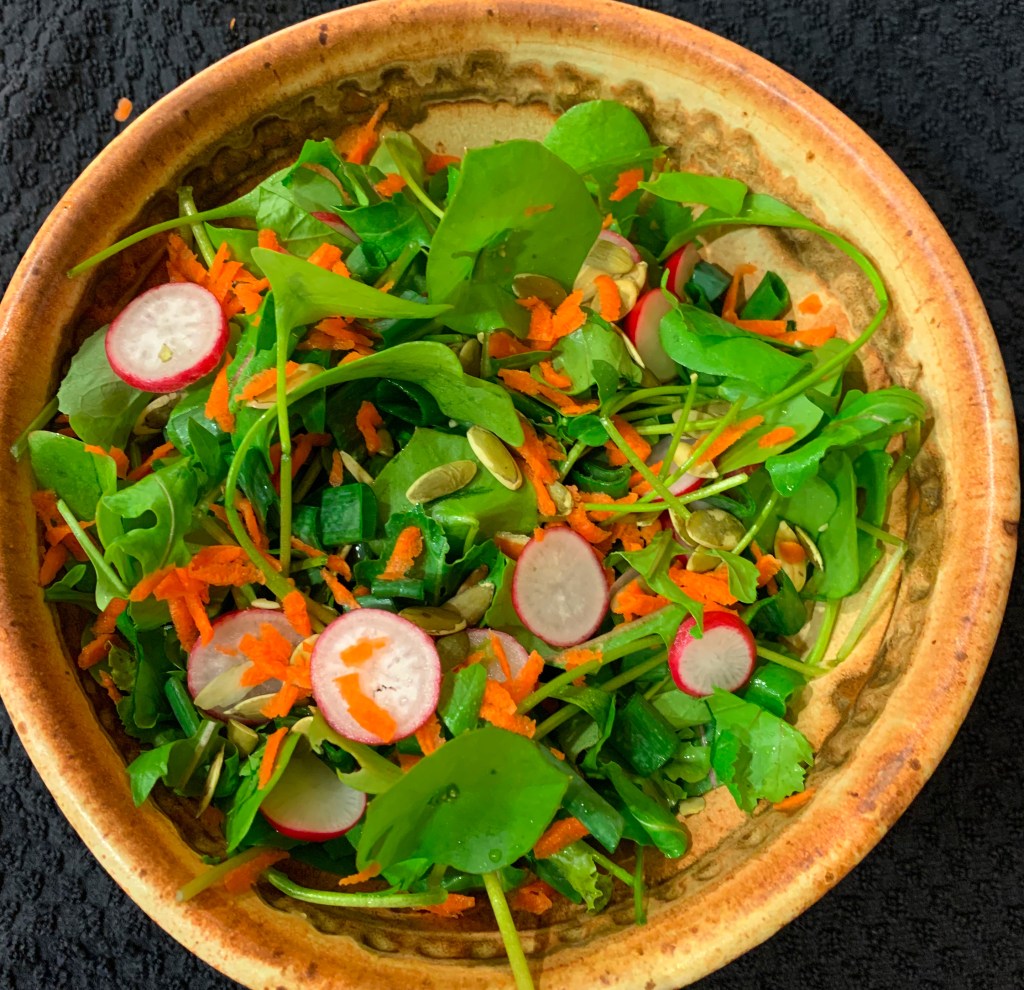
Eating them raw in a salad, or just by themselves, is an easy way to use them. The leaves have a rather mild flavor, so you can use other mild ingredients to appreciate them, or mix with stronger flavored items to spice things up.
Happy Foraging
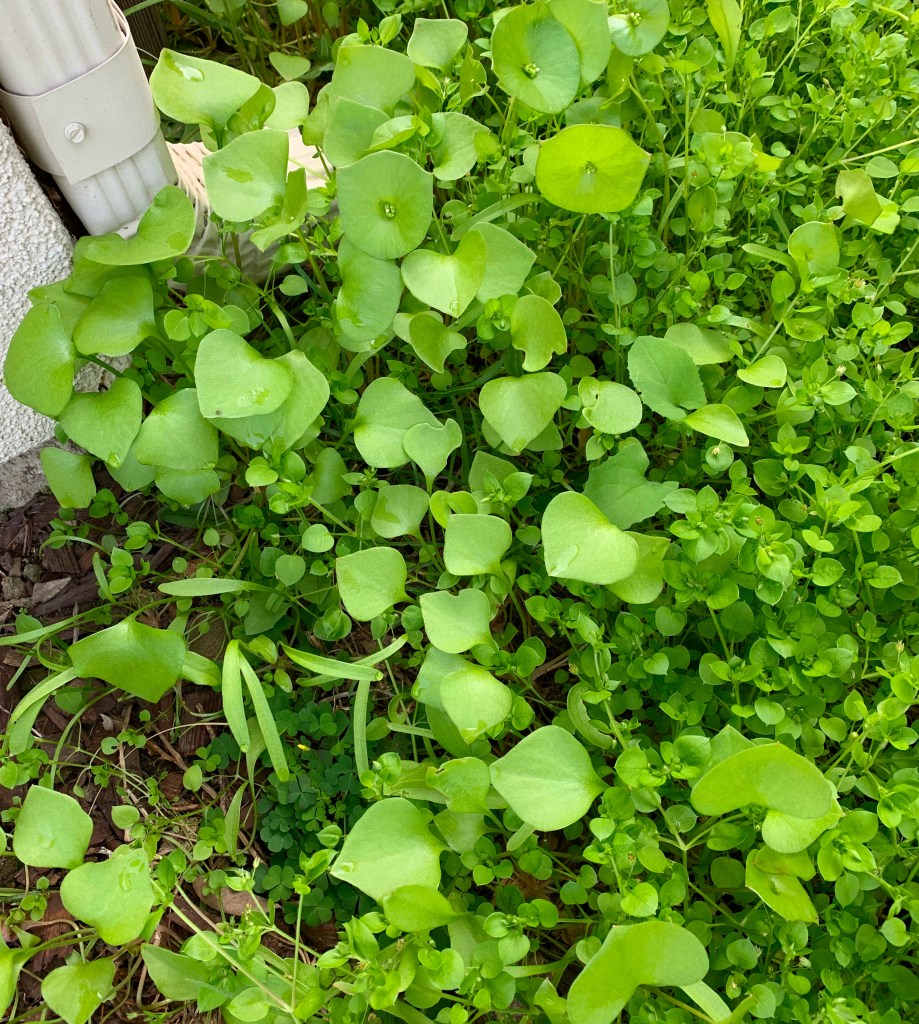
Chickweed is another early season green the we have often growing along with miner’s lettuce. Chickweed is another edible “weed” that has small white flowers. Again, make sure it is chickweed, since scarlet pimpernel looks similar but has orange flowers and is toxic!
Hope you find some good Miner’s lettuce growing near you and get a taste of eating on the wild side.
As always, any comments or questions you have are welcome. You can leave a comment below. Let us know if there are other topics you would like us to write about.
To be notified of future posts, please enter your email address below and select subscribe. You can also check out or posts on Instagram or YouTube, we are @Zanganeh.Garden.
Eat well, stay healthy and enjoy wild nature.
 Zanganeh Garden
2 responses to “Miner’s Lettuce: On the Wild Side”
Hi Bob and Mahnoosh The information was interesting and useful. Thanks so much . The Best Shahnaz
LikeLike
Nice to hear about using wild plants. How about another post on chickweed?
LikeLike